
A global movement for change
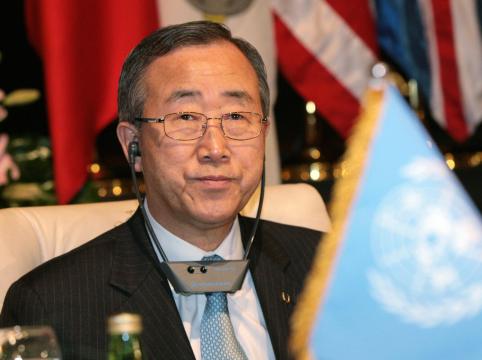
By Ban Ki-moon, Secretary-General of the United Nations
Next week, world leaders gather for a momentous occasion - the United Nations Conference on Sustainable Development in Rio de Janeiro. Will it be a success? In my opinion, yes. To be sure, the negotiations have been lengthy. Even now there is more disagreement than agreement on the details of the so-called "outcome document" that will emerge. Yet that will not be the defining measure. Far more important is what the Rio conference has already accomplished. And that is to build a global movement for change.
Rio+20 is a milestone on a long road. The famous 1992 Earth Summit put sustainable development on the global agenda. Today, we have come to a broader and more nuanced understanding of this age-old imperative: how to better balance the development needs of a growing world population - so that all may enjoy the fruits of prosperity and robust economic growth - with the necessity of conserving our planet's most precious resources: land, air and water. At Rio, more than 100 heads of state and government will join an estimated 25,000 participants to map our way ahead. For too long we have sought to burn and consume our way to prosperity. That model is dead. At Rio, we must begin to create a new one - a model for a 21st century economy that rejects the myth that there must be a zero-sum trade-off between growth and the environment. Increasingly, we understand that, with smart public policies, governments can grow their economies, alleviate poverty, create decent jobs and accelerate social progress in a way that respects the earth's finite natural resources.
In this larger sense, I believe that momentum for change is already irreversible. The evidence is all around, hiding in plain sight in countries large and small, rich and poor. Barbados, Cambodia, Indonesia, the Republic of Korea and South Africa, among many others, are already adopting "green growth" strategies that use limited natural resources more efficiently, create jobs and promote low-carbon development. Armenia, Azerbaijan, Egypt, Kenya, Jordan, Malaysia, Mexico, Nepal, Senegal and Ukraine are applying new green-growth technologies in a variety of industries, from agriculture to tourism. China has committed to supply 16 percent of its energy needs from renewable sources by 2020 and plans to invest more than $450 billion in waste recycling and clean technologies under its current five-year plan.
Here we are to serve you with news right now. It does not cost much, but worth your attention.
Choose to support open, independent, quality journalism and subscribe on a monthly basis.
By subscribing to our online newspaper, you can have full digital access to all news, analysis, and much more.
You can also follow AzerNEWS on Twitter @AzerNewsAz or Facebook @AzerNewsNewspaper
Thank you!