
Aliyev: Armenia-Turkey reconciliation should be parallel to Garabagh settlement
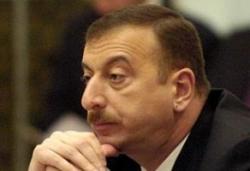
Azerbaijani President Ilham Aliyev has said normalization of
Armenia-Turkey relations should proceed in parallel with the
settlement of the Armenia-Azerbaijan conflict and as a package,
given that the Upper (Nagorno) Garabagh problem is the most severe
dispute in the volatile region and without its solution it would be
impossible to reliably resolve other issues.
Addressing the Munich Security Conference on Friday, President Aliyev said Baku had no intention to meddle in Armenian-Turkish relations but cannot remain indifferent to the issue due to the Garabagh problem. As an example Aliyev cited the fact that Turkey had shut its border with Armenia in the past due to the invasion of Azerbaijan’s strategic Kalbajar district.
"So now it turns out that the cause remains, occupation persists, but the outcome is being eliminated," the Azerbaijani leader said, adding that Baku confided in Ankara on the issue.
Armenia and Turkey have been at odds for decades, and the border between the two countries has been closed, since 1993, due to Armenia’s policy of occupying Azerbaijani territory and Armenian claims of World War I-era genocide in Ottoman Turkey. In a bid to end hostility, the two governments signed protocols in Zurich on October 10 to establish diplomatic relations and reopen their borders. However, the documents require parliamentary ratification, and Ankara has made clear that it could normalize ties with Yerevan only after the Armenia-Azerbaijan conflict has been fairly settled.
Azerbaijan and Armenia fought a lengthy war that ended with the signing of a cease-fire in 1994, but Armenia continues to occupy Upper Garabagh and seven other Azerbaijani districts in defiance of international law.
Asked whether or not Azerbaijan continues to support the Nabucco pipeline project seeking to transport Caspian gas to Europe, Aliyev said Baku fully backs the initiative and has joined all respective documents, however, answers should be found to outstanding questions to materialize it.
The president said Azerbaijan would like to know how serious other partners involved in this project are, considering that many of them are participating both in Nabucco and rival projects like Russian-backed South Stream and Nord Stream projects.
"Besides, Baku would like to know, specifically, when Nabucco will be built and how it will be financed," Aliyev said.
The 7.9 billion-euro Nabucco project, which has the backing of the EU, is designed to reduce Europe's dependence on Russian energy imports. The 3,300-kilometer pipeline would bring gas from the Caspian, Central Asia and the Middle East to the heart of Europe. The conduit, which is to pump gas via Azerbaijan, Turkey, Georgia, Bulgaria, Hungary, Romania and Austria, is due to be commissioned in 2014.
The president said the key priority for his country is presently drawing $20 billion in investments required to develop its vast gas fields, given that Azerbaijan possesses gas reserves that will suffice for as long as another 100 years. Aliyev said Azerbaijan is ready to commit investments worth billions of dollars needed for domestic gas production, but sources of funding needed to deliver fuel to European markets should be found first.
He also said Baku was anticipating a speedy agreement among all parties involved in the gas supply chain.
"We know there are gas buyers in Europe. We are therefore looking forward to the signing of an agreement among producers, transitors and consumers," the Azerbaijani leader said.*
Here we are to serve you with news right now. It does not cost much, but worth your attention.
Choose to support open, independent, quality journalism and subscribe on a monthly basis.
By subscribing to our online newspaper, you can have full digital access to all news, analysis, and much more.
Subscribe
You can also follow AzerNEWS on Twitter @AzerNewsAz or Facebook @AzerNewsNewspaper
Thank you!