
Garabagh mediators anger Azeri gov`t
The Azerbaijan Foreign Ministry has responded to a
recent statement of the OSCE mediators brokering a settlement to
the Armenia-Azerbaijan Upper (Nagorno) Garabagh conflict that
voiced concern over the documents submitted by the Azerbaijani
representative to the United Nations late in 2008.
The co-chairs of the OSCE Minsk Group said in a statement last week that, despite two reports circulated at the request of the Permanent Representative of Azerbaijan to the UN on December 24 and 29, there is no military solution to the Garabagh conflict.
The documents submitted by Baku stressed the importance of honoring Azerbaijan`s territorial integrity and asserted the nation`s right to defend itself.
Khazar Ibrahim, the spokesman for the Azerbaijani ministry, said that while distributing the mentioned papers, Baku was guided by the norms of international law and will continue to do so, recalling that the November 2, 2008 Moscow Declaration of the two countries` presidents affirmed these principles as a basis for resolving the long-standing dispute.
Ibrahim emphasized that Azerbaijan has repeatedly pledged its support for a peaceful resolution of the Garabagh conflict.
"As for a military solution, it is the Armenian side that has been persistently trying to solve the problem by military means. Azerbaijani territories have been occupied by the Armenian military, and the ceasefire is being violated on the contact line [of the two countries` troops] by the Armenian armed forces. It is the Armenian side that the co-chairs` statement should be directed at. They must be urged to aspire toward a peaceful resolution of the conflict and to unequivocally pull their forces out of Azerbaijani land."
Armenia has praised the intermediaries` statement. Foreign Minister Eduard Nalbandian said that the co-chairs had put forth a clear-cut stance toward the two documents submitted to the UN by Azerbaijan.
"I think the Minsk Group co-chairs mean to say that the actions by one of the negotiating parties are impeding the peace process by creating difficulties," he claimed, in an apparent swipe at Azerbaijan.
Armenia has been occupying over 20% of Azerbaijan`s territory since the early 1990s. Years of peace talks have brought few tangible results. Azerbaijani officials have repeatedly warned against Yerevan`s policy of aggression, saying the country`s land will be freed at any cost.
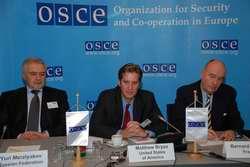
The joint statement of the co-chairs - Bernard Fassier of France, Yury Merzlyakov of Russia, and Matthew Bryza of the United States - underscored the not using force "as a core element of any just and lasting settlement of the conflict." They repeated that Presidents Ilham Aliyev and Serzh Sarkisian described their most recent meeting in Zurich on January 28 as useful and constructive, despite the two Azerbaijani reports circulated in the UN General Assembly one month earlier. The Minsk Group co-chairs indicated that they "would not allow the peace process to be subverted by legalistic or historical discussions, though they will remain sensitive to historical concerns expressed by the parties to the conflict."
Azerbaijan has sought to put the Garabagh conflict on the UN General Assembly agenda several times, but the Minsk Group co-chairing countries have not yet agreed to this.
The UN has already passed five resolutions on the unconditional pullout of the Armenian armed forces from the occupied Azerbaijani territories. Nonetheless, Yerevan is sticking to its policy of occupation and ignoring international law.
Here we are to serve you with news right now. It does not cost much, but worth your attention.
Choose to support open, independent, quality journalism and subscribe on a monthly basis.
By subscribing to our online newspaper, you can have full digital access to all news, analysis, and much more.
Subscribe
You can also follow AzerNEWS on Twitter @AzerNewsAz or Facebook @AzerNewsNewspaper
Thank you!