
Ivanishvili has enough time to win the hearts of the Georgian people
By Sabina Idayatova
Political change in any country is met by people with much interest and expectations. The October 1, 2012 parliamentary elections held in Georgia opened a new page in the history of the tiny South Caucasus republic.The elections, setting a peaceful transition from one governing party to another, proved that Georgian democracy is beyond popular slogans, bringing a new feature to politics.
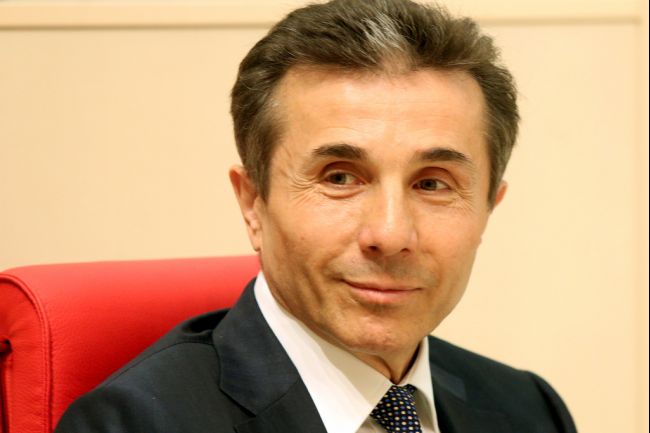
The parliamentary elections resulted in the defeat of incumbent Georgian President Mikheil Saakashvili`s United National Movement by Prime Minister Bidzina Ivanishvili`s Georgian Dream. The constitutional amendments introduced on October 15, 2010 that will go into effect once Saakashvili's term ends in 2013 will grant more authority to the Georgian parliament, and the rights of the head of state will be limited.
Georgia`s richest man, business tycoon Ivanishvili with an estimated worth of $6.4 billion that he had made in Russia in the 1990s, launched his political career in April 2012, immediately becoming a popular opposition leader. Nevertheless, Ivanishvili is considered by many, in particular, President Saakashvili, to be open to Russian manipulation.
On October 25, Georgia's parliament approved a new government
led by Ivanishvili.
He has vowed to maintain Saakashvili's pro-Western foreign policy
and continue the ex-Soviet state's bid to join NATO and ultimately
the European Union.
The premier is seen as someone who might mend ties with Moscow. He has promised to improve Georgia's relations with Russia, which broke off over South Ossetia and Abkhazia conflicts.
Ivanishvili is prepared to start dialogue with Russia using international mechanisms that will help overcome the current crisis step by step. He is keen to focus on restoring economic and cultural ties first.
Georgia's intentions to settle the Abkhazian and South Ossetian issue with Russia, however, remain unsuccessful. Ivanishvili appointed Zurab Abashidze, Georgia's former ambassador to Russia and political analyst, as his special representative for the Russian affairs.
The Russian government continues blaming Saakashvili for the deadlock between the two neighbors.
Furthermore, pro-Western Georgia has no intention to rejoin the Commonwealth of Independent States (CIS), regarding this move as a "turned page".
Parliament has endorsed the Ivanishvili government's program, which envisages increased social welfare spending, development of the agriculture sector and reform of law enforcement agencies.
What changes could Ivanishvili bring to Georgian society after coming to power? Some analysts note absence of any remarkableavchievement in the country, except prosecution and detention of former officials from Saakashvili's team.
In the last two months a number of former officials from the Saakashvili government including former defense minister, former deputy interior minister, former finance and energy minister, former education and justice minister, former employees of the interior ministry, and Tbilisi mayor's office have been detained. Most of them were charged with abuse of power. There is a common supposition that many of the officials were arrested in relation to corruption and the prison scandal that emerged shortly before the October election. Some detainees were released under court decisions.
In a televised New Year address to the nation Ivanishvili announced the ending of criminal prosecution of the country's former officials.
Ivanishvili called 2012 the year of the Georgian people's victory over Saakashvili's regime, stating that "the regime of Saakashvili was based on lies, violence and PR."
"The system of violence and lies is defeated, and now we must forgive all those who, by their own choice or not, participated in this system. We must forgive them and come up with something like amnesty," he said.
The confrontation between the president and the premier began as early as in the first weeks of Ivanishvili`s taking office.
Ivanishvili is willing to implement a "cohabitation" plan envisaging a compromise between the head of state and the government.
According to the plan, Ivanishvili will end the arrests of
former high-ranking officials of the presidential administration in
exchange for constitutional reform canceling the legitimate power
of the president to send the government into resignation, but the
president can disband parliament and call new elections. However,
until the election of a new parliament, the cabinet of the prime
minister retains all powers.
Ivanishvili is confident that Georgian Dream would defeat
pro-presidential minority even in early parliamentary
elections.
In response to Ivanishvili`s plan Saakashvili proposed his own program to solve the conflict between the new and the former Georgian authorities, expressing willingness to cooperate with the ruling coalition.
Saakashvili called on the new government to start fulfillment of campaign promises and be less engaged in prosecution of former government officials.
Ivanishvili has enough time to win the hearts of the Georgian people. But time will show how much Ivanishvili`s political authority will benefit Georgia to overcome these tough hurdles.
Ivanishvili, who is a newcomer in the political world, intends to leave politics in 2014, but is eager to continue the role of an active member of civil society.
Here we are to serve you with news right now. It does not cost much, but worth your attention.
Choose to support open, independent, quality journalism and subscribe on a monthly basis.
By subscribing to our online newspaper, you can have full digital access to all news, analysis, and much more.
You can also follow AzerNEWS on Twitter @AzerNewsAz or Facebook @AzerNewsNewspaper
Thank you!