
The Jerusalem Post: Arrests of Armenians for smuggling nuclear materials come amid reports about “dirty bomb" of IS
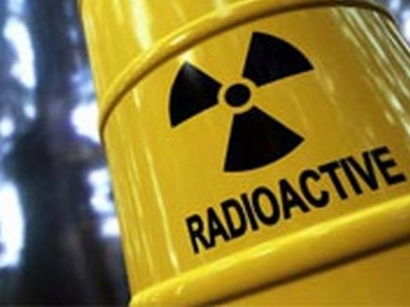
While the Obama administration (and the rest of the world) focuses on whether or not Tehran will fulfill its commitments, we may have missed other nuclear red flags that demand the world's immediate attention. No, not the permanently troubled North Korea, but Iran's neighbor Armenia, said in an article of Maayan Jaffe-Hoffman, director of internationalcommunications for a leading Israeli think tank, posted on The Jerusalem Post agency's website.
"As such, the comments could easily be cast aside as angry rhetoric. Nonetheless, why did so few news sources - particularly so few outside of the immediate geographic area - fail to report the statements? The world should not be so eager to let the comments slip.
On April 18, just days before Bagratyan's statements, the
Georgian State Security Service arresting three Armenian nationals
and three citizens of Georgia for attempting to illegally sell
roughly $200 million of weapons-grade uranium 238.
This recent arrest was not the first. Arrests of Armenians who have
crossed into neighboring Georgia have increased in the past two
years, according to an article published last month by The World
Post (a partnership publication of The Huffington Post), causing
alarm among nuclear non-proliferation experts in the US and
elsewhere. Landlocked Armenians use Georgia for access to the Black
Sea ports, which could be used to traffic nuclear material to the
Middle East or anywhere else.
Since 2014, the World Post reported, eight Armenians have been
arrested for attempting to smuggle and/or sell nuclear materials in
Georgia. In January 2016, three Armenians were arrested for
attempting to bring cesium 137 across the border. In August 2014,
two Armenians were arresting for the same thing", said in an
article.
Maayan Jaffe-Hoffman stresses in his article, that these arrests come amid reports by intelligence officials that "Islamic State" (IS) and other terrorist groups are trying to obtain materials to build a "dirty bomb", which they could explode in Europe, the United States or Israel.
"Someone who would be willing to put the lives of hundreds of
thousands or even millions of people at risk to make money is both
appalling and unfathomable", Jaffe-Hoffman says.
"What's more is that we don't know from exactly where these
Armenians are getting the nuclear materials. Until now, it was
assumed that Armenia possesses no nuclear weapons and that the
country "attaches great importance to universal application and
effective implementation of all treaties and regimes, dealing with
non-proliferation," as its foreign ministry reports on its
website", said in an article.
According to the author, Armenia's claim of a nuclear weapon will create legal and political problems for the country. Azerbaijan and Turkey will both need to deal with the legal and security ramifications of this statement immediately.
"Given all the recent arrests of Armenian smugglers, Bagratyan's words seem much more scary than unlikely", he says.
Hrant Bagratyan, Armenian MP, former prime minister, said at a press-conference that Armenia has nuclear weapons.
While explaining this statement for journalists, Bagratyan said that Armenia has an opportunity to create nuclear weapons, adding that Armenia has such weapons.
The Metsamor nuclear power plant was built in 1970. It was closed after the devastating earthquake in Spitak in 1988. But despite the international protests, the power plant's operation was resumed in 1995. Moreover, the second reactor was launched there.
According to the ecologists and scholars all over the region, seismic activity of this area turns operation of the Metsamor nuclear power plant in an extremely dangerous enterprise, even if a new type of reactor is built.
The conflict between the two South Caucasus countries began in 1988 when Armenia made territorial claims against Azerbaijan. As a result of the ensuing war, in 1992 Armenian armed forces occupied 20 percent of Azerbaijan, including the Nagorno-Karabakh region and seven surrounding districts. The 1994 ceasefire agreement was followed by peace negotiations. Armenia has not yet implemented four UN Security Council resolutions on withdrawal of its armed forces from the Nagorno-Karabakh and the surrounding districts.
---
Follow us on Twitter @AzerNewsAz
Here we are to serve you with news right now. It does not cost much, but worth your attention.
Choose to support open, independent, quality journalism and subscribe on a monthly basis.
By subscribing to our online newspaper, you can have full digital access to all news, analysis, and much more.
You can also follow AzerNEWS on Twitter @AzerNewsAz or Facebook @AzerNewsNewspaper
Thank you!