
Necessary to sit at negotiating table to resolve Karabakh conflict – Russian PM
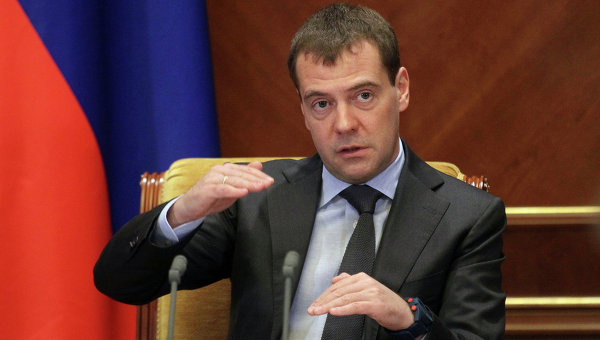
Russia, having defined its position, Russia, having defined its
position, has commenced the settlement of the Nagorno-Karabakh
conflict, the main thing is to stop shooting and sit at the
negotiating table, Russian Prime Minister Dmitry Medvedev said, RIA
Novosti reported. "After all that happened, I think that Russia, as
an influential state, which has partnership and allied relations
with both Armenia and Azerbaijan, should do anything possible so
that the conflict wouldn't drag on and enter a permanent stage," he
said. "That's why Russian President Vladimir Putin called both
Azerbaijani President Ilham Aliyev and Armenian President Serzh
Sargsyan and explained our position." He said that Russia's
position is to prevent the escalation of the Nagorno-Karabakh
conflict, no matter what happens, adding that the sides of the
conflict should calm down and stop shooting, announce a truce and
sit down at the negotiating table. "In view of the fact that I had
to go to Armenia on a special visit, it was considered appropriate
that I visit Armenia and Azerbaijan and discuss the situation with
the leaders of these countries on the spot," said Medvedev. On the
night of April 2, 2016, all the frontier positions of Azerbaijan
were subjected to heavy fire from the Armenian side, which used
large-caliber weapons, mortars and grenade launchers. The armed
clashes resulted in deaths and injuries among the Azerbaijani
population. Azerbaijan responded with a counter-attack, which led
to liberation of several strategic heights and settlements.
Military operations were stopped on the line of contact between
Azerbaijani and Armenian armies on Apr. 5 at 12:00 (UTC/GMT + 4
hours) with the consent of the sides, Azerbaijan's Defense Ministry
earlier said. Ignoring the agreement, the Armenian side again
started violating the ceasefire. The conflict between the two South
Caucasus countries began in 1988 when Armenia made territorial
claims against Azerbaijan. As a result of the ensuing war, in 1992
Armenian armed forces occupied 20 percent of Azerbaijan, including
the Nagorno-Karabakh region and seven surrounding districts. The
1994 ceasefire agreement was followed by peace negotiations.
Armenia has not yet implemented four UN Security Council
resolutions on withdrawal of its armed forces from the
Nagorno-Karabakh and the surrounding districts. commenced the
settlement of the Nagorno-Karabakh conflict, the main thing is to
stop shooting and sit at the negotiating table, Russian Prime
Minister Dmitry Medvedev said, RIA Novosti reported. "After all
that happened, I think that Russia, as an influential state, which
has partnership and allied relations with both Armenia and
Azerbaijan, should do anything possible so that the conflict
wouldn't drag on and enter a permanent stage," he said. "That's why
Russian President Vladimir Putin called both Azerbaijani President
Ilham Aliyev and Armenian President Serzh Sargsyan and explained
our position." He said that Russia's position is to prevent the
escalation of the Nagorno-Karabakh conflict, no matter what
happens, adding that the sides of the conflict should calm down and
stop shooting, announce a truce and sit down at the negotiating
table. "In view of the fact that I had to go to Armenia on a
special visit, it was considered appropriate that I visit Armenia
and Azerbaijan and discuss the situation with the leaders of these
countries on the spot," said Medvedev. On the night of April 2,
2016, all the frontier positions of Azerbaijan were subjected to
heavy fire from the Armenian side, which used large-caliber
weapons, mortars and grenade launchers. The armed clashes resulted
in deaths and injuries among the Azerbaijani population. Azerbaijan
responded with a counter-attack, which led to liberation of several
strategic heights and settlements. Military operations were stopped
on the line of contact between Azerbaijani and Armenian armies on
Apr. 5 at 12:00 (UTC/GMT + 4 hours) with the consent of the sides,
Azerbaijan's Defense Ministry earlier said. Ignoring the agreement,
the Armenian side again started violating the ceasefire. The
conflict between the two South Caucasus countries began in 1988
when Armenia made territorial claims against Azerbaijan. As a
result of the ensuing war, in 1992 Armenian armed forces occupied
20 percent of Azerbaijan, including the Nagorno-Karabakh region and
seven surrounding districts. The 1994 ceasefire agreement was
followed by peace negotiations. Armenia has not yet implemented
four UN Security Council resolutions on withdrawal of its armed
forces from the Nagorno-Karabakh and the surrounding districts.
Here we are to serve you with news right now. It does not cost much, but worth your attention.
Choose to support open, independent, quality journalism and subscribe on a monthly basis.
By subscribing to our online newspaper, you can have full digital access to all news, analysis, and much more.
Subscribe
You can also follow AzerNEWS on Twitter @AzerNewsAz or Facebook @AzerNewsNewspaper
Thank you!