
Azeri Muslims mark holy Ramadan
By Seymur Aliyev, Azernews Staff Writer
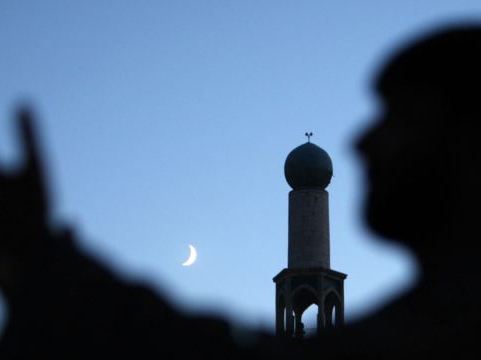
Azerbaijani people marked the holy Muslim holiday of Ramadan on August 19-20. Worshippers gathered in mosques at around 10 a.m. on August 19 for a holiday prayer. So, the fast is now over and every Muslim family in Azerbaijan, as part of the 1.5 billion Islamic world, celebrates this sacred holiday covering the table with dishes of the national cuisine.
Generally, each prosperous Muslim who has fasted during the Ramadan must share 3 kg of food with needy Muslims a few days before the holiday. This Islamic tradition aims to help poor Muslims to cover their festive table like well-to-do people do.
Azerbaijan, a predominantly Muslim country sitting on the crossroads of the East and West, has celebrated the Ramadan officially since 1993, following the collapse of the Soviet Union. Azerbaijani Muslims did not stop fasting even during the Soviet period when all religious holidays were banned.
Ramadan is the ninth month in the Islamic calendar and Muslims are required to fast during this month. The fast is to abstain from food, drink and marital relations from dawn until sunset; Muslims are also encouraged to increase in their worship and the recital of the Holy Quran. During Ramadan, every part of the body must be restrained. The tongue must be restrained from backbiting and gossip. The eyes must be restrained from looking at indecent things. The hand must not touch or take anything that does not belong to it. The ears must refrain from listening to idle talk or obscene words. The feet must refrain from going to sinful places. In such a way, every part of the body observes the fast.
Fasting is not merely physical, but is rather the total commitment of the person`s body and soul to the spirit of the fast. Ramadan is a time to practice self-restraint, a time to cleanse the body and soul from impurities and re-focus oneself on the worship of God. In accordance with the practice of Prophet Muhammad, charity is also encouraged during this month and many choose this time of the year to fulfill the requirement of Zakat, donation of a 1/40th part of one`s earnings.
It becomes compulsory for Muslims to start fasting when they reach puberty, so long as they are healthy, sane and have no disabilities or illnesses. Exemptions to fasting are travel, menstruation, illness, older age, pregnancy, and breast-feeding. However, many Muslims with medical conditions insist on fasting to satisfy their spiritual needs, and healthcare professionals must work with their patients to reach common ground. Professionals should closely monitor individuals who decide to go ahead with fasting.
While fasting is not considered compulsory in childhood, many children endeavor to complete as many fasts as possible as practice for later life. Those who are unable to fast are obliged to make up for it. According to the Quran, those ill or traveling are exempt from the obligation, but still must make up the days missed later on.
At sunset, families hasten for the fast-breaking meal known as Iftar. For many around the world, Iftar starts with the eating of one or more (usually three) dates - as Muhammad used to do. Following that, Muslims adjourn for the Maghrib prayer, the fourth of the five daily prayers, after which the main course is served.
During the last ten days of Ramadan, Muslims seek and observe the Night of Power - Leyla al-Qadr. Tradition holds that the Night of Power is the night that the first revelation of the Quran was sent down to Prophet Muhammad. Muslims are instructed to ``seek`` the Night of Power during the last ten days of Ramadan, particularly on the odd nights (ie. the 23rd, 25th and 27th). It is reported that the Prophet said: ``Whoever stays up (in prayer and remembrance of Allah) on the Night of Qadr, fully believing (in Allah`s promise of reward) and hoping to seek reward, shall be forgiven for his past sins."
Muslims worldwide spend the last ten nights of Ramadan in solid devotion, retreating to the mosque to read the Quran, reciting special supplications and reflecting on the meaning of Allah`s message to us. It is believed to be a time of intense spirituality, when the believers are surrounded by angels, the gates of heaven are open, and God`s blessings and mercy are abundant.
The whole month of Ramadan is a time of renewal and reflection. As the month winds to a close, we pray that the spirit of Ramadan and the lessons learned during it last for all of us throughout the year.
Muslims believe that their good actions bring a greater reward during this month than at any other time of the year, because this month has been blessed by Allah.
Almost all Muslims try to give up bad habits during Ramadan, and some try to become better Muslims by praying more and reading the Quran.
Here we are to serve you with news right now. It does not cost much, but worth your attention.
Choose to support open, independent, quality journalism and subscribe on a monthly basis.
By subscribing to our online newspaper, you can have full digital access to all news, analysis, and much more.
You can also follow AzerNEWS on Twitter @AzerNewsAz or Facebook @AzerNewsNewspaper
Thank you!