
Armenia ‘wants time’ for troop pullout
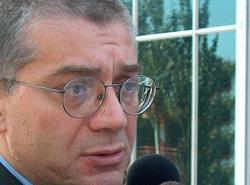
Armenia is seeking time from Baku for its withdrawal
from a part of Azerbaijan’s territory it occupies, Azerbaijani
Deputy Foreign Minister Araz Azimov has said.
Azimov, who is the President’s special envoy on Upper (Nagorno) Garabagh conflict settlement, told Public TV channel that, with the liberation of five Azerbaijani districts during the first stage, the Turkey-Armenia border could reopen.
"This would be an indication of Baku’s good will displayed to Yerevan. At the same time, this could play the role of the main tool for launching cooperation between Turkey and Armenia and provide suitable conditions for Turkey’s trilateral trade with Azerbaijan and Armenia or its collaboration in other areas. By rejecting these things, Armenia is losing everything. Due to some political illusions or the political views and interests of President Sarkisian or some others standing behind him, Armenia and the Armenian people could lose good prospects."
Armenia and Azerbaijan waged a war over the mountainous region of Upper Garabagh in the early 1990s. The war claimed some 30,000 lives and displaced about a million Azerbaijanis. Armenia has been occupying over 20 percent of Azerbaijan’s internationally-recognized territory since then. The ceasefire accord was signed in 1994, but peace talks, brokered by US, Russian and French mediators, have been largely fruitless so far.
Armenia and Turkey have been at odds for decades. Turkey closed its border with Armenia in 1993 due to the Armenian occupation of Azerbaijani territory and claims on genocide allegedly committed during World War I. In October 2009, two protocols -- which ultimately seek to open the Turkish-Armenian border – were signed. However, the documents require parliamentary approval, and Turkish officials have assured Azerbaijan, Turkey’s ally, that the protocols will not pass in the country’s parliament until progress is made in resolving the Garabagh conflict. In response, Armenian President Serzh Sarkisian announced on April 22 that Yerevan was suspending approval of the protocols though he said his country "had decided not to exit the process for the time being, but rather, to suspend the procedure of ratifying the protocols."
The Azerbaijani deputy foreign minister said Azerbaijanis’ returning to their homes in Upper Garabagh and enjoying the same living conditions as Armenian residents, granting the region an interim status and the Azerbaijani government’s tackling economic rehabilitation in the post-war region requires conducive conditions. Azimov said this is currently impossible, emphasizing that Azerbaijan’s Constitution must be reinstated in the region, and its status determined in line with constitutional statutes and upon consent of the local population. However, all this has to be done in stages, Azimov said.
"Aghdam, Fuzuli, Jabrayil, Zangilan and Gubadly must be liberated, and the Lachin road [the road connecting Upper Garabagh with Armenia’s territory] opened up. Armenia wants time for freeing Lachin and Kalbajar [another strategic district]. This timing should be set. There is a [mediating OSCE Minsk Group] co-chairs’ proposal on that. And just like the liberation of Lachin’s north and Kalbajar, the timing of the Azerbaijanis’ return to Garabagh should be determined. When will they return? And, having come back, will they be provided with an equal status? This should be embedded in the same document as the liberation of the five districts and the Lachin road."*
Here we are to serve you with news right now. It does not cost much, but worth your attention.
Choose to support open, independent, quality journalism and subscribe on a monthly basis.
By subscribing to our online newspaper, you can have full digital access to all news, analysis, and much more.
Subscribe
You can also follow AzerNEWS on Twitter @AzerNewsAz or Facebook @AzerNewsNewspaper
Thank you!