
Government adapts economy to low oil prices
By Aynur Karimova
Energy-rich Azerbaijan, the national economy of which faced challenges caused by drop in oil prices on the world market, is keen on reviewing the economic plans and taking anti-crisis measures to overcome the difficulties.
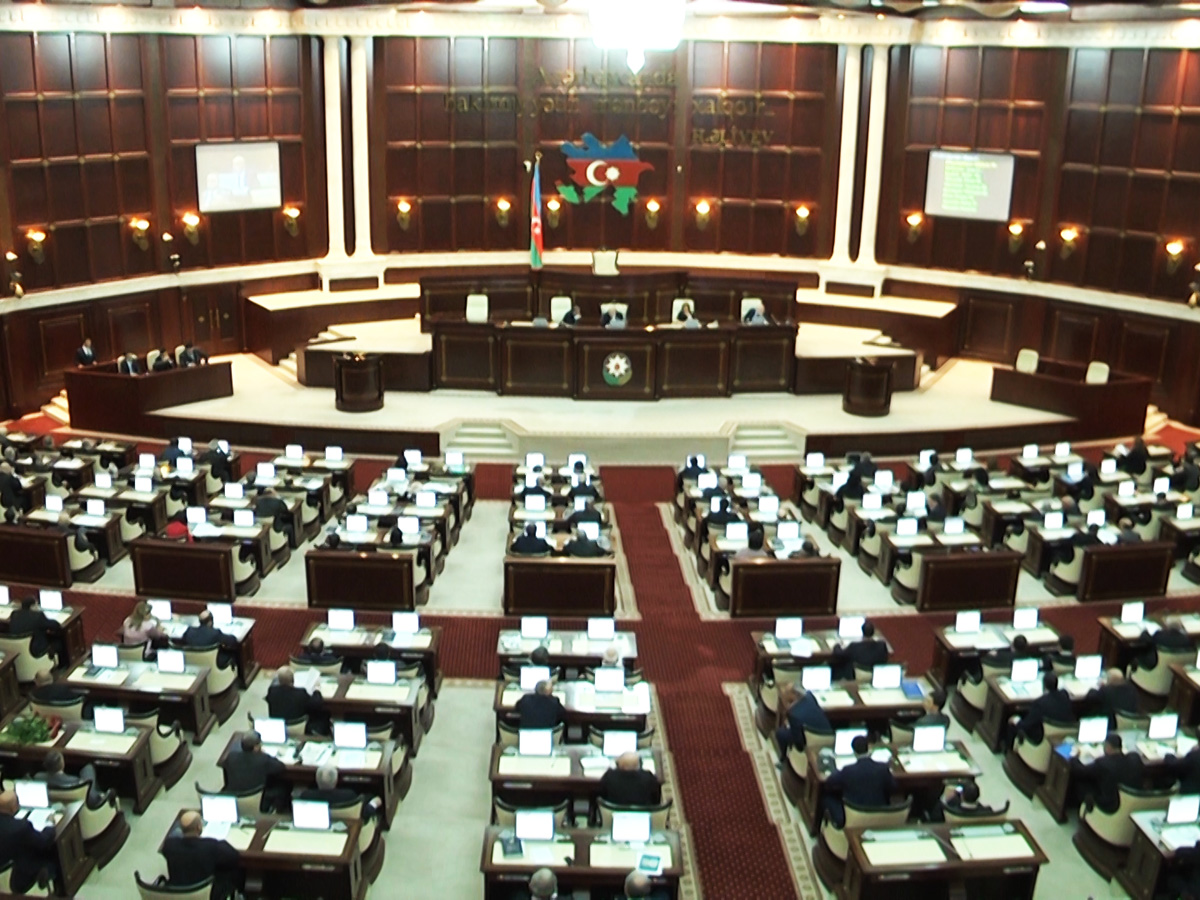
In this regard, the government may revise the state budget of Azerbaijan, Ziyad Samadzade, the chairman of the parliamentary committee on economic policy, industry and entrepreneurship, said during a meeting of the parliamentary committee on economic policy on January 19.
Another plan of the government is to build the economy based on
the oil price of $25-30 per barrel.
“Now it is our main objective in terms of stabilization of the
manat rate and preservation of macroeconomic stability,” Elman
Rustamov, the Chairman of the Central Bank of Azerbaijan, said
during his speech.
Rustamov called the devaluation of the manat “a hard fall”, saying it was not comfortable for population, financial and banking sector, business or government.
For now Azerbaijan's international reserves reach $40 billion
"Not even all exporting countries have such figures," he noted. “These funds are enough for maneuvers, diversification of economy and transition to a more sustainable foundation."
Rumors about 1USD/2 AZN groundless
The CBA chairman also called rumors about an increase of the USD's exchange rate up to two manats as groundless.
"There is no reason for panic," he said.
Following the decision of the CBA to allow a freely floating exchange rate, the dollar-denominated debt of borrowers increased by almost 50 percent in terms of the manat, thus, confounding both the banks and the clients.
Rustamov told journalists after the parliamentary meeting that
the Azerbaijani government is considering paying off dollar loan
debts up to $5,000 at the exchange rate of 1.05 manat versus
$1.
“Some $250 million may be required to compensate for the difference
between the old and the new exchange rates,” he said.
Rustamov believes that there are no economic and social reasons for denomination of national currency in Azerbaijan.
"There are no reasons for denomination also because of the lack of hyper-inflation in Azerbaijan,” he said.
Rustamov went on to add that the dividends on bank deposits are
offered for exemption from taxation in Azerbaijan from February 1,
2016.
Since 2010, the income of individuals and legal entities on
securities transactions is taxed at 10 percent.
“The total volume of deposits of the Azerbaijani population reaches 9.3 billion manat as of January 19,” Rustamov said. “The dividends on deposits reach 93 million manat.”
In accordance with the draft amendments to the Tax Code of Azerbaijan, annual interest rates on deposits of individuals in local banks and branches of foreign banks operating in Azerbaijan, dividends on investment securities paid by the issuer, the interest income is exempt from taxation for a period of three years starting from February 1, 2016.
Banking sector is stable
Rustamov said Azerbaijan's banking sector, which allocated 80 billion manats for lending to the economy over the past 10-12 years, is stable in general and is characterized by high indexes.
"Except for one or two banks with weak performance, the level of capital and liquidity is high," he said. "We don’t deny that there are some problems as well. But the situation is under control, and the proposed bills will create conditions for more efficient and flexible management."
The CBA together with the government is preparing a large-scale aid program to the banking sector.
“We have planned a number of activities together with the government,” he said. “Besides other things, they include full deposit insurance, as well as the consolidation program and so on.”
The ban on foreign currency exchange outside the banking branches and offices was also one of such measures, he added.
The CBA and SOFAZ began to hold auctions to meet the needs of population in currency.
Touching upon the consolidation in Azerbaijan’s banking sector, Rustamov said this measure may affect five to seven banks of the country.
“This is a sensitive issue as the population’s deposits have been placed in these banks,” he said. “Therefore, the main issue to be resolved now is the insurance of deposits. This issue shouldn’t cause any problems, as the banks, through their merger, become bigger.”
Rustamov said international financial organizations, in particular, the International Finance Corporation and the European Bank for Reconstruction and Development, are also interested in the consolidation of banks in Azerbaijan.
“This will lead to financial recovery of the banks. International organizations can bring modern standards to the management of these banks,” said Rustamov. “I consider that the consolidation process is in the interests of both the banks’ owners and the population.”
Currently, 42 banks operate in Azerbaijan.
Several laws amended
Azerbaijani parliament adopted amendments to the laws “On Deposit Insurance”, “On Currency Regulation” and “On Complete Deposit Insurance”, as well as changes to the Tax Code on January 19.
In accordance with the law “On Complete Deposit Insurance”, the deposits of population in the banks, which are members to the Azerbaijan Deposit Insurance Fund (ADIF), have been insured for three years, regardless of the deposits’ amounts.
Currently, the maximum level of insurance coverage for deposits is 30,000 manats.
Under the amendments to the Tax Code, interest rates on deposits of individuals in local banks and branches of foreign banks operating in Azerbaijan, dividends on investment securities paid by the issuer, and the interest income are exempt from tax for a period of three years starting from Feb. 1, 2016.
The parliament also adopted amendments the law “On Currency Regulation,” which envisages introducing a 20-percent mandatory fee for the money transfer abroad as direct investment for the purchase of securities, real estate and land plots, as well as for maintenance of foreign offices of Azerbaijani companies in an amount exceeding $50,000 during a year.
This won’t cover the legal entities, the state share in the equity capital of which exceeds 50 percent. This measure also won’t affect the transfers abroad for medical treatment, education, execution of decisions of courts and law enforcement agencies outside of Azerbaijan.
--
Aynur Karimova is AzerNews’ staff journalist, follow her on Twitter: @Aynur_Karimova
Follow us on Twitter @AzerNewsAz
Here we are to serve you with news right now. It does not cost much, but worth your attention.
Choose to support open, independent, quality journalism and subscribe on a monthly basis.
By subscribing to our online newspaper, you can have full digital access to all news, analysis, and much more.
You can also follow AzerNEWS on Twitter @AzerNewsAz or Facebook @AzerNewsNewspaper
Thank you!