
China stocks jump with U.S. futures on stimulus bets; oil drops
By Bloomberg
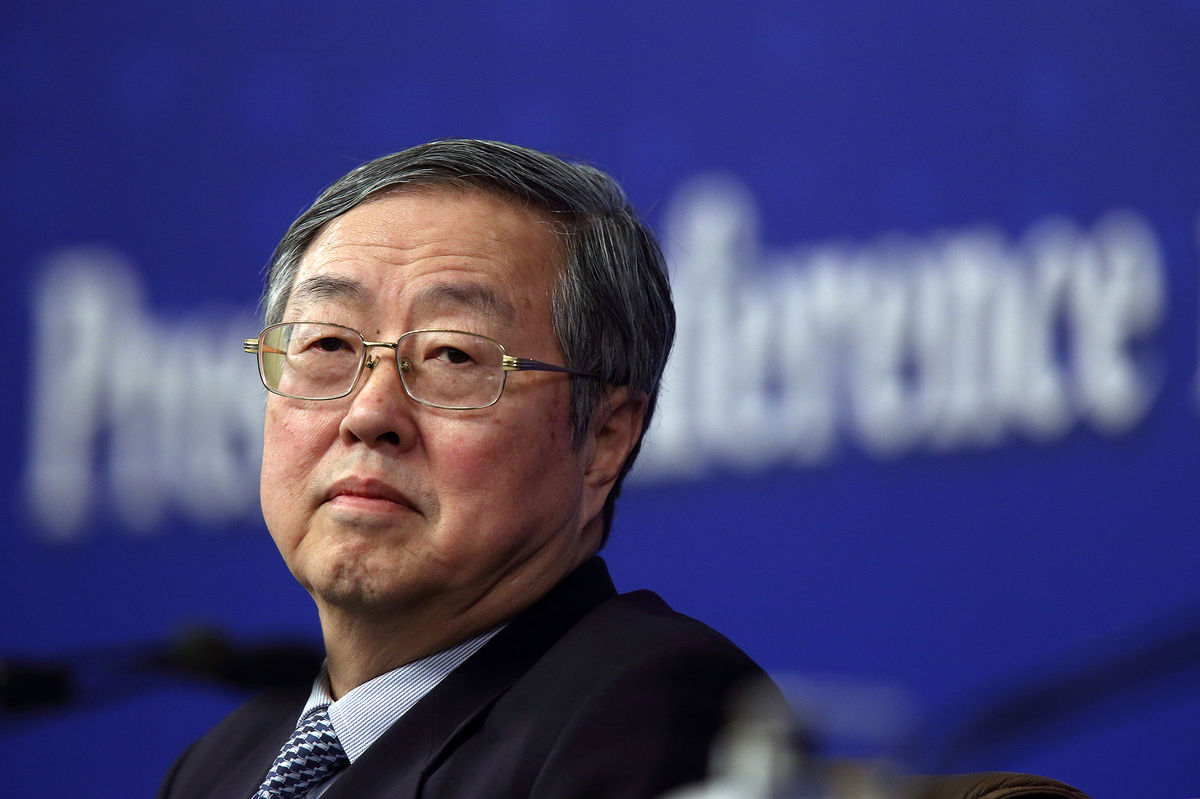
Chinese shares jumped with U.S. equity-index futures after central bank Governor Zhou Xiaochuan said the government can do more to support growth in the world’s second- largest economy. Oil slid a second day and the dollar was stronger against most peers.
The Hang Seng China Enterprises Index surged 3.5 percent by 12:32 p.m. in Tokyo, and Standard & Poor’s 500 Index futures advanced 0.3 percent. The Hang Seng Index rose 1.6 percent as regulators expanded access for mainland funds to Hong Kong’s exchange link with Shanghai. The MSCI Asia Pacific Index added 0.4 percent. The greenback climbed 0.2 percent against the euro, while Malaysia’s ringgit weakened 0.8 percent as U.S. crude oil fell 1.7 percent.
China’s central bank chief said that the nation’s growth rate has tumbled “a bit” too much and that policy makers have scope to respond, underscoring forecasts for further monetary easing in the world’s second-largest economy. Talks on Iran’s nuclear program resume Monday amid speculation that an accord to ease sanctions could mean a resumption of oil shipments, further swelling global supply. Reports on personal spending and income are due in the U.S.
“Confirmation that further stimulus in China is likely might have some positive announcement impact and help calm market nerves but in the long run is likely to be outweighed by concerns that growth in China’s economy continues to soften,” Ric Spooner, a chief market analyst at CMC Markets in Sydney, wrote in an e-mail to clients.
China has room to act with both interest rates and “quantitative” measures, People’s Bank of China’s Zhou said in remarks at the Boao Forum for Asia, an annual conference on the southern Chinese island of Hainan.
More Cuts
Analysts surveyed by Bloomberg News expect the PBOC will lower both benchmark lending rates and banks’ required reserve ratios, adding to cuts made in recent months.
Banks and insurers helped boost the gauge of Chinese shares in Hong Kong to its biggest gain for the year. The number of shares changing hands on the Hang Seng Index was twice the 30- day average for the time of day. The Shanghai Composite Index added 1.6 percent after capping a third straight weekly advance.
Domestic money managers no longer need to be part of the Qualified Domestic Institutional Investor program to invest in Hong Kong shares via the connect, the China Securities Regulatory Commission said in a statement on its microblog Friday. Firms can set up new funds to use the link, the CSRC said.
Caltex Tumbles
Energy and mining stocks drove declines on Australia’s S&P/ASX 200 Index, which slid 1.3 percent. Caltex Australia Ltd. dropped as much as 10 percent, the most since June 2013, after Chevron Corp. sold its 50 percent stake in the petroleum seller. New Zealand’s NZX 50 Index dropped 0.6 percent, while the Kospi index in Seoul rose 0.4 percent.
Japan’s Topix swung to a gain of 0.4 percent, while the yen weakened to 119.22 per dollar. The currency added 0.8 percent last week in a second round of gains. Japanese industrial production fell 2.6 percent in February from a year earlier, exceeding the 0.6 percent drop projected by economists, data Monday showed.
West Texas Intermediate crude sank to $48.09 a barrel after a 5 percent rout on Friday trimmed its weekly gain to 6.9 percent. Brent oil lost 0.7 percent to $55.99 a barrel Monday following last week’s 2 percent gain.
Oil fell almost 50 percent last year as the Organization of Petroleum Exporting Countries resisted calls to cut output to maintain market share amid surging U.S. supply. Iran, the fifth biggest producer of the group, could increase exports by 1 million barrels a day if international sanctions were lifted, Oil Minister Bijan Namdar Zanganeh said March 16.
Gold, Euro
Gold declined 0.4 percent to $1,194.30 an ounce after halting its longest run of daily gains since August 2012 on Friday. Iron ore, Australia’s biggest export, tumbled 4 percent on Friday to a fresh record-low of $53.14 per dry metric ton.
The euro weakened to $1.0866 after gaining 0.6 percent last week. The Bloomberg Dollar Spot Index, which tracks the greenback against 10 major peers, was up a third day, adding 0.2 percent following last week’s 0.3 percent retreat. It’s set for a ninth straight monthly gain.
The Australian dollar dropped for a fifth straight day, declining 0.3 percent to 77.26 U.S. cents, while New Zealand’s currency slipped 0.4 percent to 75.35 U.S. cents following Friday’s 0.4 percent retreat. The ringgit fell to 3.7128 per dollar.
Fed Revisions
The dollar’s advance has been tempered the past two weeks after the Federal Reserve reduced its forecasts for rates and economic growth March 18. The Fed has held its main rate at zero to 0.25 percent since 2008 to support the economy. While the U.S. ponders tightening, policy makers from Europe to Asia are easing to ward off deflation and stoke growth.
Fed Chair Janet Yellen said Friday that she expects rates to be raised this year and that subsequent increases will be gradual without following a predictable path. Gross domestic product in the U.S. expanded 2.2 percent in the fourth quarter on an annualized basis, below the 2.4 percent growth predicted by economists.
Reports Monday may show personal incomes rose 0.3 percent in February, according to economists surveyed by Bloomberg, while spending probably advanced by 0.2 percent after dropping 0.2 percent in January.
The S&P 500 rose 0.2 percent Friday to 2,061.02, cutting its weekly drop to 2.2 percent. The Nasdaq Composite Index slumped 2.7 percent last week, the most since October, as a push to top its dot-com-era record stalled 10 points short. A Nasdaq index of biotechnology shares tumbled 5.3 percent from an all- time high. The gauge’s worst week in a year trimmed its 2015 advance to 14 percent.
The Chicago Board Options Exchange Volatility Index surged 16 percent last week, the most since Jan. 30.
Here we are to serve you with news right now. It does not cost much, but worth your attention.
Choose to support open, independent, quality journalism and subscribe on a monthly basis.
By subscribing to our online newspaper, you can have full digital access to all news, analysis, and much more.
You can also follow AzerNEWS on Twitter @AzerNewsAz or Facebook @AzerNewsNewspaper
Thank you!