
Asian stocks extend global rally; oil pulls back as bonds slide
By Bloomberg
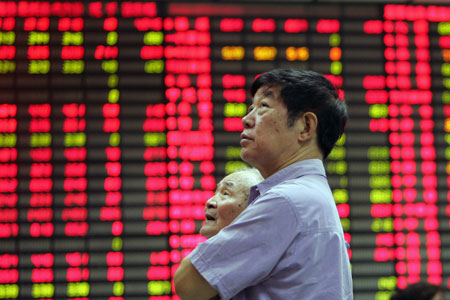
Asian stocks headed for the biggest gain in six weeks and emerging-market currencies strengthened after a three-day rally in commodities. Australian bonds plunged while German yields were below Japan’s for a second day.
The MSCI Asia Pacific Index gained 1.5 percent by 7:10 a.m. in London, as sub-indexes of materials and energy companies surged. Futures on the Euro Stoxx 50 Index and Standard & Poor’s 500 Index were little changed. U.S. oil slipped 1.3 percent after a four-day, 19 percent rebound. Russia’s ruble climbed and China’s yuan jumped. The rate on Japan’s 10-year bond rose three basis points, holding above the yield on similar German notes. Australia’s 10-year yield advanced by the most in 19 months a day after the central bank unexpectedly cut rates.
Global stocks have erased 2015 losses this week as energy companies jumped amid speculation that crude prices may have found a bottom and as Greece softened its stance on a debt writedown. Oil is paring gains before data Wednesday that may show stockpiles in the U.S. rose last week. A gauge of China’s services industry expanded at the weakest pace in six months before similar measures in Europe and the U.S.
“There are still underlying issues out there, but the market is choosing to ignore it right now,” said Matt Riordan, a Sydney-based portfolio manager who helps oversee about $7.5 billion at Paradice Investment Management Pty. “When push comes to shove, it’s all about central banks at the moment. When the oil supply report does come out, it will potentially cause quite a bit of volatility. To try and see where the price is going from here will just be guesswork.”
Japan Surge
Japan’s Topix index rose 1.8 percent, gaining for the first time in three days. Mitsubishi UFJ Financial Group Inc. shares surged 5.2 percent, the most since June 2013 after Japan’s largest bank reported an unexpected 36 percent gain in third- quarter profit. Toyota Motor Corp. added 2.4 percent before reporting earnings that beat estimates.
Australia’s S&P/ASX 200 Index climbed for a 10th straight day, extending its longest rally since August 2013 and heading for its highest close since May 2008. BHP Billiton Ltd., the world’s biggest mining company and Australia’s top oil and gas producer, capped its biggest five-day gain since 2009.
Energy stocks drove gains in the S&P 500 Tuesday, with the benchmark U.S. gauge rising 1.4 percent. Exxon Mobil Corp. and Chevron Corp. jumped at least 3 percent to pace a 1.8 percent advance in the Dow Jones Industrial Average.
Brent Bull
West Texas Intermediate oil dropped to $52.30 a barrel today. The U.S. benchmark contract touched its highest level in a month yesterday. Brent, the benchmark for more than half of the world’s oil, slipped 0.5 percent in London today after finishing Tuesday more than 20 percent above its Jan. 13 settlement, the common definition of a bull market.
U.S. crude inventories probably rose by 3.25 million barrels last week, according to a Bloomberg News survey before the Energy Information Administration report. It will be a “long time” before oil returns to $100, according to Bob Dudley, the chief executive officer of BP Plc, which pledged to cut about $2 billion of planned spending in response to the drop, mirroring similar moves by competitors including Chevron.
Japanese government notes due in a decade retreated for a third day, with the yield climbing to as high as 0.385 percent. The country’s 10-year bond rate rose above that of similar German notes for the first time ever yesterday. Ten-year bunds paid 0.364 percent today.
U.S. Inflation
U.S. Treasuries were little changed after the biggest rout in 14 months on Tuesday. A government report this week will show wages are rebounding, economists estimate. Quickening inflation would remove a hurdle for the Federal Reserve as it considers raising its benchmark interest rate from close to zero. The rate on notes due in a decade rose one basis point to 1.80 percent today.
Australia’s 10-year yield surged as much as 20 basis points to 2.48 percent, the biggest jump since June 2013, erasing yesterday’s drop that followed a surprise interest-rate cut by the country’s central bank.
Malaysia’s currency climbed 2 percent from Jan. 30 to 3.5585 a dollar in Kuala Lumpur as markets reopened after holidays on Monday and Tuesday, according to prices from local banks. The FTSE Bursa Malaysia KLCI Index of shares climbed 1.2 percent and headed for its highest close since November. SapuraKencana Petroleum Bhd., the nation’s biggest oilfield services contractor by market value, surged 7.1 percent, the most this year.
China’s yuan rose the most in a week after the central bank boosted the reference rate to a level that meant the currency had to strengthen in order to stay within its permitted trading band. The People’s Bank of China raised the daily fixing by 0.08 percent to 6.1318 a dollar, which was 2.06 percent stronger than the closing spot rate on Tuesday.
The currency rose 0.19 percent to 6.2462 per dollar, China Foreign Exchange Trade System prices show. The Shanghai Composite Index slipped 1 percent, while a gauge of mainland companies listed in Hong Kong climbed 0.4 percent.
Here we are to serve you with news right now. It does not cost much, but worth your attention.
Choose to support open, independent, quality journalism and subscribe on a monthly basis.
By subscribing to our online newspaper, you can have full digital access to all news, analysis, and much more.
You can also follow AzerNEWS on Twitter @AzerNewsAz or Facebook @AzerNewsNewspaper
Thank you!