
Iran, P5+1 hold expert-level talks in Istanbul
By Sara Rajabova
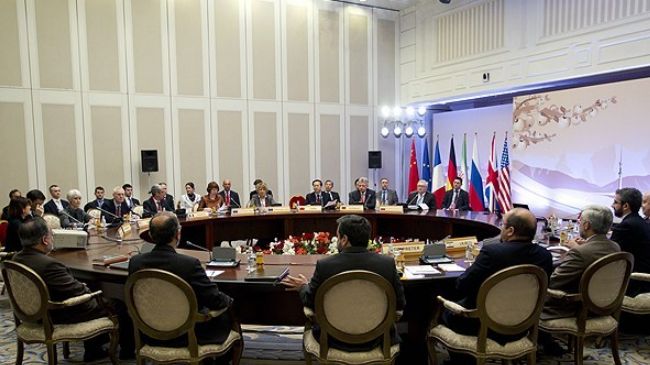
Iran and the five permanent members of the UN Security Council plus Germany have started their second day of expert-level nuclear talks in the Turkish city of Istanbul, Press TV reported.
The two sides will likely issue a statement at the end of their two-day talks in Istanbul on Monday.
Iran and the P5+1 - Britain, China, France, Russia and the United States plus Germany - agreed to hold the expert-level meeting during their previous negotiations in Almaty, Kazakhstan, on February 26-27. The two sides agreed to convene again in the city on April 5-6 to continue talks.
Earlier, EU foreign policy Chief Catherine Ashton called on the P5+1 group of world powers to be "determined and creative" in the upcoming talks with Iran.
Ashton said on Saturday that the P5+1 should take more measures in order to build "communication" and "trust" with Iran.
"Such a move would encourage Iranian officials already beginning to engage in a real discussion to move on their nuclear program," Aston said.
Meanwhile, Iran's Foreign Ministry spokesman Ramin Mehmanparast said that Iran is ready to cooperate with EU and waits for practical changing in the US behavior.
Mehmanparast said that EU has an independent and high capacity and it should not have a manner that put its independency under question.
He said that before the Almaty meeting, P5+1 had offered several proposals that have at least two problems, first, those proposals don't recognize Iranians' rights and second, their proposals were not practicable.
Mehmanparast didn't give detailed information about proposals, but said that in Almaty meeting P5+1 position become closer to Iran's position and this can be a start point for achieving mutual understanding and results.
Also, a senior Iranian diplomat privy to the Iranian negotiating team with the world powers said that the proposals presented by the P5+1 Group during the Almaty talks in late February were not sufficient, Fars news agency reported.
He said the P5+1 withdrew from its previous positions in Almaty but its proposals are not yet desirable for Tehran.
"The G5+1 gave up its previous position which called for a complete halt of (Iran's) enrichment and centrifuges building and included the threat of (imposing) crippling sanctions, but they still need to do more," the diplomat added.
He also noted that while Tehran is pleased with the western side's positive step during the Almaty talks, the proposals are not yet considered as desirable and sufficient by Iran.
Iran and the P5+1 group have held several rounds of talks with the main focus on Iran's nuclear energy program.
After the Almaty talks, both sides expressed hope and optimism about the future of the negotiations. On February 28, Reuters quoted an unnamed Western diplomat as saying that the Almaty talks had been "more constructive and more positive than previous meetings because they were really focusing on the proposal on the table."
In an interview with Austrian broadcaster ORF on March 1, Iran's Foreign Minister Ali Akbar Salehi also described the latest round of the talks as a "milestone" and a "turning point in the negotiations."
The United States, Israel, and some of their allies have repeatedly accused Iran of pursuing non-civilian objectives in its nuclear energy program.
Iran rejects the allegation, arguing that as a committed signatory to the Treaty on the Non-Proliferation of Nuclear Weapons (NPT) and a member of the International Atomic Energy Agency (IAEA), it has the right to use nuclear technology for peaceful purposes.
Here we are to serve you with news right now. It does not cost much, but worth your attention.
Choose to support open, independent, quality journalism and subscribe on a monthly basis.
By subscribing to our online newspaper, you can have full digital access to all news, analysis, and much more.
You can also follow AzerNEWS on Twitter @AzerNewsAz or Facebook @AzerNewsNewspaper
Thank you!