
Iran will not recognize ‘bilateral deal’ on Caspian
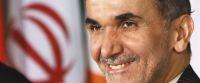
TEHRAN – A senior Iranian official has said Tehran would not recognize a bilateral agreement on the delimitation of the Caspian Sea if it is signed by Turkmenistan and Azerbaijan.
Deputy Foreign Minister Mohammad Mehdi Akhundzadeh was quoted by Russia’s Regnum news agency as saying that Iran’s position of principle was that any future deal on the status of the Caspian should be reached based on a consensus. Otherwise, the country will not accept any such agreement, he said.
Akhundzadeh said that even if such an agreement is signed by Turkmenistan, Azerbaijan and Russia, it will never be recognized by Tehran.
The status of the resource-rich basin has been unresolved for over a decade. Azerbaijan, Russia and Kazakhstan signed an agreement in 2001 on dividing the Caspian’s northern area into national sectors, with Azerbaijan and Russia each possessing 19 percent, while the Central Asian state received 29 percent. However, the other two coastal nations, Iran and Turkmenistan, did not sign the agreement. Iran supports division of the seabed into five equal sectors.
Turkmenistan's First Deputy Prime Minister Baymurad Khojamukhamedov said last week that his country was ready to supply 40 billion cubic meters of gas per year to Europe. He said this volume will remain available for exports after the demand is met in western Turkmenistan and gas is supplied further to Iran. "Therefore, Europe should not be concerned over gas supplies, as the Central Asian state is capable of delivering enough gas to markets there, considering the European countries’ annual consumption levels," Khojamukhamedov said.
Khojamukhamedov noted that Turkmenistan has started building the East-West gas pipeline this year. The conduit has a throughput capacity of 30 billion cubic meters per year, and gas produced from the country’s biggest field, South Yolotan-Osman, will be transported to Western markets through the Caspian.
"Construction of the trans-Caspian pipeline will begin in the near future while taking into account all environmental norms, which will fully comply with Turkmenistan’s policy of diversifying gas supplies. This pipeline will allow to transport Turkmen gas to Azerbaijan and further to Europe."
Regarding the Nabucco pipeline, which will pump Caspian gas to European markets bypassing Russia, Khojamukhamedov said that as early as in 2011 Turkmenistan will need a market to sell its gas. According to him, these volumes, amounting to 5 billion cubic meters per year, are produced by Malaysia’s Petronas company from the Caspian seabed.
The Nabucco gas pipeline project is worth €7.9 billion. Construction of the pipeline is to be launched in 2012, the first supplies - in 2015. Maximal capacity of the pipeline will hit 31 billion cubic meters per year.
Nabucco participants are the Austrian OMV, Hungarian MOL, Bulgarian Bulgargaz, Romanian Transgaz, Turkish Botas and German RWE. Each has an equal 16.67-percent share.
Turkmen President Kurbanguly Berdymukhamedov said at the recent summit of the Caspian littoral states in Baku that new pipelines to transport Caspian oil and gas can be laid strictly upon consent of the countries whose sectors they will cross.
Here we are to serve you with news right now. It does not cost much, but worth your attention.
Choose to support open, independent, quality journalism and subscribe on a monthly basis.
By subscribing to our online newspaper, you can have full digital access to all news, analysis, and much more.
You can also follow AzerNEWS on Twitter @AzerNewsAz or Facebook @AzerNewsNewspaper
Thank you!