
Gazprom bows to demand with gas price cut
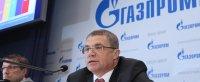
Gazprom has reduced the price of gas in its long-term contracts with European customers by 10 per cent, as it comes under mounting pressure to move away from oil-linked prices, the Financial Times reported.
Alexander Medvedev, Gazprom’s deputy chief executive, said the group had agreed to a price cut but fought off calls from customers to increase the spot price component in its contracts.
High quality global journalism requires investment. Please share this article with others using the link below, do not cut & paste the article. See our Ts&Cs and Copyright Policy for more detail.
"Our partners asked us to revise our prices and ... what we did is correct the parameters of our formula, which led to a relative price reduction of 10 per cent on average," he said.
"The new price will ensure that Russian gas remains competitive."
The concession came in negotiations with some of Gazprom’s biggest customers, including France’s GDF Suez, Wingas of Germany, the Slovakian gas company SPP and Botas, Turkey’s state gas supplier, Mr Medvedev said.
It reflects the seismic changes that have transformed global energy markets in recent years. The boom in shale gas production in the US means cargoes of liquefied natural gas that were destined for the US market have been diverted to Europe, pushing down spot prices on continental trading hubs.
Gazprom’s long-term supply contracts are indexed to the price of oil, but the influx of cheap LNG has emboldened its customers to demand it switch to spot – or hub-based – prices.
European gas prices have remained relatively flat over the past two years as oil prices have soared, piling on the pain for gas importers burdened with oil-linked contracts.
Jonathan Stern, director of gas research at the Oxford Institute for Energy Studies, said hub-based prices had been 25 per cent lower than oil-linked prices on average over the past two years.
Two years ago, Gazprom agreed to allow up to 15 per cent of its sales to be linked to spot prices for three years.
Since then, the pressure from customers has continued. The two German utilities Eon Ruhrgas and RWE, and Polskie Gornictwo Naftowe i Gazownictwo, Poland’s gas monopoly, have taken Gazprom to arbitration after talks on pricing broke down.
Mr Stern said Gazprom was fighting a losing battle to preserve its oil-linked contracts. "Europe is moving to hub-based pricing, and that means Gazprom is as well," he said. To avoid more arbitration, the company "realises it has to narrow the gap between the oil-based price and the hub-based price".
Mr Medvedev said Gazprom’s European sales grew strongly last year, despite the pressure on pricing, rising to 150bn cubic metres in 2011 compared to 138 bcm the previous year – at a time when overall European gas consumption fell by 8 per cent.
Mr Stern said Italy, which took more gas from Russia to make up for a shortfall from Libya, accounted for much of the increase.
Here we are to serve you with news right now. It does not cost much, but worth your attention.
Choose to support open, independent, quality journalism and subscribe on a monthly basis.
By subscribing to our online newspaper, you can have full digital access to all news, analysis, and much more.
You can also follow AzerNEWS on Twitter @AzerNewsAz or Facebook @AzerNewsNewspaper
Thank you!