
Nabucco consortium defends pipeline plan
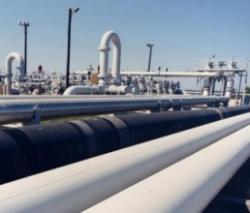
The Nabucco consortium that is building a pipeline bringing natural gas to Europe via Turkey on Wednesday signed agreements with transit countries in what it called a breakthrough for the troubled project, predicting that the first supply contracts would be sealed by the end of the year, The Walla Street Journal reported.
Government ministers and consortium companies at the signing sought to dispel growing skepticism about the pipeline's viability, just weeks after they announced a two-year delay in the pipeline's target date for completion.
Increased gas supplies in Turkmenistan and the prospect of stronger gas demand in Europe, in the wake of Japan's Fukushima nuclear-power-plant disaster, had improved prospects for the project at both ends, the ministers and the consortium said.
"Nabucco has made the final step from a project to reality," Gunther Öttinger, the European Union's energy commissioner, told a hall filled with hundreds of dignitaries at the start of an elaborate ceremony in Kayseri, central Turkey.
The project aims to build a 3,900 kilometer pipeline with the capacity to transport 31 billion cubic meters of gas a year, from Turkey's borders with Iraq and Georgia, to the Baumgarten hub in Vienna. It assumes natural-gas supplies from Azerbaijan, Iraq and Turkmenistan will be available.
Energy ministers from Turkey, Bulgaria, Romania, Hungary and Austria repeatedly stressed the pipeline's strategic importance in diversifying Europe's energy supplies. Russia currently has a monopoly on the supply of gas from the Caspian region to the EU.
"We are gathered here to say: Yes, Nabucco will happen," said Bulgarian Energy Minister Traiko Traykov.
Speaking to reporters before the ceremony, Reinhard Mitschek, managing director of the Nabucco said that after project-support agreements were signed with each of the transit countries Wednesday, he expected to start signing gas supply contracts by the end of the year.
The project-support agreements were needed first to create the necessary legal framework for financing, Mr. Mitschek said. The bilateral agreements include standards government assurances in some 40 areas, including land acquisitions, taxes and imports of construction materials.
Most concerns over Nabucco's success have focused on whether the consortium will be able to find enough gas to fill the pipeline. On Wednesday, the consortium's members sought to dismiss those concerns.
Turkmenistan has a growing interest in supplying Nabucco, because Russia is buying just one fifth of the Turkmen gas it used to, said Stefan Judisch, chief executive of supply and trading at Germany's RWE AG. "They have more gas than they can sell."
An audit of Turkmenistan's South Yolotan field to be delivered to the Turkmen government this monthwill upgrade estimates of the field's size, making it the world's second-largest field after South Pars in the Persian Gulf, the audit company, London-based Gaffney, Cline and Associates, said last month. South Yolotan alone has enough gas to supply all of Europe for 36 years, Mr. Judisch said, adding that a pipeline to take it across the Caspian Sea to feed into Nabucco could be built within three to four years, given political will.
Meanwhile, Mr. Judisch said he learned Tuesday that Uzbekistan had also expressed interest in selling gas through Nabucco. Israel, which is developing new offshore gas fields, also has approached the consortium, Mr. Judisch said.
At the same time, the consortium has revised higher its estimates of how much demand there will be for natural gas in Europe, following the meltdown earlier this year at Japan's Fukushima plant, which triggered a scaling back of plans for nuclear-power production in Europe, especially in Germany. Instead of a projected gap of 150 billion cubic meters a year between supply and demand of gas by 2025, there is now a projected gap of 180 billion cubic meters, said Gerhard Roiss, chief executive of Austria's OMV AG, using company estimates.
But there have long been doubts as to the pipeline's viability and those were fueled last month when the consortium said it was delaying construction by two years. The target to deliver the first gas is to be delivered is now 2017.
Richard Morningstar, the U.S. Secretary of State's special envoy for Eurasian energy, urged Turkey and Azerbaijan to finalize a transit agreement needed for Nabucco to progress. Mr. Öttinger, meanwhile, said Iraq would need help with its own energy market before it could export gas, and that Nabucco needed new partners from the supplier states to join up.
Costs are also expected to rise substantially from the consortium's original €7.9 billion ($11.60 billion) estimate. Mr. Mitschek dismissed those expectations as "speculation," but said a cost review was underway.
Meanwhile, South Stream, a rival Russian pipeline project to bring gas from Central Asia to Europe, has a target launch date of 2015.
Mr. Judisch blamed the Nabucco delay on BP PLC, which runs the consortium working Azerbaijan's Shah Deniz field and which recently made public its concerns about Nabucco's viability.
"Shah Deniz initially said it would announce who gets the gas [from the field] by March 2011. They haven't made this decision, and consequently we delayed our construction because we will not build an empty pipeline," Judisch said.
Here we are to serve you with news right now. It does not cost much, but worth your attention.
Choose to support open, independent, quality journalism and subscribe on a monthly basis.
By subscribing to our online newspaper, you can have full digital access to all news, analysis, and much more.
You can also follow AzerNEWS on Twitter @AzerNewsAz or Facebook @AzerNewsNewspaper
Thank you!