
Belarus says keen on joining Odessa-Brody pipeline
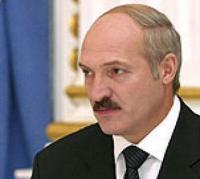
Belarusian President Alexander Lukashenko has ordered to begin
negotiating with Ukraine his country’s joining the Odessa-Brody
pipeline project that aims to carry Caspian oil to European
markets.
Lukashenko said on the national Belarusian TV channel that he had authorized First Deputy Prime Minister Vladimir Semashko to deal with the issue.
The Odessa-Brody pipeline, one of Ukraine's most ambitious projects, was plagued for years by a lack of funding, supplies and political bickering between Russia and the European Union over control of new oil routes. Built in 2002, the pipeline stood idle for two years and was reversed in 2004 to ship Russian oil.
In October 2007 Azerbaijan, Georgia, Poland, Ukraine, and Lithuania signed an agreement to develop a feasibility study for the Baku-Tbilisi-Odessa-Brody-Plock-Gdansk oil pipeline and establish a joint venture to build the pipeline. The Polish-Ukrainian consortium, set up on the basis of Poland’s Sarmatia pipeline consortium, was joined in January 2008 by SOCAR, Georgia’s Oil and Gas Corporation and Lithuania’s Klaipedos Nafta company. The conduit, whose construction is due to be completed in 2011, is expected to transport 40 million tons of Caspian oil per year.*
Here we are to serve you with news right now. It does not cost much, but worth your attention.
Choose to support open, independent, quality journalism and subscribe on a monthly basis.
By subscribing to our online newspaper, you can have full digital access to all news, analysis, and much more.
Subscribe
You can also follow AzerNEWS on Twitter @AzerNewsAz or Facebook @AzerNewsNewspaper
Thank you!