
Botas claims losing money from BTC project
Botas, the state-owned operator of
Baku-Tbilisi-Ceyhan (BTC) pipeline's Turkish segment, has admitted
it was incurring loss in operating the conduit, which pumps
Azerbaijan’s crude to world markets through Georgia and Turkey,
Turkish media reported.
The company planned to make revenues worth at least $300 million per year, but has instead seen losses of $210 million in recent years. Botas officials also said the company would continue losing money unless the standing agreements are amended, reports say.
Botas had reported the problem to the Turkish government and parliament in a confidential report, and the issue was discussed at a closed-door government meeting on December 9. Ankara is reportedly working to alter the provisions of the energy contracts to prevent further financial losses.
The Turkish contractor claims that it has sustained damages of $210m over three years, instead of seeing the expected profit of $900m, due to invariable transit fees. Turkey is receiving 35 cents for transit and 20 cents in taxes per barrel of transported oil, regardless of the crude price. The proceeds are being spent on operating oil pumps in the country’s territory. Moreover, the fact that the maximum volume of oil is not being pumped through the BTC pipeline is also reducing Turkey’s revenues. Further, the weakening of the US dollar is also detrimental to Ankara.
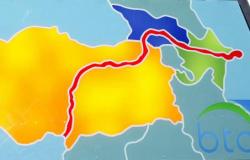
The BTC pipeline was inaugurated by the Azerbaijani, Georgian and Turkish presidents in July 2006. The conduit transports oil produced from Azerbaijan’s Azeri-Chirag-Gunashli (ACG) oil block in the Caspian Sea. The pipeline is operated by the international consortium, BTC Co. *
Here we are to serve you with news right now. It does not cost much, but worth your attention.
Choose to support open, independent, quality journalism and subscribe on a monthly basis.
By subscribing to our online newspaper, you can have full digital access to all news, analysis, and much more.
Subscribe
You can also follow AzerNEWS on Twitter @AzerNewsAz or Facebook @AzerNewsNewspaper
Thank you!