
Novruz Mammadov: Int`l law does not allow forceful self-determination
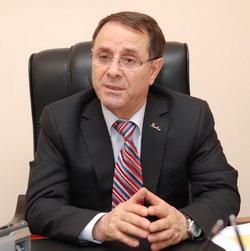
The signing of a declaration by the Azerbaijani, Armenian and Russian presidents in conclusion of the recent round of Moscow-brokered talks on the Upper (Nagorno) Garabagh conflict, the first document signed by Baku and Yerevan since peace talks began in 1994, has sparked heated debate in the world community. AzerNEWS has approached Novruz Mammadov, head of the Azerbaijan President`s Office international relations department, for comments on the gist ongoing discussions.
Q. First of all, how do you assess the declaration?
A. The joint declaration signed in Moscow on Sunday is a start of a new stage in the complicated and challenging negotiating process that has been under way for 14 years. The document covers a wide range of important issues and specifies the tasks facing the conflicting sides. We therefore highly assess this declaration and believe it is a step forward taken toward a settlement to the conflict. At the same time, I deem the activeness of Russia as commendable.
Q. As you pointed out, the declaration covers a number of issues. How would you assess them from Azerbaijan`s standpoint?
A. Attitude toward these issues has been expressed on the level
of both the heads of state and the Foreign Ministries. I would only
like to say that every single issue laid out in the document has
profound content. These issues will be further looked into and
views expressed separately in the future.
The document says that the Armenia-Azerbaijan Upper Garabagh
conflict is a problem that has to be resolved between the two
countries. The declaration envisions contacts between Azerbaijani
and Armenian leaders, and, at the same time, under the presidents`
orders, the work of foreign ministers is to be coordinated with
that of the OSCE Minsk Group (MG), and efforts should be made to
move the peace process forward.
The document reiterates that the conflict must be settled based on
the principles and norms of international law, which indicates that
a solution should be sought by political means.
Q. There is an interesting tendency. When referring to international law, inviolability of borders and territorial integrity are laid out as primary conditions. But the opposing side - Armenia - claims that the principle of self-determination lies at the core of international law. What detail [issue] envisioned by international law is to be taken as a basis in peace talks?
A. Settling the conflict based on the principles and norms of international law means that a given country`s territory cannot be forcefully separated from it, and territorial integrity cannot be violated. Committing aggression against a given country`s independence and sovereignty is unacceptable. International legal norms do not imply that a certain ethnic group within a given country has the right to resolve its fate by force.
Q. Does this document preclude Azerbaijan`s choice to launch war? As you know, speculations on this issue have been circulating of late.
A. First of all, I would like to say that Azerbaijan is committed to peace talks and is interested in continuing negotiations. Azerbaijan aspires to a peaceful solution to the problem and restoration of stability and peace in the region. This fully meets the interests of the country itself and those of regional states. If the norms of international law are enforced, there will be no grounds for the war option. However, if peace talks yield no fruit, Azerbaijan reserves the right to regain its land through military action.
Q. Some, and opposition circles in particular, are trying to present the declaration as a document representing no importance…
A. When stating an opinion about a certain issue, one should think how to back up his assertions. First, everyone should be unequivocally aware that the Moscow declaration is the first document adopted and signed by the presidents since the Minsk Group was established. There is no other document that we can talk about and state our views upon. If the signing of such a document is achieved, it should be only commended.
Q. One of the details that stood out during the Moscow talks was the open support given to the Minsk Group, notwithstanding the fact that prior to this meeting, wide discussions were under way, although not on official level, about changing the format of mediators.
A. So far, the OSCE Minsk Group has been mediating the peace process, and will continue to do so. At the same time, the group should intensify its efforts. Azerbaijan`s position has always been like this, and remains the same. In other words, we are not talking about turning down the Minsk Group`s mediation or altering the format, but merely about the need for increasing the efficiency of the group`s activity.
Q. Azerbaijan was heading to this meeting advocating for a stage-by-stage package of conflict resolution. There has been no change in this view after the Moscow talks, correct?
A. No, there is no change at all, and why should there be any? The conflict must be settled in stages, as this very option is the most appropriate one for reaching a solution. Moreover, there should be international legal guarantees during each stage. The first step is the return of Azerbaijani displaced persons home. Afterwards, substantial steps should be taken to create confidence and trust between the conflicting sides. In doing so, it is possible to move step by step toward a conflict settlement. Furthermore, regional cooperation should be established and relations developed between countries. Azerbaijan sees no problems in this respect. We have always been interested in regional cooperation, and today, the country is its driving force. But for this to happen, a settlement to the Upper Garabagh conflict is the primary condition. Forging any ties with Armenia is out of the question prior to reaching a solution to the conflict. This collaboration is needed not only by Azerbaijan, but also by Armenia and its citizens. By the way, I want to point out it is very reassuring that Armenian leaders have realized after lengthy contemplation that a political settlement to the conflict is an option that has no alternatives.
Q. The issue of stationing peacekeepers in Upper Garabagh has also been a focal point in discussions. What would you say to that end?
A. Issues regarding the stationing of peacekeepers and their purpose were not reflected in the mentioned declaration and this issue is presently not topical. There is actually no need to talk at length about a non-existent issue. However, I would like to state my views in this regard. Azerbaijan has managed to maintain peace between the conflicting sides for 14 years without the aid of any peacekeeping force. I am confident that furthermore, and after the positive completion of peace talks, we will be able to defuse tension and preserve peace.
Q. How about the Upper Garabagh status issue?
A. The issues of the withdrawal [of Armenian armed forces] from
the occupied territories of Azerbaijan and the return of
Azerbaijani displaced persons to their native land are in focus of
discussions. After that, fostering trust between the sides,
establishing ties and other issues will come to the fore, i.e. the
previously-mentioned matters have to be resolved to lay groundwork
for addressing other issues. The status of Upper Garabagh is
currently not a topic of discussion. But President Ilham Aliyev has
repeatedly stated that Azerbaijan is ready to grant Upper Garabagh
the highest status within its borders and territorial
integrity.
Here we are to serve you with news right now. It does not cost much, but worth your attention.
Choose to support open, independent, quality journalism and subscribe on a monthly basis.
By subscribing to our online newspaper, you can have full digital access to all news, analysis, and much more.
You can also follow AzerNEWS on Twitter @AzerNewsAz or Facebook @AzerNewsNewspaper
Thank you!