
21 year after Gubadli occupation
By Sara Rajabova
Twenty one years have passed since the occupation of Azerbaijan's Gubadli region by the Armenian armed forces.
The region with an area of 802 square kilometers was occupied by Armenian military forces on August 31, 1993. About 30,000 people of Gubadli are now living in 94 settlements in the country.
After the occupation of Lachin, Agdam, Fuzuli and Jabrayil regions, Gubadli has been under a siege. Some 283 people heroically died when defending the region and 7 of them were awarded high title of "Azerbaijani National Hero".
In fact, each family suffered from Armenian armed forces' outrage. People who survived now are accommodated in 47 regions of the country.
As a result of the invasion, 21 secondary and 26 incomplete secondary schools, 15 primary schools, 4 hospitals and 33 health centers and 111 cultural and educational establishments, including 60 libraries, 10 cultural center were ruined and occupied.
Gubadli region is also rich and famous for its historical and cultural monuments, such as cave-temple in Gavur valley (4th century), Galali castle monument in Muradkhanli village and Goy (Blue) castle monument in Aliguluushagi village (5th century), Damirchilar tombs and Javanshir tomb in Yazi plane (14th century) and etc. Also, there was a chain fortresses system of second century BC in Gubadli region connecting other regions of Azerbaijan together.
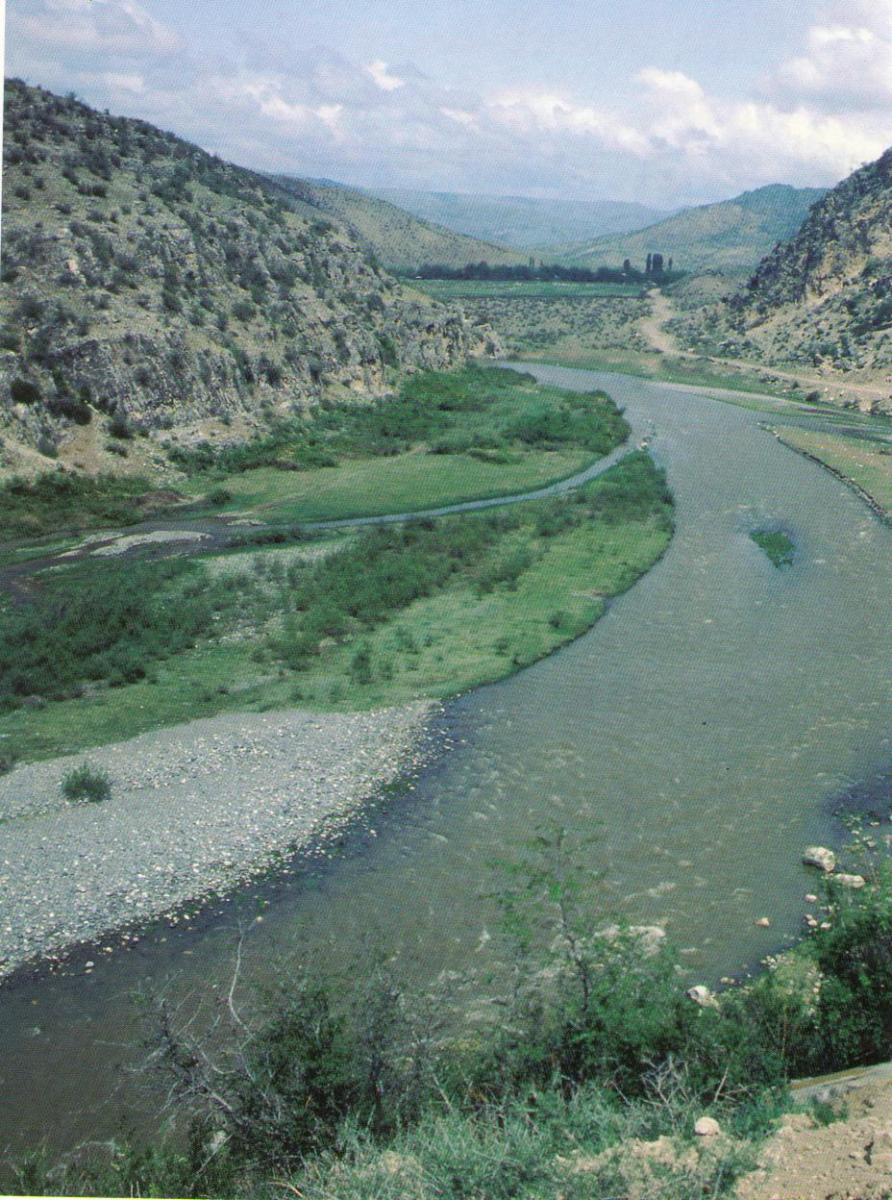
Gubadli region, situated between Mount Zangazur and Nagorno Karabakh mountain range, is distinguished by its favorable geographic location, unique picturesque landscape, rocky and steep mountains, turbulent rivers - Barkushad and Akara and attaching special coloring.
Formerly 13, 2 acres state forest fund consisting of various trees existed in the territory of the region. More than 10 big diameter trees aged between 150-1600 composed of rare species were protected as nature monuments erstwhile. Furthermore, numerous endangered animal and bird species were preserved in the Gubadli State Sanctuary that is located in 1600 m height above sea level. It has also 20 thousand acres area, and possesses abundant flora and fauna.
The following deposits subsisted in some area of Gubadli region include Hajili tuff deposit suitable for building stone which is being exploited, clay deposit with lots of resources, felicitous for construction and situated in Khinalig village, Eyvazli ornamental-non-ferrous metal (agate) deposit and subsoil fresh water deposits situated in the bank of Hakari river.
Forests encompassing vast areas and consisting of precious tree species, subsoil resources with great deal of reserves, water sources full of mineral substances in the area of the region were exploited by the invaders and enigmatic nature corners distinguished with extraordinary flora and fauna were destroyed and quelled by the Armenian invaders.
Armenia is still continuing to plunder Azerbaijan's history after the occupation. The Armenian invaders also depleted the natural resources of the region after the occupation, according to the facts revealed by the Center of the Ecology and Natural Resources Ministry of Azerbaijan.
Armenia and Azerbaijan fought a lengthy war that ended after signing of a precarious ceasefire in 1994. Since then, Armenian armed forces have occupied over 20 percent of Azerbaijan's internationally recognized territory, including Nagorno-Karabakh, defying international calls and UN resolutions.
Peace talks, mediated by Russia, France and the U.S. through the OSCE Minsk Group, are underway on the basis of a peace outline proposed by the Minsk Group co-chairs and dubbed the Madrid Principles. The negotiations have been largely fruitless so far.
Here we are to serve you with news right now. It does not cost much, but worth your attention.
Choose to support open, independent, quality journalism and subscribe on a monthly basis.
By subscribing to our online newspaper, you can have full digital access to all news, analysis, and much more.
You can also follow AzerNEWS on Twitter @AzerNewsAz or Facebook @AzerNewsNewspaper
Thank you!