
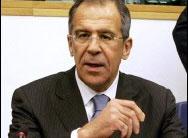
Lavrov rules out Georgian scenario in Garabagh
Russia`s recognition, early last week, of the independence of
Georgia`s rebel regions of Abkhazia and South Ossetia has turned up
regional pressures due to the potential consequences of regional
independence movements flaring elsewhere within former Soviet
republics. The concerns are valid, given that Moscow`s actions
evidently serves to prop up aggressive separatism and further the
attempts to forcefully redraw the borders of states, not only in
the ex-Soviet territories but throughout the world.
Western observers, who harshly criticized Russia`s decision, say the encroachment on Georgia`s territorial integrity may signal a dangerous scenario for other countries that include separatist regions.
The issue came to the fore during British Foreign Secretary David Miliband`s visit to Ukraine last week. Miliband stressed the need for rallying a broad international coalition against Moscow, warning that, otherwise, Russia would eventually seek full control over other conflict zones within the former USSR. Miliband said, after meeting Ukrainian Foreign Minister Vladimir Ogryzko, that the two countries would be at the forefront of such a coalition, which will support Georgia`s territorial integrity and counter Russia`s aggressive actions. The foreign secretary said the outbreak of a fresh Cold War does not benefit anyone, and Russia should alter its policy if it aspires to gain international respect and influence.
"The former Soviet empire should be left behind and negotiated solutions found to the conflicts in post-Soviet territories, including those over Upper (Nagorno) Garabagh [between Azerbaijan and Armenia] and Dnestr in Moldova," Miliband said.
Commenting on the statement, Russian Foreign Minister Sergei Lavrov tried to ease his British counterpart`s concerns. He said the situation in Abkhazia and South Ossetia was the result of the Georgian leaders` unwise policy, while the situation with the Garabagh and Dnestr disputes was completely different.
"The Dnestr and Garabagh conflicts will not unfold in a scenario applied in Abkhazia and South Ossetia, as it is not [Georgian President] Mikheil Saakashvili who is holding talks on settling them. In Moldova and Azerbaijan, there are no leaders who have lost their minds like Saakashvili and are seeking to resolve conflicts by force, while destroying their countries. That`s exactly what the Georgian leadership did in Abkhazia and South Ossetia," Lavrov said.
It appears that Russia is trying to assure Azerbaijan and Moldova, which have been fighting aggressive separatism along with Georgia, that it has no intention to encroach on their territorial integrity and recognize the independence of Upper Garabagh and Dnestr. It is evident, however, that the Russian foreign minister`s statement stems not from efforts to diminish these concerns, but from the "breakup and rule" policy inherent to empires. In other words, Moscow is attempting to distance Azerbaijan and Moldova from Georgia and to counter these countries` joint steps within the regional group, GUAM and, as a whole, the international arena.
In reality, Russia`s plans to split up Georgia are likely to take a toll on other countries suffering from separatist threats. It is not by mere chance that President Medvedev`s decision to recognize Abkhazia and South Ossetia as independent states has been praised by separatists in Upper Garabagh, an Azeri region under Armenian occupation.
"This decision is in full compliance with the principles of international law on self-determination of nations," the separatist regime claimed in a statement. "We hope that forces interested in restoring peace in the region will draw a conclusion from the latest developments in the South Caucasus and take practical steps at finding a solution to conflicts strictly by peaceful means."
Meanwhile, a group of Armenian pro-government and non-governmental organizations demanded that their government recognize the "independence" of Upper Garabagh.
The appeal branded Georgia`s assault on the pro-Russian region of South Ossetia earlier this month as "a military aggression." Based upon that, the Armenian groups maintain that there are no prospects for a negotiated resolution of "frozen" conflicts in the South Caucasus region. They alleged that Tbilisi and Baku, by intentionally prolonging the settlement process, are taking advantage of it to purchase armaments and strengthen their armies.
Georgia launched large-scale military operations on August 8 in South Ossetia to restore its territorial integrity. Moscow retaliated by sending troops to the region, striking at Georgian armed forces with overwhelming force. Georgian forces had gained control over the capital of the breakaway province, Tskhinvali, but had to retreat a day later after a Russian attack. An EU-brokered ceasefire was, subsequently, reached on August 17 to end the brief war. It envisions the return of both countries` troops to the positions they held prior to the outbreak of hostilities. Russia pulled most of its troops from Georgia on August 22 but continued to build up its forces in and around the two separatist regions after withdrawing from deep inside Georgia.
Here we are to serve you with news right now. It does not cost much, but worth your attention.
Choose to support open, independent, quality journalism and subscribe on a monthly basis.
By subscribing to our online newspaper, you can have full digital access to all news, analysis, and much more.
Subscribe
You can also follow AzerNEWS on Twitter @AzerNewsAz or Facebook @AzerNewsNewspaper
Thank you!