
OSCE representative optimistic on Nagorno-Karabakh settlement in 2014
By Sara Rajabova
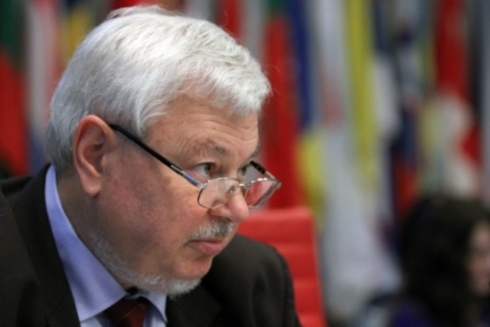
OSCE Chairperson-in-Office Personal Representative voiced optimism over the recent settlement processes of the Nagorno-Karabakh conflict in 2014.
Azerbaijani and Armenian Presidents have made it clear that they intend to build on the momentum of their meeting in Vienna and intensify the peace process, which indeed gives ground for optimism in 2014, Andrzej Kasprzyk told Trend news agency.
Presidents Ilham Aliyev and Serzh Sargsian met in Vienna on November 19.
He said he has heard cautiously optimistic assessments from Armenian and Azerbaijani officials in the last few weeks.
With the permission and assistance of the sides, OSCE teams have visited the line of contact on 17 occasions in 2013, Kasprzyk said.
He said local commanders and their superiors, as well as civilian authorities have raised some serious concerns during these visits.
These concerns include the risk to life posed to civilians and military personnel, both from ceasefire violations and mine-related incidents, and debilitating psychological and economic impacts on those living close to the line of contact, Kasprzyk said.
Ceasefire breaches by Armenian armed forces have kept tension high on the front line.
Frequent ceasefire violations occur almost on a daily basis, causing great hardship for the people living near the frontline, as they are unable to live a normal life and are always under threat.
The numbers of those reported killed or wounded as a result of the ceasefire violations in 2013 are lower than those in 2012, Kasprzyk said.
"However, the ceasefire remains self-regulated: the risks remain as serious as ever, and those living close to the line of contact will continue to suffer hardship until the ceasefire is strengthened," he noted.
Kasprzyk said both the Minsk Group co-chairs and personal representative have mandates to work with the parties to develop confidence-building and other measures.
Presidents Aliyev and Sargsyan have called for additional steps to strengthen the ceasefire and carry out confidence-building measures in all fields in order to create a better atmosphere for the negotiations, he added.
He also said the Presidents affirmed that one of confidence-building measures would be the development of humanitarian contacts between the two sides, expressing their readiness to pursue dialogue between intelligentsia, academic, and public circles.
Kasprzyk noted the OSCE Minsk Group co-chairs and his team have been helping the development of a mechanism for investigating potential incidents.
"Implementation of some confidence-building measures is more complicated than others, of course, but these measures can and - sooner or later - will help reduce tensions on the line of contact and the international border, reduce the risks faced by military personnel and those living close to the front lines, and create a better atmosphere for the negotiations, allowing Presidents Aliyev and Sargsyan to make demonstrable progress towards a lasting political settlement," Kasprzyk said.
The OSCE Minsk Group co-chairs are on a visit to Azerbaijan to discuss the settlement of the Nagorno-Karabakh conflict with Azerbaijani officials.
Azerbaijani President Ilham Aliyev on December 15 received OSCE Minsk group co-chairs Igor Popov of Russia, James Warlick of the United States and Jacques Faure of France, as well as Personal Representative of the OSCE Chairperson-in-Office Kasprzyk.
The sides discussed the current state of and prospects for the talks to settle the Armenia-Azerbaijan Nagorno-Karabakh conflict.
The Nagorno-Karabakh conflict emerged in 1988 when Armenia made territorial claims against Azerbaijan. Since a lengthy war in the early 1990s that displaced over one million Azerbaijanis, Armenian armed forces have occupied over 20 percent of Azerbaijan's internationally recognized territory, including Nagorno-Karabakh and seven adjacent regions.
Long-standing efforts by US, Russian and French mediators have been largely fruitless so far.
The UN Security Council has passed four resolutions on Armenian withdrawal from the Azerbaijani territory, but they have not been enforced to this day.
Here we are to serve you with news right now. It does not cost much, but worth your attention.
Choose to support open, independent, quality journalism and subscribe on a monthly basis.
By subscribing to our online newspaper, you can have full digital access to all news, analysis, and much more.
You can also follow AzerNEWS on Twitter @AzerNewsAz or Facebook @AzerNewsNewspaper
Thank you!