
War in Iran may kindle fighting in Caspian region
By Sara Rajabova, AzerNews Staff Writer
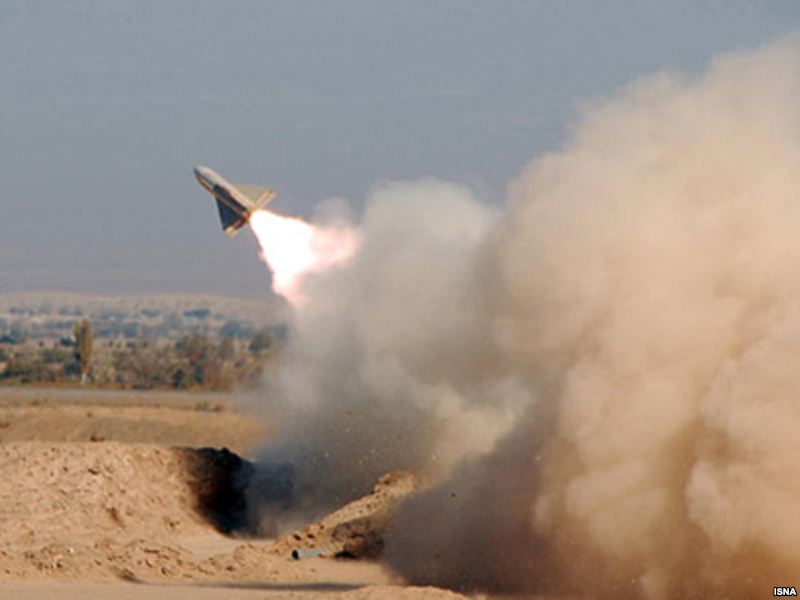
Disputes over the Iranian nuclear program threaten to change the status quo in the region. European countries' sanctions against Tehran and frequent threats of a military attack on Iran by Israel and the U.S. may flare up a war in the Caspian Sea region.
If the U.S. and Israel decide to launch massive air attacks on Iran, Tehran could clearly retaliate. In this case, bordering countries, particularly Azerbaijan, can be a target of some missiles, which it would use in the conflict. This possibility necessitates installation of modern radar systems in the countries bordering on Armenia, Azerbaijan's long-time foe, and Iran, as well as along the coast of the Caspian Sea, which is shared by Iran and Azerbaijan, as well as Kazakhstan, Russia and Turkmenistan.
Meanwhile, Russia, the region's powerhouse, is also expanding its presence in the Caspian Sea. It recently launched the Dagestan ship, designed to implement complex tasks such as patrolling, border security, protection of the marine economic zone, etc. in the Russian sector of the Caspian Sea. The ship is also capable of carrying Caliber-NK cruise missiles, carrying out underwater, surface and air defense, and shooting a target at a distance of 300 kilometers.
This could be considered as a response to Iran's statement about the transfer of submarines from the Persian Gulf to the Caspian Sea and deployment in its waters of missile carriers in accord with the plan of preparing for potential war with Israel.
Indeed, none of the Caspian countries is happy with such statements from Iran, and they are trying to increase their presence in the Caspian Sea.
In turn, this suggests that in the event of an all-out war, not only the Persian Gulf, but also the Caspian Sea can become an arena of war.
Azerbaijan must protect itself from Armenia, with which is faces a long-standing and bitter conflict over Nagorno-Karabakh, and Armenia's military allies until a peace agreement is signed. Certainly, one must not rule out that Iran at any time may subject neighboring Azerbaijan's territory to rocket fire or an air attack under the pretext of its cooperation with other countries.
Just recall that the Russian military, after technical modernization of the military base No. 102 in Armenia, granted large quantities of weapons and ammunition to the Armenian armed forces.
The Armenian defense enterprises were rebuilt, a joint Armenian-Russian air defense command unit and enterprises dealing with capital repair of aircraft and helicopters were opened with the aid of Russian experts in 2010. For instance, armored vehicles were upgraded and a repair plant was established in April 2012 under an agreement between the Charentsavan Machine Tool Factory of Armenia and Russia's Uralvagonzavod.
In general, the Iranian factor is of particular importance for Yerevan in the long-lasting Armenian-Azerbaijani conflict.
Tehran is interested in maintaining the status quo and the military balance in Nagorno-Karabakh. In the event of any military intervention into Iran, protection of critical infrastructure, uncontrolled borders and airspace, which are of great strategic importance for both Armenia and Iran, will be a daunting task for the Armenian government to handle. That undoubtedly doesn't suit Iran.
Another factor frightening both Armenia and Iran in case of potential armed conflict entails obstacles for the transportation of basic civilian goods, such as medicine, fuel and lubricants.
In short, if the current conflict enters into an active phase, a "big war" posing enormous threats will not bypass the entire Caspian region.
Here we are to serve you with news right now. It does not cost much, but worth your attention.
Choose to support open, independent, quality journalism and subscribe on a monthly basis.
By subscribing to our online newspaper, you can have full digital access to all news, analysis, and much more.
You can also follow AzerNEWS on Twitter @AzerNewsAz or Facebook @AzerNewsNewspaper
Thank you!