
Azerbaijan securing Turkey’s backing ahead of Erdogan-Obama talks
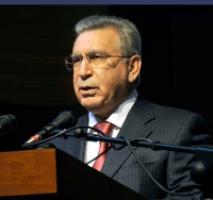
Last week’s visit to Turkey by the Azerbaijani
Presidential Administration chief Ramiz Mehdiyev, an influential
politician who rarely pays foreign visits, which came shortly
before Turkish Prime Minister Recep Tayyip Erdogan’s visit to the
United States, suggests that the relations between Turkey, the
U.S., Armenia and Azerbaijan have reached a critical point,
analysts say. The main issue that perturbs the Azerbaijani
leadership and people is the expectations that during US President
Barack Obama’s meeting with Erdogan in Washington, due April 12-13,
the White House leader is likely to put pressure on the Turkish
prime minister over reopening Turkey’s shut border with Armenia and
ratifying the 2009 accords on normalizing Ankara’s strained
relations with Yerevan, without demanding progress in settling the
Armenia-Azerbaijan conflict over Upper (Nagorno) Garabagh. Ariel
Cohen, a senior researcher at the Washington-based Heritage
Foundation, says the U.S. has already drafted "a roadmap" on
mending Turkish-Armenian ties. This enables a conclusion that the
US administration is heading to the upcoming negotiations with
developed proposals, and the discussions to be held in the U.S.
will affect whether or not President Obama will use the "genocide"
term in his address to Armenians on April 24, the day considered by
Armenians to be the anniversary of the alleged mass killings of
their ancestors in the Ottoman Empire during World War I.
Armenia and Turkey have been at odds for decades. In a bid to end
the long-standing hostility, the two governments signed protocols
in Zurich on October 10, 2009 to establish diplomatic relations and
reopen their borders. However, the documents require parliamentary
approval, and Ankara has ruled out normalization with Yerevan until
the conflict between Armenia, which occupies part of Azerbaijani
territory, and Azerbaijan, Turkey’s ally, has been fairly
resolved.
Of note, Armenian President Serzh Sarkisian has also been invited
to Washington to attend a summit on nuclear security and might meet
there with the Turkish premier, reports say.
According to reliable sources, a trilateral meeting between Obama,
Erdogan and Sarkisian is due in the U.S., which will focus on key
regional issues, including the Upper Garabagh conflict.
Unfortunately, Azerbaijan has not been invited to the summit,
unlike Armenia and Georgia, its South Caucasus neighbors, which
points to existing problems in Baku-Washington relations. This is
an undesirable development, given that the U.S., despite its
distant location, is playing the lead role in the developments
ongoing in the turbulent region, including Garabagh settlement and
Turkish-Armenian reconciliation.
Considering the above-mentioned, prior to Erdogan’s talks in the
U.S., the Azerbaijani government apparently sought -- by means of
the presidential chief-of-staff -- to remind Turkey of the
magnitude of the Garabagh issue in Ankara’s forging its ties with
Yerevan. Baku also tried to enquire about the strategy Ankara will
pursue during the forthcoming negotiations with Washington.
Therefore, one may presume that the Azerbaijani presidential
administration chief was fulfilling the mission of the top-level
special envoy during his visit to Turkey who was vested the two
following tasks: first, to assure the Turkish leaders that the
cool-down in Turkish-Azerbaijani relations has been left behind and
that Baku is ready to coordinate its foreign policy with Ankara;
secondly, to obtain assurances from Ankara that Prime Minister
Erdogan will be defending Baku’s interests in Washington as
vigorously as his country’s cause and that Ankara will act as a
mediator to defuse tension in US-Azerbaijani relations.
Baku 'satisfied' with Ankara’s stance
While in Ankara, the Azerbaijani presidential administration chief
said that Azerbaijan is satisfied with Turkey's long-held position
that it will not ratify the 2009 reconciliation accords unless
Yerevan withdraws its troops from Azerbaijani territories.
"We should not forget that Armenia covets not only Azerbaijani but
also Turkish territory," Mehdiyev told journalists last Friday at
the conclusion of a visit by a delegation of senior Azerbaijani
officials to Turkey.
Azerbaijan and Armenia fought a lengthy war that ended with the
signing of a cease-fire in 1994, but Armenia continues to occupy
Upper Garabagh and seven other Azerbaijani districts in defiance of
international law. Peace talks have been largely fruitless so far
but are still ongoing. Mediators from Russia, France and the United
States are brokering the peace process through the Minsk Group.
"Azerbaijan is developing its military industry and has built a
powerful army. We have the right to liberate our territories from
occupation by any means," Mehdiyev added.
Mehdiyev went on to say that Azerbaijan supports Turkey, a
fraternal country, in countering efforts exerted by the Armenian
lobby and their supporters.
"After the US House of Representatives Foreign Affairs Committee
passed a decision recognizing the so-called Armenian genocide,
President Ilham Aliyev declared that we stand by fraternal Turkey,"
said Mehdiyev.
Mehdiyev noted that there is no force capable of tarnishing the
high-level Azerbaijan-Turkey relations. He also called on some
journalists in the two countries to refrain from writing reports
defying each other's countries, adding "you should mainly focus on
fighting those forces that have hostility towards our countries and
peoples."
Mehdiyev pointed out that his three-day official visit to Turkey
had accomplished much. He said he had a beneficial exchange of
views with Prime Minister Erdogan, Parliament Speaker Mehmet Ali
Sahin and other officials.
According to Ali Hasanov, the head of the Presidential
Administration socio-political department who was part of the
Azerbaijani delegation that met with Erdogan, Azerbaijan hopes the
Garabagh conflict will be high on the agenda of Turkish Prime
Minister Erdogan’s upcoming talks in the United States.
"Our expectations are that the US president, as the leader of one
of the countries represented in the OSCE Minsk Group, would compel
Yerevan to relinquish its unprincipled policy of invasion, press on
it with the aim to bring Armenia to a constructive position,"
Hasanov told journalists Tuesday.
"We hope that a mechanism for influencing the Armenian president
will be determined," he said.
Considering the afore-mentioned conclusions, the Azerbaijani
leadership hopes that the Turkish premier will advocate for
Azerbaijan’s cause as Turkish interests. This, in fact, may prove a
daunting task, given a certain cool-down in Baku-Ankara relations.
But Azerbaijan lacks any other reliable and influential mediator
that could broker its dialog with Washington.
Meanwhile, the Turkish media have elaborated on the strategy that
the country’s delegation will adhere to during the negotiations in
the U.S. Ankara will reportedly offer to postpone parliamentary
approval of the Zurich protocols based upon mutual agreement.
Washington will be told that political tension is high in Turkey
due to the proposed amendments to the country’s Constitution on
reforming the armed forces and the plans on putting these
amendments on a nationwide poll; ratifying the accords signed with
Armenia at this time could further exacerbate the political
situation at home.
Here we are to serve you with news right now. It does not cost much, but worth your attention.
Choose to support open, independent, quality journalism and subscribe on a monthly basis.
By subscribing to our online newspaper, you can have full digital access to all news, analysis, and much more.
You can also follow AzerNEWS on Twitter @AzerNewsAz or Facebook @AzerNewsNewspaper
Thank you!