
OSCE chief says 2010 ‘crucial’ for Garabagh
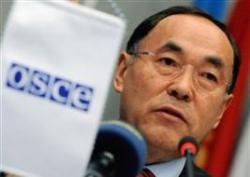
The chairman of the Organization for Security and Cooperation in
Europe (OSCE), which is mediating talks on the Armenia-Azerbaijan
dispute over Upper (Nagorno) Garabagh, has said 2010 will be "a
crucial year" for the conflict settlement in all respects.
The OSCE chief, Kazakh Foreign Minister Kanat Saudabayev said in Baku on Monday that this optimism is inspired by the progress achieved in the peace process at the December 2009 meeting between the Azerbaijani and Armenian foreign ministers in Athens and the Russia-brokered talks between the two countries’ presidents held in the Russian town of Sochi late in January 2010.
"All sides involved should capitalize on existing opportunities," Saudabayev told a news briefing following talks with his Azerbaijani counterpart Elmar Mammadyarov on Monday.
According to the OSCE chairman, his visit to the region chiefly seeks to hold discussions with Baku and Yerevan on all aspects of the peace process and to outline further steps.
Saudabayev said the key priorities for Kazakhstan during its OSCE chairmanship will be settling protracted conflicts, including the Garabagh problem.
The Azerbaijan foreign minister, in turn, said Baku views Astana’s leadership in the European security organization as a positive factor for Garabagh settlement.
On the same day, Saudabayev met with Bayram Safarov, the leader of Upper Garabagh’s Azerbaijani community. Safarov told a news conference after the talks that the meeting was mainly aimed at familiarization.
He noted that the community representatives had aired their grievances to the OSCE chairman over the stalling Garabagh settlement and asked him questions. "The community members expressed to Safarov their aspirations to return to their lands."
Armenia has had territorial claims against Azerbaijan, a South Caucasus neighbor, since the early 1990s. The country’s armed forces have been occupying over 20 percent of Azerbaijan’s internationally-recognized territory, defying international law. Azerbaijani officials have repeatedly warned against Yerevan’s policy of aggression, saying the country’s land will be freed at any cost.
Safarov said a referendum to determine the future status of Upper Garabagh could be held only after Azerbaijanis displaced during the armed conflict with Armenia have returned home.
"Rank-and-file Armenians living in Upper Garabagh want Azerbaijanis to return there. They support co-existence [of the two communities] in the region," he said.
Safarov said plain Armenian residents are not in favor of holding a referendum, given Azerbaijan’s economic development.
The OSCE chairman also had meetings with the leaders of main Azerbaijani political parties, including the governing Yeni (New) Azerbaijan Party (YAP). The meeting centered on the fulfillment of tasks by the OSCE Minsk Group brokering talks on settling the Garabagh conflict and the situation ahead of the 2010 parliamentary elections, according to Igbal Agazada, the chairman of opposition Umid (Hope) Party, which participated in the discussions.*
Here we are to serve you with news right now. It does not cost much, but worth your attention.
Choose to support open, independent, quality journalism and subscribe on a monthly basis.
By subscribing to our online newspaper, you can have full digital access to all news, analysis, and much more.
Subscribe
You can also follow AzerNEWS on Twitter @AzerNewsAz or Facebook @AzerNewsNewspaper
Thank you!