
Garabagh settlement not deadlocked: Russia’s Lavrov
Settlement of the Armenia-Azerbaijan conflict over Upper (Nagorno)
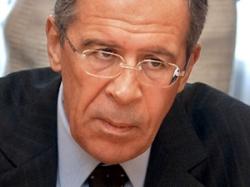
Garabagh is not deadlocked, Russian Foreign Minister Sergei Lavrov
said Thursday during a visit to Armenia.
He told a news conference with his Armenian counterpart Eduard Nalbandian that Moscow would continue working to resolve the long-standing dispute and provide strong support for seeking options to reach agreement between Armenia and Azerbaijan.
Lavrov went on to say that the sooner Turkey and Armenia normalize their relations, the better it will be for the region. He said Russia was ready to support the process by implementing infrastructure projects, in particular, those in the field of railway transport.
The Russian minister said the principles that the mediating OSCE Minsk Group’s co-chairs are trying to foster agreement upon will be the basis for a peace accord reflecting legal obligations of the conflicting sides. He said further: "We are of the opinion that the position of Garabagh’s population cannot be overlooked in drafting such an agreement. It is necessary to coordinate and specify in which form this will be done."
Nalbandian, for his part, said that if positive dynamic in the peace process seen in 2009 is maintained, Armenia and Azerbaijan "may approach a settlement to the Upper Garabagh conflict."
The Armenian minister emphasized that there is no alternative to a negotiated solution. He added that the two countries’ presidents are due to hold their next meeting soon.
The Russian foreign minister headed to Armenia after a visit to Moscow by Turkish Prime Minister Recep Tayyip Erdogan, but he insisted that the two visits are unrelated.
"My visit to Yerevan had been agreed a month and a half beforehand, while the Turkish prime minister stated his willingness to visit Moscow just a few days ahead of time. Based on this logic, my visit could also be linked to another development ongoing in any given part of the world," Lavrov said.
Asked whether or not Russia’s energy cooperation with Turkey "could be more important than the right of the people of Upper Garabagh to self-determination", Lavrov replied: "The answer is simple: it can’t."
Azerbaijan and Armenia fought a lengthy war that ended with the signing of a cease-fire in 1994, but Armenia continues to occupy Upper Garabagh and seven other Azerbaijani districts in defiance of international law. Despite numerous rounds of OSCE-brokered negotiations, peace talks have been fruitless so far and refugees remain stranded. Baku says the occupied districts must be freed and Azerbaijani refugees displaced during the armed conflict in the early 1990s returned home, and only after that could the status of Upper Garabagh be determined within the territorial integrity of Azerbaijan.*
Here we are to serve you with news right now. It does not cost much, but worth your attention.
Choose to support open, independent, quality journalism and subscribe on a monthly basis.
By subscribing to our online newspaper, you can have full digital access to all news, analysis, and much more.
Subscribe
You can also follow AzerNEWS on Twitter @AzerNewsAz or Facebook @AzerNewsNewspaper
Thank you!