
Armenia rejects Turkish demand on rebel region
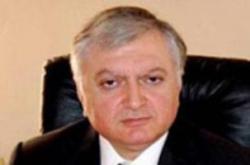
Armenia's foreign minister has reportedly rejected Turkish calls
for concessions in the Armenia-Azerbaijan Upper (Nagorno) Garabagh
conflict in exchange for the historic rapprochement between Yerevan
and Ankara.
Speaking to Reuters late on Friday, Edward Nalbandian said negotiations between Turkey and Armenia were over and both sides were obliged to move quickly to establish diplomatic relations and open their border under accords signed this month.
Turkish leaders say they want to see progress in negotiations between Armenia and Turkish ally Azerbaijan over Garabagh before parliament in Ankara ratifies the accords, a link Armenia rejects.
"Why did we sign two protocols if we are not going to ratify and implement them?" Nalbandian said in an interview in the Armenian capital, Yerevan.
"I think the whole international community is waiting for quick ratification and implementation and respect for the agreements which are in the protocols," he said, speaking in English.
"If one of the sides will delay and create some obstacles in the way of ratification and implementation, I think it could bear all the responsibility for the negative consequences."
Turkey closed its border with Armenia in 1993 in solidarity with fellow Muslim Azerbaijan in its war with Armenian-backed ethnic Armenians in the mountain region of Upper Garabagh.
Former Soviet Armenia and NATO-member Turkey have no diplomatic ties, but a relationship haunted by the alleged World War One killing of Armenians by Ottoman Turks. But after a year of negotiations, Armenia and Turkey this month signed accords looking to bury a century of hostility.
The deal has encountered opposition in both countries, but full rapprochement and an open border carries huge significance for Turkey's clout as a regional power, for its bid to join the European Union and for landlocked Armenia's crisis-hit economy, Reuters said.
Following Azerbaijan’s criticism of the agreement, Ankara unequivocally stated it would not take any steps contradicting its ally’s interests.
Diplomats and analysts say Turkey, before it ratifies the accords, is seeking at least a small sign of progress in negotiations between Armenia and Azerbaijan over Upper Garabagh, where a fragile ceasefire has held since 1994 but a peace deal has never been agreed.
Such a link is political dynamite for Armenians. The domestic opposition and Armenia's huge and influential diaspora claim Turkey must first recognize the alleged last century's killings as genocide before ties can be restored.
Nalbandian maintained that the Armenian-Turkish thaw and Garabagh negotiations were "two separate processes."
"This is not only the Armenian approach but the approach of the international community," he said, adding that negotiations between Turkey and Armenia were over. "Negotiations were finalised at the beginning of February."
Turkey rejects the "genocide" allegations, saying many people died on both sides of the conflict.
Mediators from the United States, Russia and France say they are making progress towards a peace deal on Nagorno-Karabakh in talks between Armenian President Serzh Sarksyan and Azerbaijan's Ilham Aliyev.
But Nalbandian played down talk of an imminent breakthrough.
There is a "positive dynamic", he said. "But to say that tomorrow or in one month's time or in a very short period of time we will come to the agreement, I don't think this is very serious."*
Here we are to serve you with news right now. It does not cost much, but worth your attention.
Choose to support open, independent, quality journalism and subscribe on a monthly basis.
By subscribing to our online newspaper, you can have full digital access to all news, analysis, and much more.
Subscribe
You can also follow AzerNEWS on Twitter @AzerNewsAz or Facebook @AzerNewsNewspaper
Thank you!