
Former US official calls on Obama to mull Caucasus conflicts in Moscow
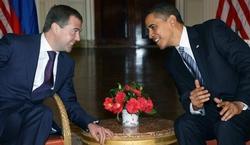
Conflicts flaring in the South Caucasus region
should be thoroughly discussed during US President Barack Obama`s
visit to Moscow early in July, a former top State Department
official has said.
David Kramer, a representative of the German Marshall Fund, who acted as US assistant secretary of state in the last years of the Bush administration, said during a recent debate on the issue at the Hudson Institute that, during his talks with Russian leaders, President Obama should not leave out the Armenia-Azerbaijan Upper (Nagorno) Garabagh conflict and other regional disputes. He emphasized the need for joint efforts by Washington and Moscow to help settle these conflicts.
Political experts are speculating about the potential impact on regional developments of Obama`s visit to Moscow on July 6. Influential US pundits believe the visit could soften the long-strained relations between the United States and Russia.
Kramer noted that Moscow has failed to concede to Washington, ahead of Obama`s visit, on pivotal issues concerning Iran, Georgia or disarmament, which casts a shadow on American efforts on all three matters.
Kramer was in charge of US policy, primarily in Eurasia, for the State Department prior to early 2009. Before that, he served as US Assistant Secretary of State for Democracy, Human Rights and Labor.
Kramer said the new US administration bases its regional policy chiefly on boosting its cooperation with Russia. "However, we should not forget that this country is violating such universal rights of its neighbors as territorial integrity and security, and strangling democracy and silencing the media and rights champions at home."
The former State Department official said Russia is testing European leaders over energy supplies, openly cooperating with Iran on nuclear energy, and considers any attempts by the U.S. to propose initiatives on regional security as a threat to its sphere of influence. Though various proposals have been made for US-Russian cooperation, including the joint use of radar in Azerbaijan for missile defense, discrepancies stand in the way of moving forward in this direction.
Nonetheless, Kramer welcomed President Obama`s intent to delve to the bottom of the countries` differences by visiting Moscow. Kramer further said Obama`s visit would allow the two countries` leaders to make mutual proposals and clarify their positions.
Here we are to serve you with news right now. It does not cost much, but worth your attention.
Choose to support open, independent, quality journalism and subscribe on a monthly basis.
By subscribing to our online newspaper, you can have full digital access to all news, analysis, and much more.
Subscribe
You can also follow AzerNEWS on Twitter @AzerNewsAz or Facebook @AzerNewsNewspaper
Thank you!