
Caspian nations closer to status deal - Russian official
Caspian littoral states - Azerbaijan, Kazakhstan,
Turkmenistan, Iran and Russia - have drawn closer to reaching
agreement on a document defining the legal status of the basin, a
Russian official has said following another round of talks on the
issue that has long remained unresolved.
Alexander Golovin, Russia`s special envoy for CIS states and the delimitation of borders, made the announcement at a news conference early last week while reviewing the outcomes of discussions held by the five coastal nations` taskforces in Moscow.
According to Golovin, the parties have agreed to 70-80 per cent of the wording of the convention regarding the Caspian status. However, certain differences among the coastal states remain outstanding.
"This pertains to the division of the seabed, and the issue of delimitation of the basin remains open," the Russian diplomat said.
Golovin expressed hope that forthcoming consultations in Baku on the safety of the Caspian Sea and the third summit of the littoral states` leaders would be prolific.
Prior to the break-up of the Soviet Union in 1991, the Caspian status determination was based upon agreements signed by the USSR government and Iran during the period of 1921-1940. However, since those earlier legal documents did not address the division of the prospective oil and gas fields among the coastal nations, the need emerged to develop a new framework on the status of the resources on the basis of a consensus.
Azerbaijan, Russia and Kazakhstan signed an agreement in 2001 on the delineation of the Caspian`s northern area into national sectors, with Azerbaijan and Russia each possessing 19%, while the Central Asian state received 29%. However, the positions of the other two coastal nations - Iran and Turkmenistan - do not allow reaching general agreement on the issue. Nonetheless, Turkmenistan`s stance has been seen to be constructive since the latest change of power in the country.
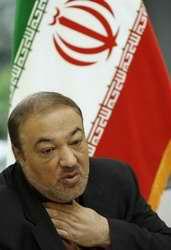
Mehdi Safari, the Iranian President`s special envoy on Caspian status issues, told the press conference that Tehran`s position on the matter remains unchanged. Iran supports equal division, meaning that each coastal state receives 20% of the seabed.
He emphasized that each side is advocating for its own national interests in the course of talks.
"We intend to bring our positions closer by means of negotiations. Ways of dividing the Caspian Sea are being discussed with our Turkmen and Azerbaijani partners," Safari said.
In general, the head of the Iranian delegation spoke positively about the Moscow talks. While admitting that certain differences remain among the parties, and narrowing them was a lengthy process, Safari voiced hope that this goal would be reached at the next meeting of the littoral states` working groups to be held in Ashgabat.
Here we are to serve you with news right now. It does not cost much, but worth your attention.
Choose to support open, independent, quality journalism and subscribe on a monthly basis.
By subscribing to our online newspaper, you can have full digital access to all news, analysis, and much more.
Subscribe
You can also follow AzerNEWS on Twitter @AzerNewsAz or Facebook @AzerNewsNewspaper
Thank you!