
Int’l conference on Nagorno-Karabakh conflict due in Baku
By Rashid Shirinov
An international scientific-practical conference "The Nagorno-Karabakh conflict: origins, peacekeeping and the role of civil society" will be held in Baku on March 14.
The issues of history, expansion of international dialogue, peacekeeping initiatives, as well as the Armenian-Azerbaijani dialogue to find the ways to resolve the Nagorno-Karabakh conflict will be the topics of the upcoming conference. The event is organized by the Caucasus History Center.
Director of the Center, Rizvan Huseynov, told Day.az on March 9 that the conference will bring together scientists, politicians and public figures from Azerbaijan, Georgia, Russia, Turkey, Kazakhstan, Canada, Ukraine, Sweden, Uzbekistan, as well as Armenian figures and researchers. In total, the event will involve more than 40 scientists and politicians from different countries, Huseynov said.
The conference will also include representatives of the media, state structures of Azerbaijan, diplomatic missions and international organizations accredited in Baku.
Huseynov said that the event will be held with the aim of expanding the Baku Peace Platform and attracting the political and scientific community of different countries to it.
The Armenia-Azerbaijan Peace Platform was founded on December 6 in Baku 2016 by a group of Azerbaijani and Armenian public figures and peacekeepers. It was created to bring together representatives of civil society of the two countries for creating dialogue between Azerbaijan and Armenia, the sides to the Nagorno-Karabakh conflict. However, this initiative was negatively perceived by the Armenian government, which started persecution of those Armenians who joined the Platform.
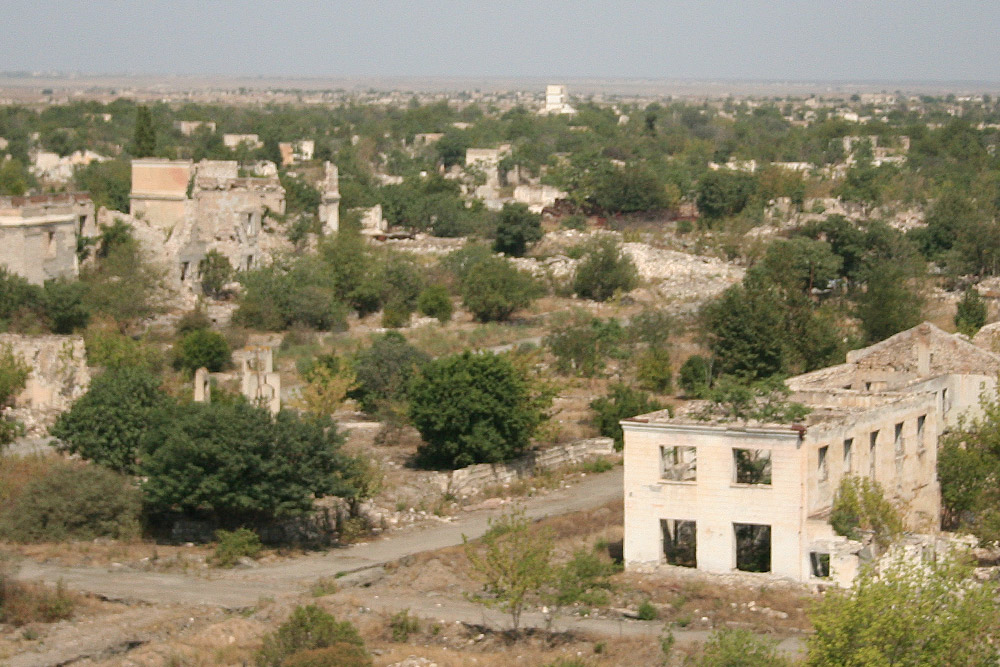
The conflict between the two South Caucasus countries began in 1988 when Armenia made territorial claims against Azerbaijan. As a result of the ensuing war, in 1992 Armenian armed forces occupied 20 percent of Azerbaijan, including the Nagorno-Karabakh region and seven surrounding districts. More than 20,000 Azerbaijanis were killed and over 1 million were displaced as a result of the large-scale hostilities. The 1994 ceasefire agreement was followed by peace negotiations.
Armenia still controls fifth part of Azerbaijan's territory and rejects implementing four UN Security Council resolutions on withdrawal of its armed forces from the Nagorno-Karabakh and surrounding districts.
---
Rashid Shirinov is AzerNews’ staff journalist, follow him on Twitter: @RashidShirinov
Follow us on Twitter @AzerNewsAz
Here we are to serve you with news right now. It does not cost much, but worth your attention.
Choose to support open, independent, quality journalism and subscribe on a monthly basis.
By subscribing to our online newspaper, you can have full digital access to all news, analysis, and much more.
You can also follow AzerNEWS on Twitter @AzerNewsAz or Facebook @AzerNewsNewspaper
Thank you!