
Azeri budget revenues to drop after 15 years of growth
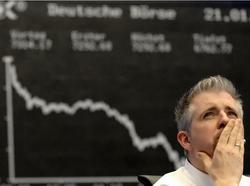
The revenues and expenses of Azerbaijan’s state
budget are expected to decrease in 2010 for the first time in the
past 15 years.
Revenues are predicted at 10.015 billion manats ($12.5 billion), while expenses - at the level of 11.264bn manats ($14.08bn), down 8.8% and 16.8% respectively in comparison with 2009, Finance Minister Samir Sharifov said during discussions on the 2010 draft budget in parliamentary committees on Tuesday.
Sharifov said the reduction in state revenues was due to the government’s conservative approach to spending in light of the lingering world economic crisis. Given that the global economy is still affected by the slowdown, the price of oil has been set at $45 a barrel in the 2010 budget.
The minister said another reason for the reduction was the decrease in some tax rates and a sharp drop in inflationary levels anticipated next year compared to 2008.
According to him, reducing a number of tax rates will support local businessmen working in the conditions of a crisis and help to maintain jobs.
Sharifov said, further, that budget deficit of 1.249bn manats ($1.561bn), or 3.9% of the country’s Gross Domestic Product (GDP), is expected in 2010. To fill the gap, the government will use internal and external borrowing as well as proceeds from the privatization of property and services provided by budget-funded organizations.
Sharifov said the 2010 budget will be socially and investment-oriented. The funds will be spent to protect the achievements made by the fast-growing Azerbaijani economy, boost social security for low-income citizens, bolster the country’s defense capabilities and ensure food safety in the domestic market.
The minister noted that strengthening Azerbaijan’s military power will be one of the top priorities for the government next year. As part of the ongoing policy aiming to improve logistics of the military, 10.7% of the budgetary expenses in 2010 is made up of defense spending, or 0.7% above the 2009 level.
Parliament member Vahid Ahmadov, who attended the discussions, suggested stepping up oversight over budgetary spending, saying a special law should be adopted for the purpose.
Nazim Mammadov, another lawmaker, believes a very cautious approach was exercised in setting the oil price in the state budget. He also opined that the projected 3% inflation is unlikely due to a recovery of the world economy expected in 2010.
The draft budget will be put on general discussion in the legislature next week.*
Here we are to serve you with news right now. It does not cost much, but worth your attention.
Choose to support open, independent, quality journalism and subscribe on a monthly basis.
By subscribing to our online newspaper, you can have full digital access to all news, analysis, and much more.
Subscribe
You can also follow AzerNEWS on Twitter @AzerNewsAz or Facebook @AzerNewsNewspaper
Thank you!