
EU investors spooked by rout seek ‘Asia Beyond China’ in Asean
By Bloomberg
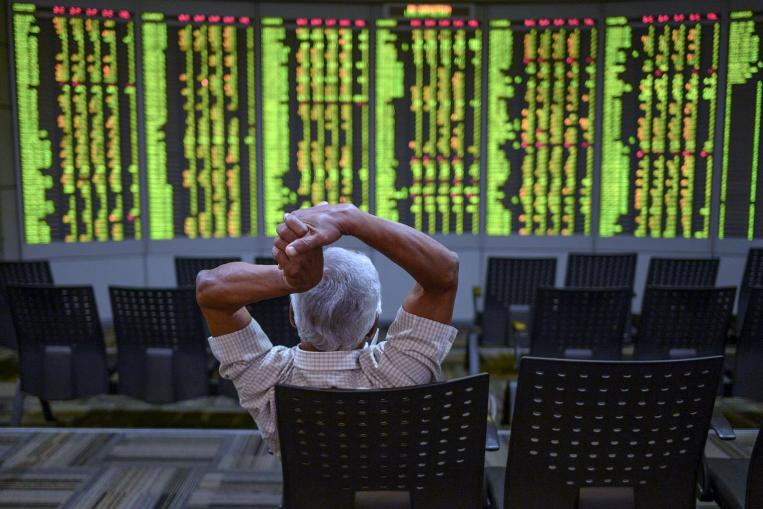
European investors are paying renewed attention to Southeast Asia as the Greek crisis and China’s stock market rout encourage companies to look for cheaper and more stable markets, said Michael Pulch, the European Union’s ambassador to Singapore.
“There’s now a moment where companies realize there’s Asia beyond China,” Pulch said in an interview on Thursday.
The EU is the largest investor in Southeast Asia and the region’s biggest trading partner after China, according to the European Commission’s annual trade and investment publication released last week. Trade flows will increase further under a free-trade agreement that the EU expects to sign with the 10- member Association of Southeast Asian Nations in the “medium term,” Pulch said.
Growth in global trade has slowed in the past few years after outpacing world expansion for decades, according to the International Monetary Fund. A commodities slump, China’s slowdown and uneven recoveries in the U.S. and Europe have damped demand for exports that power many Asian economies.
The fate of Greece’s 313 billion-euro ($339 billion) debt load -- most owed to other European governments -- has emerged as the key question in returning the country to financial health. A Greek exit from the euro area would cost creditors almost 100 billion euros more than keeping the country in the currency union, according to Alberto Gallo, head of macro credit research at Royal Bank of Scotland Group Plc.
Sluggish Economy
German Chancellor Angela Merkel held out the prospect of limited debt relief as Greece prepares to reopen its banks three weeks after they were shut. Merkel told German broadcaster ARD that she’s prepared to discuss the matter once Greece successfully completes the first round of a new bailout. She ruled out any haircut on Greek debt.
“Problems at home in Europe and the European economy have been sluggish at best for years, so if you want to grow your business somewhere else in the world, Asean has a great story to tell,” Chris Humphrey, executive director at the EU-Asean Business Council, said in an interview on Thursday.
China’s economy expanded 7 percent in the second quarter, unchanged from the first quarter and beating economists’ estimates for a 6.8 percent pace. While growth was faster than expected, it was underpinned by an expansion of the financial sector that may be unsustainable with stocks faltering.
The nation’s stocks plunged in the past month, with the benchmark Shanghai Composite Index losing as much as 32 percent since the recent peak on June 12.
Accelerated Move
“What’s going on right now could accelerate the effect of this move” to Southeast Asia, said Leong Wai Ho, senior regional economist at Barclays Bank Plc. “This shift is not only precipitated just by low cost or slowing growth in China, it’s also for longer-term opportunity, longer-term positioning.”
Southeast Asia may not be immune to China or Greece. Singapore, the EU’s biggest investment destination, last week said its economy contracted more than analysts predicted in the second quarter, underscoring the weakening outlook for the region amid sluggish global growth.
That hasn’t stopped the EU from seeking further cooperation with Asean governments. Pulch identified maritime transport and aviation lines as areas where the region could expand, starting with a so-called open skies agreement to increase flight connections, he said.
“As China climbs the value chain, low-cost industries will move south towards the Mekong delta and the rest of Southeast Asia,” said Daniel Wilson, an economist at Australia & New Zealand Banking Group Ltd.
Here we are to serve you with news right now. It does not cost much, but worth your attention.
Choose to support open, independent, quality journalism and subscribe on a monthly basis.
By subscribing to our online newspaper, you can have full digital access to all news, analysis, and much more.
You can also follow AzerNEWS on Twitter @AzerNewsAz or Facebook @AzerNewsNewspaper
Thank you!