
Merkel can’t escape Greece’s geopolitical pull on Balkan trip
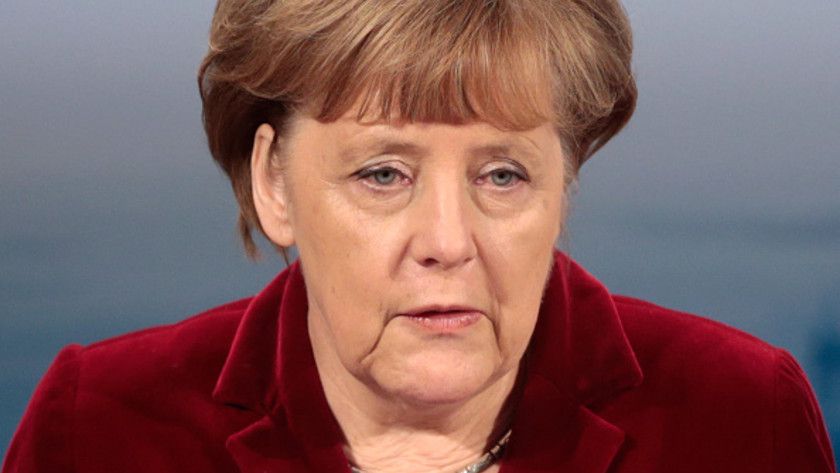
By Bloomberg
As a student in East Germany, Angela Merkel would travel by train south through the Balkans and gaze over to Greece, wondering when she might be able to visit.
Now she can’t escape its pull.
As the German chancellor begins a three-country tour of the western Balkans on Wednesday, she’ll never be far from the spillover effects of the five-year-long Greek crisis. From regional economic malaise to creeping Russian influence and a growing refugee crisis, all can be traced back to Greece.
The fact isn’t lost on Merkel, who knows well that further political instability in Greece would risk more turbulence across the Balkans, according to a government official with knowledge of her strategy. That realization of Greece’s broader relevance to regional security makes her more willing to reach a deal to bind it to the euro, the official said, asking not to be named because those negotiations are private.
“Stability in the Balkans definitely feeds into Merkel’s more general worries about the potential geopolitical consequences of a Grexit,” said Famke Krumbmueller, a London- based analyst at political risk consultancy Eurasia Group. “Having a failed state on the border of Europe could spill over into the already unstable Balkans.”
Merkel will travel first to Albania, then to Serbia, where she’ll overnight in Belgrade, before heading on to Bosnia and Herzegovina, where a bloody civil war ended only 20 years ago.
Foreign Policy
Building on a visit to Croatia in July last year, the tour is a demonstration of her engagement with a region that has become a testing ground for Germany’s ambitions for a more active foreign policy.
By attempting to anchor the Balkans in a western orbit, the chancellor is sending a signal to President Vladimir Putin, who has made his own play to reassert Russian influence in what were communist allies until the fall of the Berlin Wall.
Putin hosted Greek Prime Minister Alexis Tsipras for talks in St. Petersburg last month, raising concern in some European capitals about the orientation of a country that was kept out of the Soviet grip by Allied intervention after World War II.
“Greece is an anchor of stability in the Balkans,” former German Foreign Minister Joschka Fischer said in an interview with the weekly Die Zeit. “If it falls, it could have wide- ranging consequences for the entire region -- and that’s been noted in Moscow.”
Remembering Srebrenica
Greek banks have the potential to amplify the crisis across the Balkans after using euro adoption to expand abroad. At particular risk are Romania and Bulgaria, where Greek lenders control more than a quarter of banking assets, while units also operate in Serbia and Macedonia.
It’s a part of Europe Merkel knows from her trips south to the Bulgarian-Greek border -- as related in a 2012 speech -- and which was later convulsed by the Balkan wars of the 1990s that splintered the constituent parts of Yugoslavia into seven states. (Her trip winds up in Sarajevo, where she’ll meet with representatives of the Mothers of Srebrenica group whose family members died in the July 1995 massacre of the same name.)
Two of those states, Slovenia and Croatia, are now members of the European Union and Merkel is keen to show that Germany cares about the rest of the western Balkans, and regards them as potential EU members, the official said.
There’s a lot of catching up to do. Croatia, the EU’s newest member after joining in 2013, has an economy smaller than that of Luxembourg despite having almost nine times the population. Albania generated a gross domestic product of 10 billion euros ($11 billion) last year, a fifth of Croatia’s.
Refugee Corridor
Here too, the ripples of Greece’s economic woes are being felt, as a source of employment for many across the western Balkans evaporates. In addition, the region has become a main corridor for refugees fleeing across the eastern Mediterranean, many of them heading for Germany. If Greece opens its doors, that flow could become unmanageable, the German official said.
For all those reasons, the Greek crisis is being watched very closely in Serbia, according to Jan Techau, the director for the Carnegie Endowment for International Peace. Any rupture to Greece’s membership in the euro or the EU might cause Serbia to reconsider its pro-western course, he said.
“Merkel will consider all these geopolitical factors very carefully in her handling of the Greek crisis,” Techau said in an interview from Brussels. “The timing of her Balkan trip is perfect.”
Here we are to serve you with news right now. It does not cost much, but worth your attention.
Choose to support open, independent, quality journalism and subscribe on a monthly basis.
By subscribing to our online newspaper, you can have full digital access to all news, analysis, and much more.
You can also follow AzerNEWS on Twitter @AzerNewsAz or Facebook @AzerNewsNewspaper
Thank you!