
Samsung profit misses estimates on Galaxy S6 Phone struggles
By Bloomberg
Samsung Electronics Co. profit for the second quarter missed analysts’ estimates as new Galaxy S6 smartphones failed to lure enough customers from Apple Inc.’s iPhones and cheaper devices made in China.
Operating income fell 4 percent to 6.9 trillion won ($6.1 billion) in the three months ended June, the company said in a filing Tuesday. That compares with the 7.2 trillion won average of 33 analyst estimates compiled by Bloomberg.
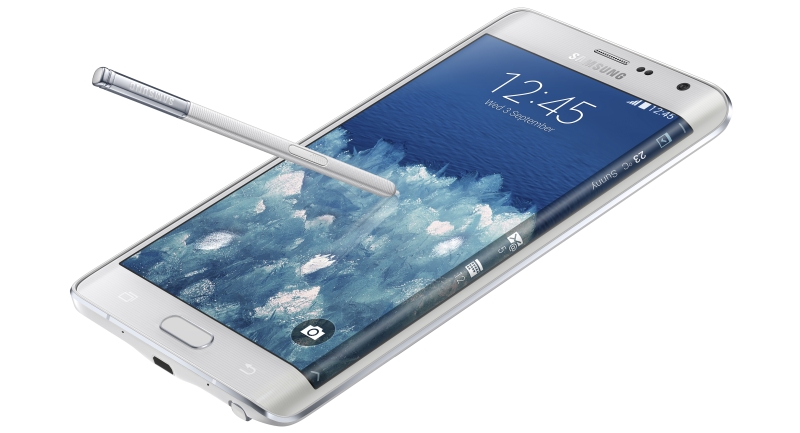
Samsung’s seventh straight quarterly profit drop comes as Galaxy S6 phone sales fell short of expectations it would attract users away from the iPhone 6. Production constraints for the S6 model with a curved display have led to shortages, trimming shipments of the device and leaving the company to rely more on its chip unit for earnings.
“S6 didn’t sell as well as the market had hoped for, partly because of continued outperforming of iPhones combined with the supply constraint,” said Greg Roh, a Seoul-based analyst at HMC Investment Securities Co. “Sales sharply missed the market expectation, which implies that overall technology industry demand for smartphones, TVs and PCs is weakening.”
Sales were 48 trillion won in the quarter, the company said today. That compares with the 53 trillion-won average of 37 analyst estimates.
The company’s shares rose 0.8 percent to close at 1,240,000 won in Seoul. The stock has fallen 6.6 percent this year compared with a 6.5 percent gain in the benchmark Kospi index.
Lowered Estimates
Samsung didn’t provide net income or details of division earnings today. Audited results are scheduled for later this month.
Operating income at the mobile unit probably fell about 28 percent to 3.2 trillion won on sales of 28.7 trillion won, according to the median estimate of six analysts surveyed by Bloomberg News.
Samsung Securities Co. last month lowered its shipment estimate for S6 models to 45 million units this year from 50 million previously. Total smartphone shipments probably were about 78 million units in the second quarter, down from 85 million units sold in the previous quarter, it said in a June 24 report.
“The initial response to S6 smartphones wasn’t all that bad, but Samsung failed to fully address the market demand,” analysts at KB Investment & Securities Co. said in a July 3 report. Samsung underestimated demand for the Edge model, resulting in a “marketing misstep,” he said.
Samsung has predicted record sales of the Galaxy S6.
Processor Chips
The company’s display division is said to have started production at a third factory for curved smartphone screens about two months earlier than planned to meet demand. Adding the production line, known as A3, enables Samsung to more than double monthly output to 5 million screens from about 2 million previously.
Earnings from the semiconductor unit, which supplies memory and processor chips to Apple and other device makers, were about 3.2 trillion won in the second quarter on sales of 11.2 trillion won, according to the analyst survey.
Samsung uses its own processors in the S6, switching from those provided by Qualcomm Inc., and helping the logic chip business end losses.
“Mobile, home appliance and display businesses will remain bearish, but chips will continue remain bullish and march even higher in the third quarter,” Jonathan Hwang, a Seoul-based analyst at Daewoo Securities Co. said. “Samsung has changed its smartphone strategy to profit-driven from shipment-focused and is trying to create more value from chips through a tighter in- house component integration.”
Apple Orders
Samsung will make the main chip in the next iPhone model, regaining a customer previously lost to Taiwan Semiconductor Manufacturing Co., people with direct knowledge of the matter said in April.
The display unit, which includes liquid-crystal displays and screens using organic light-emitting diodes, probably had operating profit of 515 billion won on sales of large panels, according to the analyst survey. The company’s OLED displays are mainly used for Samsung’s high-end smartphones.
Demand for Samsung’s high-end devices helps drive profit in its component business, so a downturn in smartphones could also hurt income from chips and displays.
“If high-end Galaxy S and Note shipments falter, this could lead to sluggish demand for key components such as OLED,” Peter Yu, an analyst at BNP Paribas SA, said in June 12 report. Yu expects a larger version of the S6 Edge model in the current quarter.
Operating profit at the consumer-electronics division, which oversees TVs and appliances, probably dropped to 170 billion won in the quarter due to tepid demand for TVs, according to the survey.
Here we are to serve you with news right now. It does not cost much, but worth your attention.
Choose to support open, independent, quality journalism and subscribe on a monthly basis.
By subscribing to our online newspaper, you can have full digital access to all news, analysis, and much more.
You can also follow AzerNEWS on Twitter @AzerNewsAz or Facebook @AzerNewsNewspaper
Thank you!