
Oil rises as shale drillers seen succumbing to OPEC onslaught
By Bloomberg
Oil gained for the second time in three days amid signs that U.S. shale oil producers are succumbing to the Organization of Petroleum Exporting Countries’ effort to defend its share of the global crude market.
Futures rose as much as 2.4 percent in New York. Output from prolific U.S. tight-rock formations will decline through July to the lowest level since January, the Energy Information Administration reported Monday. Crude stockpiles in the country, the world’s biggest oil consumer, probably dropped for a sixth week as refiners prepared to meet increased fuel demand in the summer, a Bloomberg survey showed.
Oil’s recovery from a six-year low has stumbled near $60 a barrel amid speculation the price advance since March will spur production. With OPEC maintaining its target, U.S. shale output has come under pressure to rebalance the global market.
“These EIA data show that the OPEC strategy has succeeded so far to originate a contraction in the U.S. shale oil boom,” Daniela Corsini, a Milan-based analyst at Intesa Sanpaolo SpA, said by e-mail. U.S. shale oil output probably won’t extend its decline for long because efficiency gains could help companies raise their production estimates, she said.
OPEC agreed on June 5 to keep its output ceiling at 30 million barrels a day as it seeks to defend market share against higher-cost producers. The 12-member group, supplying about 40 percent of the world’s oil, has pumped above that target each month in the past year, data compiled by Bloomberg showed.
Shale Formations
West Texas Intermediate for July delivery climbed as much as $1.42 to $59.56 a barrel in electronic trading on the New York Mercantile Exchange and was at $59.27 at 8:07 a.m. local time. The contract lost 99 cents to $58.14 on Monday. The volume of trading was 16 percent below the 100-day average for the time of day. Prices have gained 11 percent this year.
Brent for July settlement rose as much as $1.74, or 2.8 percent, to $64.43 a barrel on the London-based ICE Futures Europe exchange. The European benchmark crude traded at a premium of $4.86 to WTI.
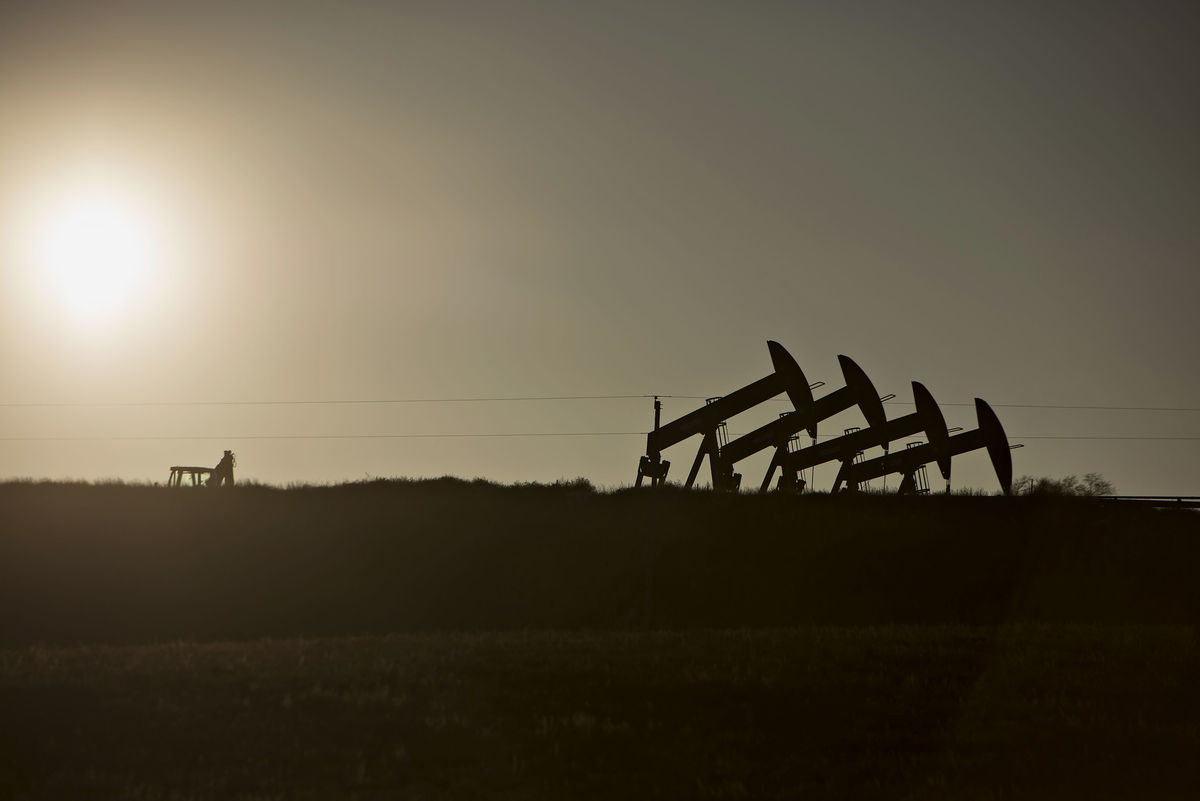
Production from shale formations such as North Dakota’s Bakken and the Eagle Ford in Texas will fall by 1.3 percent to 5.58 million barrels a day this month, the EIA said in its monthly Drilling Productivity Report. Output will decrease to 5.49 million a day next month, the Energy Department’s statistical arm predicted.
Active Machines
Drillers seeking oil in the U.S. have reduced the number of active machines by 59 percent to 642 in the past six months, according to Baker Hughes Inc. That’s the fewest since August 2010, data from the oil-services company showed.
“If prices remain below $60 a barrel for WTI, we can very well see further production decline in the coming months,” Abhishek Deshpande, a London-based analyst at Natixis SA, a financial services company, said by e-mail. Any tightness in the market due to this decline could help support prices and lead to increased U.S. output, he said. The EIA releases its short-term energy outlook at noon New York Time.
U.S. crude inventories probably shrank by 1.45 million barrels in the week ended June 5, according to the median estimate in the Bloomberg survey of eight analysts before a separate EIA report Wednesday. Stockpiles were at 477.4 million barrels through May 29, almost 100 million above the five-year average for this time of the year.
The market will probably turn its attention to the talks between Iran and six world powers on the Middle Eastern country’s nuclear program ahead of a June 30 deadline, according to Jens Naervig Pedersen, an analyst at Danske Bank A/S in Copenhagen. Iran, once OPEC’s second-largest producer and now fifth-largest, could boost production by 1 million barrels a day within six months of sanctions being lifted, Oil Minister Bijan Namdar Zanganeh said June 3.
“A deal and subsequent actions relief would be negative for oil prices as Iran probably has around 1 million barrels a day in spare capacity,” Pedersen said by e-mail. Iran pumped 2.8 million barrels a day last month, data compiled by Bloomberg show.
Here we are to serve you with news right now. It does not cost much, but worth your attention.
Choose to support open, independent, quality journalism and subscribe on a monthly basis.
By subscribing to our online newspaper, you can have full digital access to all news, analysis, and much more.
You can also follow AzerNEWS on Twitter @AzerNewsAz or Facebook @AzerNewsNewspaper
Thank you!