
Mas to ditch Nov. 9 in Switch to plan B for Catalan independence
By Bloomberg
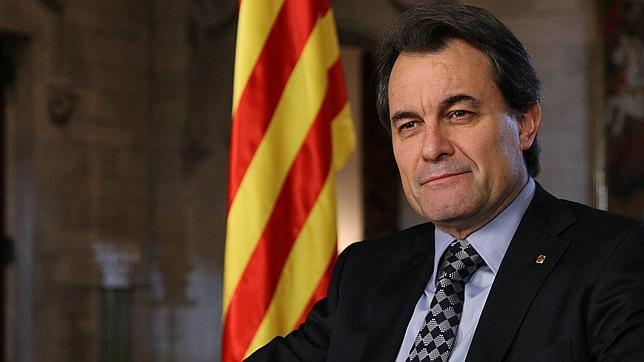
Catalan President Artur Mas is switching to his fall-back option for a vote on independence after telling his allies the Spanish Constitutional Court's opposition makes his plan for a Nov. 9 ballot impossible.
Mas, who's due to speak in a press conference at 10 a.m. local time today, told the leaders of three other parties supporting his push for a vote they needed to change tack at a meeting in Barcelona yesterday.
"The government considers that a Nov. 9 consultation isn't possible," Joan Herrera, head of the environmentalist party ICV, told reporters on his way out of the meeting last night. "The government will present an alternative proposal."
Mas is trying to hold together a disparate alliance ranging from anarchists to executives, industrialists to greens as Spanish Prime Minister Mariano Rajoy blocks the one course of action they all agreed on: Holding a vote on Nov. 9. By changing course, he risks losing momentum or taking a political hit.
Yesterday's meeting reversed an Oct. 3 agreement to push ahead with the vote, straining the ties between Mas and his allies. While Mas has said throughout the process he won't break the law to hold the vote, Oriol Junqueras, his strongest ally, has called on Catalans to use civil disobedience if the central government blocks the ballot.
"The government is moving toward a new and non-agreed scenario," Junqueras, leader of Esquerra Republicana, said on his Twitter account. Esquerra Republicana received the most votes in Catalonia in European Parliament elections held in May and is the main sponsor of the independence movement.
The 7.4 million Catalans in the northeast corner of the Iberian peninsula make up Spain's largest economic region, with annual output of 193 billion-euro ($244 billion). That's about the same as Scotland, where voters last month opted to remain part of the U.K. Output per head in Catalonia is 17 percent above the European Union average, whereas in Spain as a whole, it's 5 percent below.
Increasing tensions between the governments in Barcelona and Madrid have been incorporated into the price of Catalan debt. The yield on Catalan bonds maturing in February 2020 jumped 20 basis points to 2.68 percent since Oct. 3 when Mas said he planned to push ahead with his preparations for the vote. The spread over Spanish debt widened by 19 points to 166 points, the biggest gap since Jan. 2014.
The most likely plan for nationalists now is to call a regional election and use that as a de-facto referendum. That option has been advanced by Carles Viver i Pi-Suner, a former Constitutional Court judge who is advising Mas's government, as well as Junqueras.
"We'll build a majority in parliament to declare independence and start the process to create the Catalan Republic," Junqueras said yesterday on Twitter.
In a survey by the regional government's polling agency earlier this year, 47 percent of Catalans said they were in favor of independence while 28 percent said they preferred to stay with Spain. The rest were either undecided or planned to abstain.
Whatever option he picks, Mas will be seeking to retain the backing of the three other party leaders in his alliance, and Junqueras in particular, to protect himself from the political fallout. Junqueras, who finished second in the 2012 regional election, has opened a lead over Mas in recent polls by taking a more aggressive pro-independence stance.
Here we are to serve you with news right now. It does not cost much, but worth your attention.
Choose to support open, independent, quality journalism and subscribe on a monthly basis.
By subscribing to our online newspaper, you can have full digital access to all news, analysis, and much more.
You can also follow AzerNEWS on Twitter @AzerNewsAz or Facebook @AzerNewsNewspaper
Thank you!