
Living free and equal
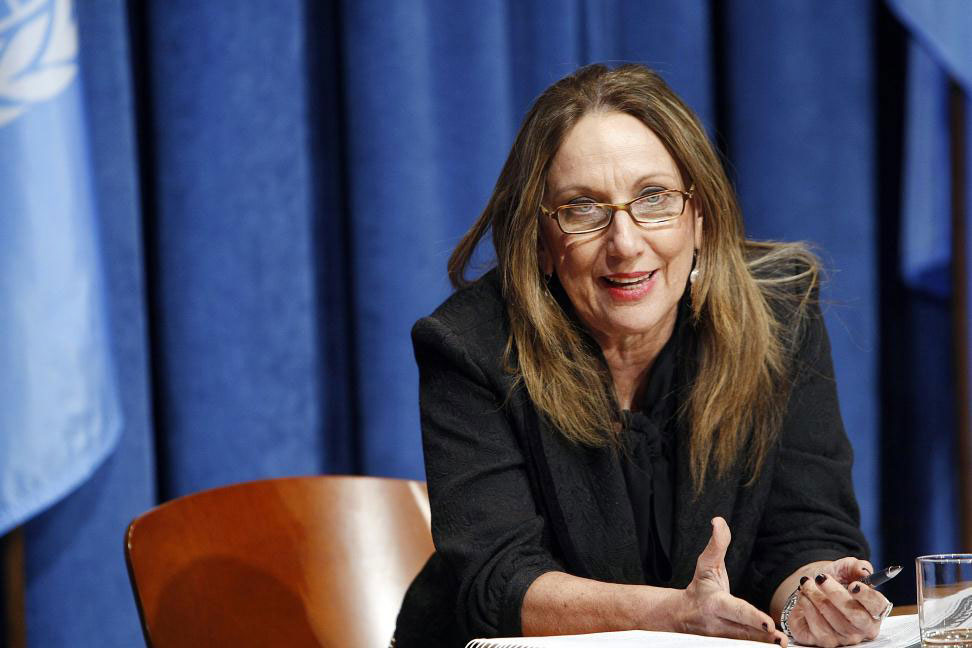
By Rebeca Grynspan
In the quarter-century since the publication in 1990 of the
first Human Development Report, the world has made astounding
strides in reducing poverty and improving the health, education,
and living conditions of hundreds of millions of people. And yet,
as impressive as these gains may be, they have not been distributed
equally. Both between countries and within them, deep disparities
in human development remain.
Consider infant mortality. In Iceland, for every 1,000 live births,
two children die before their first birthday. In Mozambique, the
figure is 120 infant deaths for every 1,000 live births. Similarly,
in Bolivia, babies born to women with no education are twice as
likely to die within a year than babies born to mothers with at
least a secondary education. And these disparities continue
throughout a person’s life. A five-year-old child born in a
low-income household in Central America is, on average, six
centimeters shorter than a child born in a high-income
household.
Such differences have taken root for a variety of reasons. These
include “vertical inequalities,” like skewed income distribution,
as well as “horizontal inequalities,” such as those that exist
within groups because of factors like race, gender, and ethnicity,
and those that form between communities, owing to residential
segregation.
Many people face different, simultaneous forms of discrimination,
and the degree of exclusion they suffer is a result of the
interaction among them. A combination of vertical and horizontal
inequalities can generate extreme exclusion and marginalization,
which in turn perpetuates intergenerational poverty and
inequality.
Fortunately, the world has become increasingly aware of
inequality’s pernicious effects on democracy, economic growth,
peace, justice, and human development. It has also become clear
that inequality erodes social cohesion, and increases the risk of
violence and instability.
Ultimately, economic and social policies are two sides of the same
coin.
Besides the moral argument for reducing inequality, there is also
an economic argument. If inequality continues to rise, higher
growth will be needed to eradicate extreme poverty than if the
economic gains were more evenly distributed.
High levels of inequality are also correlated with the possibility
of political capture by elites who defend their interests by
blocking egalitarian reforms. The problem with inequality is not
only that it obstructs the pursuit of collective goals and the
common good; it also erects structural barriers to development, for
example, through meager or regressive taxation and underinvestment
in education, health, or infrastructure.
Growth alone cannot guarantee equal access to public goods and
high-quality services; deliberate policies are required. Recent
history in Latin America, the most unequal region in the world,
provides a good example of what is possible when such policies are
put in place. The region made significant gains in social inclusion
during the first decade of this century, through a combination of
economic dynamism and sustained political commitment to fighting
poverty and inequality as interdependent problems.
Thanks to these efforts, Latin America is the only region in the
world that managed to reduce poverty and inequality, while
continuing to grow economically. More than 80 million people have
joined the middle class, which for the first time has surpassed the
poor as the largest segment of the region’s population.
To be sure, some have argued that this was made possible by
favorable external conditions, including high commodity prices,
which supported economic expansion. However, evidence from the
World Bank’s LAC Equity Lab confirms that growth explains only part
of Latin America’s social gains; the rest was due to redistribution
through social spending.
Indeed, progressive policies were at the heart of the economic
expansion itself: a new generation of better-educated workers
entered the labor force, earning higher salaries and reaping the
dividends of social spending. The largest wage increases occurred
in the lowest income brackets.
Now that Latin America has entered a period of slower economic
growth, these achievements are being put to the test. Governments
have less fiscal space, and the private sector is less able to
create jobs. Efforts to reduce poverty and inequality are at risk
of stalling – or even of losing hard-won gains. The region’s
policymakers will have to work hard to maintain progress on
long-term human development.
The importance of tackling inequality is enshrined in the ideals of
the French Revolution, the words of the United States Declaration
of Independence, and in the targets established by the United
Nations Sustainable Development Goals. The effort is at the root of
shaping a world that is not only fair, but also peaceful,
prosperous, and sustainable. If, as the Universal Declaration of
Human Rights puts it, “all human beings are born free and equal in
dignity and rights,” should we not all be able to continue to live
that way?
Copyright: Project Syndicate:Living Free and Equal
---
Follow us on Twitter @AzerNewsAz
Here we are to serve you with news right now. It does not cost much, but worth your attention.
Choose to support open, independent, quality journalism and subscribe on a monthly basis.
By subscribing to our online newspaper, you can have full digital access to all news, analysis, and much more.
You can also follow AzerNEWS on Twitter @AzerNewsAz or Facebook @AzerNewsNewspaper
Thank you!