
Harmonizing Europe’s elections
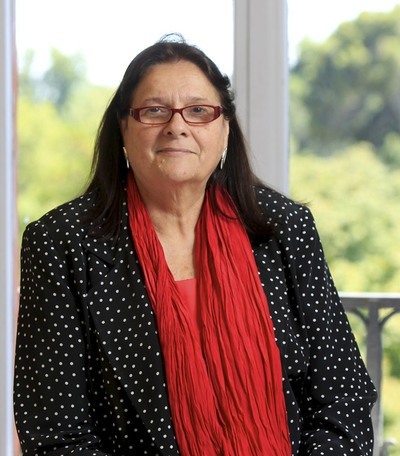
By Ana-Maria Llopis Rivas
Non-executive Chairwoman of the Board of the Spanish discount retailer Distribuidora Internacional de Alimentación (DIA Group), non-executive board director of Société Générale, and founding Chairwoman of ideas4all.com.
The European Union is in the midst of a far-reaching debate
about its future role. What does it stand for? Whom does it
represent? How should it work with its member states? And what
should it offer its citizens? Now is the time for some innovative
thinking - including about how to remove obstacles to
implementation of the EU's bold plans.
Many EU initiatives - from financial and regulatory harmonization
to gender equality - make good sense. But if they are to survive
Europe's crises, they must be supported by timely political
decision-making, familiar regulatory frameworks across member
states, and an EU-wide commitment to good governance and
ethics.
There is no shortage of schemes. Last year, Italian Prime Minister
Mario Monti, with the backing of the four largest eurozone
economies - Germany, France, Italy, and Spain - called for a €130
billion ($170 billion) stimulus package to improve competitiveness
across the EU. Like many others in the business community, I
applauded this move. Similarly, the €6 billion package approved by
the EU in August to help reduce endemic youth unemployment,
especially in Spain, must be seen as a step in the right
direction.
But, while the EU is undoubtedly willing to launch ambitious
projects, it appears less able to implement them quickly and
effectively. Some governments have adopted new, rules-based
governance codes, and are instituting strict controls to keep
projects on track. Ministers in France, for instance, recently set
new governance standards by committing themselves to guiding
principles, including transparency, impartiality, and
integrity.
Yet one important aspect of implementation has received far too
little public attention: the time, money, and effort that are
wasted when a member state enters an election period and forces the
EU to put a project on hold. Policymakers must wait to see if new
parties or leaders will assume power, and if so, whether they will
commit to the projects approved by their predecessors.
Such delays have been depressingly familiar over the past two
years. First, the EU had to sit tight as new Italian and Spanish
governments, elected at the end of 2011, pondered their inherited
commitments. More uncertainty followed with France's change of
government in May 2012, and then again with Greece's inconclusive
elections the following month. This year, Czechs, Italians, and
Germans have been, or will go, to the polls.
Such disruptions not only make it difficult to pursue important
reforms; they also undermine popular confidence in the EU
generally. Last June, the Royal Spanish Academy (the guardians of
the national language) added a new word to the Spanish dictionary:
Euroescepticismo, defined as distrust of EU projects. This
expression surely would not have gained currency had Europe's
projects been given time and space to take root.
So how can the EU avoid the distractions caused by endless rounds
of national votes? As Europe defines what it stands for, let us
also consider an audacious yet practical idea: synchronization of
Europe's political clocks, so that all of Europe's national
elections are held within the same year - or even the same month.
Simultaneous, EU-wide polls might then be followed by some four or
five years of relative stability (depending on the agreed length of
a parliamentary term). This would limit the disruptions to
decision-making, personnel, and legislation that seem to occur
every few months, thereby allowing important policies to be
implemented efficiently.
A common election calendar for all EU member states would free up
scarce resources and focus policymakers' attention more
effectively. As a result, it would maximize the benefits of vital
programs, such as those supporting youth education and employment,
and therefore strengthen Europe's economic prospects.
This idea may not be completely original (the financiers Leon
Benelbas and Kyra Hazou have aided my thinking in this area), and
there are important counterarguments to consider (for example, such
a scheme could be undermined by a national government's loss of a
parliamentary confidence vote). But fresh thinking about the true
effect of Europe's political cycles might, at the very least, help
the EU to regain its momentum and retain its relevance.
Copyright: Project Syndicate
Here we are to serve you with news right now. It does not cost much, but worth your attention.
Choose to support open, independent, quality journalism and subscribe on a monthly basis.
By subscribing to our online newspaper, you can have full digital access to all news, analysis, and much more.
You can also follow AzerNEWS on Twitter @AzerNewsAz or Facebook @AzerNewsNewspaper
Thank you!