
Stop paying the polluters
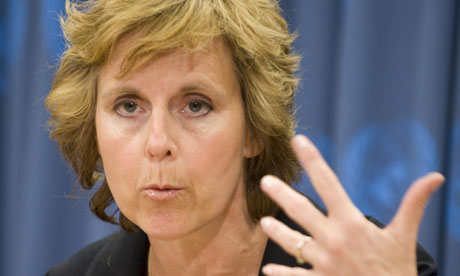
By Connie Hedegaard
EU Commissioner for Climate Action
"When the winds of change blow," says an old Chinese proverb,
"some build walls, and others build wind mills."
These same words closed the meeting in March of the Climate
Parliament, a forum in Brussels that brought together legislators
from around the world who are committed to the fight against
climate change. Parliamentarians, United Nations representatives,
and the International Energy Agency (IEA) alike agreed that ending
dependency on fossil fuels is one of the most urgent steps needed
to combat it effectively.
The voices from the Climate Parliament join a growing crescendo of
influential actors who are speaking out about the need to clean up
our energy habits. During January's World Economic Forum in Davos,
Lord Nicholas Stern, author of a well-known report outlining the
measures that the world should take to avoid runaway climate
change, admitted that the planet is on track to warm by four
degrees Celsius this century. Looking back, Stern said, his report
could have been more insistent about the need to take determined
action to avoid the catastrophic risks that this level of warming
implies.
Stern's sentiment was echoed by Christine Lagarde, Managing
Director of the International Monetary Fund, who pleaded in favor
of stronger climate action to prevent future generations being
"roasted, toasted, fried, and grilled." And World Bank President
Jim Yong Kim announced that his institution would prioritize the
fight against climate change and focus on promoting, among other
measures, the elimination of subsidies doled out to the fossil-fuel
industry.
With this pledge, the World Bank joined an expanding list of
international bodies, including the UN, the IMF, and the OECD, that
are calling for an end to such subsidies. Globally, we are on track
to reach an international climate deal. But this will still take
time, while the need for action will not wait. Harnessing the
existing broad consensus against fossil-fuel subsidies is possible
even in the absence of a legal agreement, and could quickly have a
significant positive impact.
According to the IEA, fossil-fuel subsidies rose by almost 30% to $
523 billion, in 2011. Meanwhile, the UN Environment Program reports
that global investment in renewable energy totaled only $257
billion in 2011.
In other words, we are doing exactly the opposite of what we should
be doing. Support for energy efficiency and renewable energy
sources is lagging, while governments around the world spend
hundreds of billions of dollars subsidizing an incipient
catastrophe. This must change.
As European Commissioner for Climate Action, I am particularly keen
to see three international financial institutions - the European
Investment Bank, the European Bank for Reconstruction and
Development, and the World Bank - join with their EU and OECD
partners to take a lead role in eliminating public support for
fossil fuels. Together, these three institutions lend more than
€130 billion ($168 billion) annually for projects in Europe and
beyond, and maintain a strong advisory role in beneficiary
countries. This year provides an especially important opportunity
to use this potential for action.
All three institutions have announced reviews of their lending
policies for the energy sector. The outcome will underpin their
lending over the next 4-6 years, and send a strong political and
financial signal about worldwide commitment to addressing climate
change. Four to six years is also the interval over which climate
scientists predict that greenhouse-gas emissions must peak and
start to be reduced if the world is to have any hope for a decent
future.
Multilateral lenders can lead by example by restricting conditions
for public financing of coal, the most damaging fossil fuel, and by
pressing for greater transparency in reporting on emissions.
Encouraging investments in renewable energy and increased energy
efficiency will have the added benefit of boosting long-term
self-reliance and resilience against the volatility of fossil fuel
prices.
More broadly, international financial institutions should guide
public and private investments alike away from a short-term logic.
Supported by a stable, long-term climate-policy framework, public
financing can drive the decarbonization of our energy system and
our economies.
Instead of offering unsustainable and environmentally damaging
subsidies for fossil fuels, public finance should encourage the
development of new industries and businesses that are emerging in
the course of the low-carbon transition. The industries of the
future, which will create jobs that last, are those that will use
scarce resources efficiently, and that can pay the real
environmental and health costs of the resources that they use.
Copyrights: Project Syndicate
Here we are to serve you with news right now. It does not cost much, but worth your attention.
Choose to support open, independent, quality journalism and subscribe on a monthly basis.
By subscribing to our online newspaper, you can have full digital access to all news, analysis, and much more.
You can also follow AzerNEWS on Twitter @AzerNewsAz or Facebook @AzerNewsNewspaper
Thank you!