
The Defense Dividend
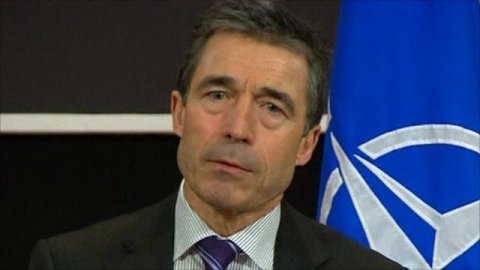
By Anders Fogh Rasmussen
Secretary General of NATO and a former prime minister of
Denmark
On a hillside overlooking the Turkish city of Gaziantep, Patriot missile launchers are keeping watch under NATO command and control. This is just one of six Patriot batteries from three Allied countries - Germany, the Netherlands, and the United States - providing protection for millions of people along Turkey's southeastern border with Syria.
The deployment shows NATO's enduring commitment to its core
task: safeguarding its members' security. It also shows that, when
a crisis erupts, there is no substitute for effective deterrence
and defense.
Virtually every day brings fresh evidence that an arc of crisis -
from terrorism and weapons proliferation to cyber-attacks and
piracy - is spreading from the Middle East and the Sahel to Central
Asia. These risks will not disappear while NATO members focus on
fixing their finances. The fact is that our way of life is
predicated on security and stability, without which investment
withers, employment collapses, and economies shrink.
In these tough economic times, we are all acutely aware that
security comes at a price. But we must not forget that the cost of
insecurity is unacceptable. Defense is our essential insurance
policy in a complex and unpredictable world.
Conflicts take a terrible human toll, while restoring peace and
supporting reconstruction is extremely expensive. For example, the
total cost of the Balkan wars of the 1990's is estimated at $150
billion. Today, NATO continues to maintain a safe and secure
environment for all of Kosovo's people, and is helping the entire
region progress along the path of Euro-Atlantic integration.
Another example is piracy, which can threaten vital trade and
energy routes. The overall cost of piracy off the coast of Somalia
in 2011 was estimated at $7 billion. But, with concerted
international efforts, including by NATO ships, pirate attacks have
dropped sharply. Although the situation remains precarious, for the
last eight months pirates off the Horn of Africa have been
unsuccessful in their attacks against merchant vessels.
Finally, we have seen cyber-attacks not just swamping Web sites,
but targeting entire countries, such as NATO ally Estonia in 2007.
The Estonian presidency, parliament, government ministries,
political parties, news organizations, banks, and communications
companies were all hit. In fact, everything on which a modern
democracy and knowledge-based economy relies was attacked. Today,
as part of our continuing drive to improve the security of our
members' networks, Estonia's capital, Tallinn, hosts a NATO
cyber-defense center of excellence.
These examples show that hard power and soft power go together. To
be effective, we need both. When dealing with international
security challenges, diplomacy remains the primary tool; but, by
investing in defense, we can back up our statements with military
strength and improve our chances of addressing challenges
successfully. It is also an investment in our most innovative and
technologically advanced industries.
Indeed, research programs led by defense industries have already
changed our lives, giving us the jet engine, the Internet, and
satellite navigation. In the future, technology developed for
military aerial surveillance could have major civilian benefits -
for example, helping to control traffic and reduce road congestion,
and assisting in the dispatch of rescue teams and humanitarian
assistance.
Expertise in the defense sector has been built up over generations.
Like any other high-tech industry, it is constantly evolving. If we
cut defense spending too much, for too long, we will sacrifice that
hard-won expertise, which will be impossible to regenerate quickly
when we need it most.
A strong defense also helps to ensure that the benefits of security
are shared across countries. NATO itself embodies that goal. Our 28
allies have more security together than they could achieve on their
own. While this helps them to defend their own interests more
effectively, it also allows them to play a much more active role in
international crisis management, such as the protection of
civilians in Libya in 2011.
So defense investment is also investment in security and stability,
in diplomacy and cooperation, and in technology and innovation. It
is an investment in a safer and more prosperous future for our own
countries and for the rest of the world.
Even though defense budgets are under pressure in this time of
austerity, it is essential that NATO members hold the line on
defense spending and are prepared to increase it when their
economies recover. The decisions that we take on defense today will
have a profound impact on our children's security tomorrow.
Copyrights: Project Syndicate
Here we are to serve you with news right now. It does not cost much, but worth your attention.
Choose to support open, independent, quality journalism and subscribe on a monthly basis.
By subscribing to our online newspaper, you can have full digital access to all news, analysis, and much more.
You can also follow AzerNEWS on Twitter @AzerNewsAz or Facebook @AzerNewsNewspaper
Thank you!