
EU tries to balance its ties between Iran, regional allies
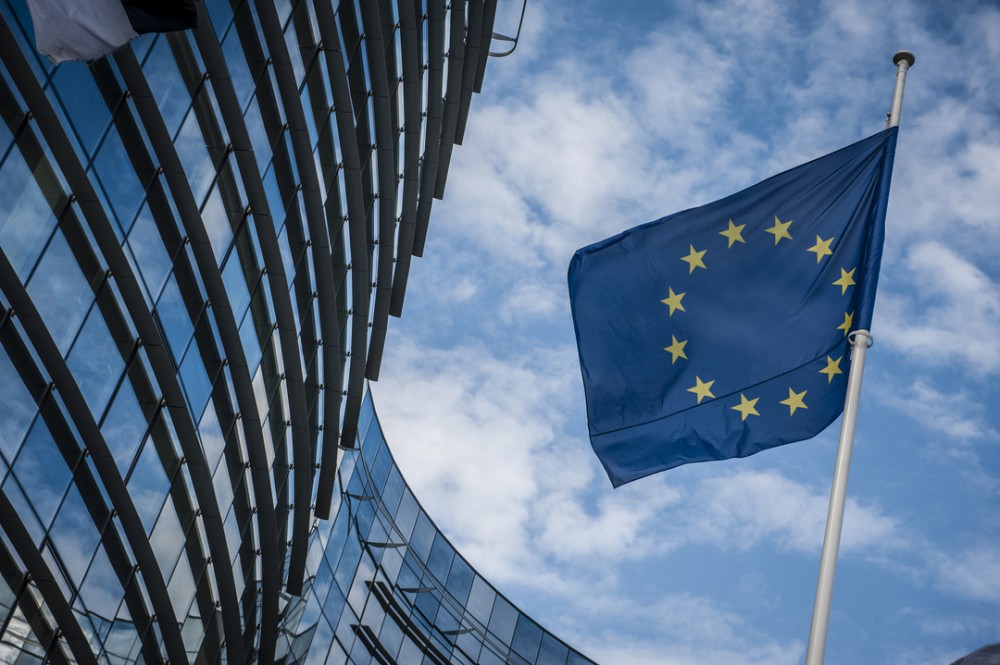
The EU is currently trying to balance its newly developing
relations with Iran against its longer-standing relations with
Turkey, Israel, and the Gulf States, John Feffer, who is director
of Foreign Policy In Focus at the Institute for Policy Studies
believes.
“So, this is obviously a delicate issue, much depends on what
happens internally in Iran, because it will be very difficult for
the EU to normalize relations with a more conservative government
in Tehran,” Feffer told Trend Feb. 4.
Iran and the P5+1 group reached a nuclear agreement last July,
which curbs Iran’s nuclear program in exchange for the removal of
the earlier imposed economic sanctions on the country.
Various EU firms have expressed interest to return to Iranian
market following the removal of the sanctions as Iran’s nuclear
deal with world powers came into force Jan. 16.
As Iran's economy develops, and it moves higher up the value chain,
the EU will be a more valuable trading partner than China or
Russia, which rely mostly on Iran's raw materials (energy, iron,
minerals), Feffer said responding to a question about possibility
for the EU to gradually replace China and Russia in Iran’s market
in post-sanctions era.
While Iranian officials have repeatedly stated that the country is
open for economic ties with the US, as well as doing business with
the US entrepreneurs, Feffer believes that it will not happen any
time soon mainly due to political reasons.
“The obstacles are not really economic, since many US companies are
very interested in Iran. They're mostly political. Opposition to
economic engagement with Iran is strong within Congress. Again,
many US politicians are reluctant to offend longstanding US allies,
particularly Israel and Saudi Arabia,” he explained.
Feffer, while responding to a question about the idea of Iran's
cooperation with the entire West, excluding the US, in compliance
with the “West minus the US” doctrine, said when it comes to
economic relations, such a doctrine could have some success.
The EU is, for example, moving forward more quickly on economic
engagement with Iran, he said.
“But on Iran's larger engagement with the international community,
it will be important for Iran and the US to develop closer working
relations,” he remarked.
In the early 1990s, Iran's Supreme Leader Ali Khamenei put forward
a doctrine known as the “West minus the United States”. The
doctrine, which envisages Iran's cooperation with the entire West
excluding the US, has since then been followed by all Iranian
administrations. Khamenei even banned any talks with the US beyond
the nuclear issue.
Here we are to serve you with news right now. It does not cost much, but worth your attention.
Choose to support open, independent, quality journalism and subscribe on a monthly basis.
By subscribing to our online newspaper, you can have full digital access to all news, analysis, and much more.
You can also follow AzerNEWS on Twitter @AzerNewsAz or Facebook @AzerNewsNewspaper
Thank you!