
Tehran says IAEA head's Parchin visit to annul all accusations
By Sara Rajabova
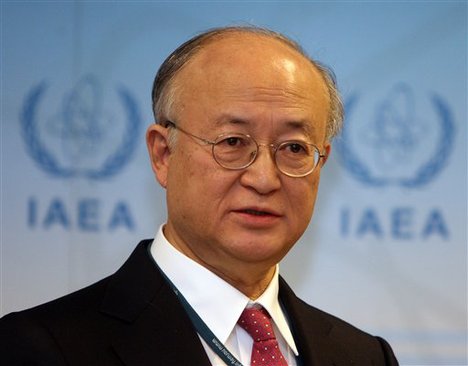
To remove doubts on whether Iran is complying with the July nuclear deal, UN nuclear watchdog head Yukiyo Amano paid a visit to the Islamic Republic’s Parchin site.
The military site was a contentious issue between Iran and the world powers, where the West believed that the Islamic Republic carried out high-explosives testing for a nuclear warhead. Iran denied allegations that it was conducting research into creating a nuclear weapon at the site.
Amano’s Iran visit came as the IAEA was under criticism by skeptics of the nuclear agreement for giving too much leeway for Tehran to carry out inspections on its own behalf, which included taking its own environmental samples.
Under a confidential plan for IAEA inspections at the Parchin site, samples will be taken by Iranian technicians while IAEA experts present at Parchin observe and oversee the process, Western diplomats told Reuters.
During the one-day visit to Tehran, Amano met with President Hassan Rouhani, Atomic Energy Organization of Iran head Ali Akbar Salehi, and Foreign Minister Mohammad Javad Zarif on September 20.
Discussions with high-level Iranian officials focused on the continued implementation of the roadmap to resolve all past and present outstanding issues, IAEA reported.
Amano also met with members of the Iranian parliament and addressed a parliamentary panel reviewing Tehran's nuclear agreement with the P5+1 group, Iranian media reported.
Amano said Iran's planned execution of the Additional Protocol to the nuclear Non-Proliferation Treaty will help prove the peaceful nature of the country's nuclear program.
He went on to say that the IAEA will respect the confidentiality of issues related to Iran’s nuclear program, saying the agency has defined a regime for protecting confidential data.
While some media considered Amano’s visit to Iran as ceremonial rather than a true inspection of the Parchin site, Tehran believes the visit has annulled accusations that Iran is pushing for a nuclear weapon program.
Director General for Political and International Affairs at Iran’s Foreign Ministry Hamid Baidinejad said Iran managed to take a great step on the path to the implementation of the roadmap with the IAEA and put an end to accusations from Western countries.
By itself, the roadmap is indicative of a fundamental change in Iran-IAEA relations on one side and a turnabout in the P5+1 approach to the Iranian nuclear case on the other, he further noted.
The Tehran-IAEA roadmap was signed on July 14, the same day that Iran and the P5+1 group – the United States, Russia, China, France, Britain and Germany – finalized the text of their nuclear agreement in Vienna dubbed the Joint Comprehensive Plan of Action.
As part of the roadmap, the IAEA is required to finish its investigations on Iran’s nuclear activities and submit a report to the agency’s Board of Governors by December 15.
Tehran says it has provided the necessary documents and explanations about its past and present nuclear issues to the IAEA within the agreed time frame.
--
Sara Rajabova is AzerNews’ staff journalist, follow her on
Twitter: @SaraRajabova
Follow us on Twitter @AzerNewsAz
Here we are to serve you with news right now. It does not cost much, but worth your attention.
Choose to support open, independent, quality journalism and subscribe on a monthly basis.
By subscribing to our online newspaper, you can have full digital access to all news, analysis, and much more.
You can also follow AzerNEWS on Twitter @AzerNewsAz or Facebook @AzerNewsNewspaper
Thank you!