
Nuke deal not eliminates decades of distrust between US and Iran, says Matthew Bryza
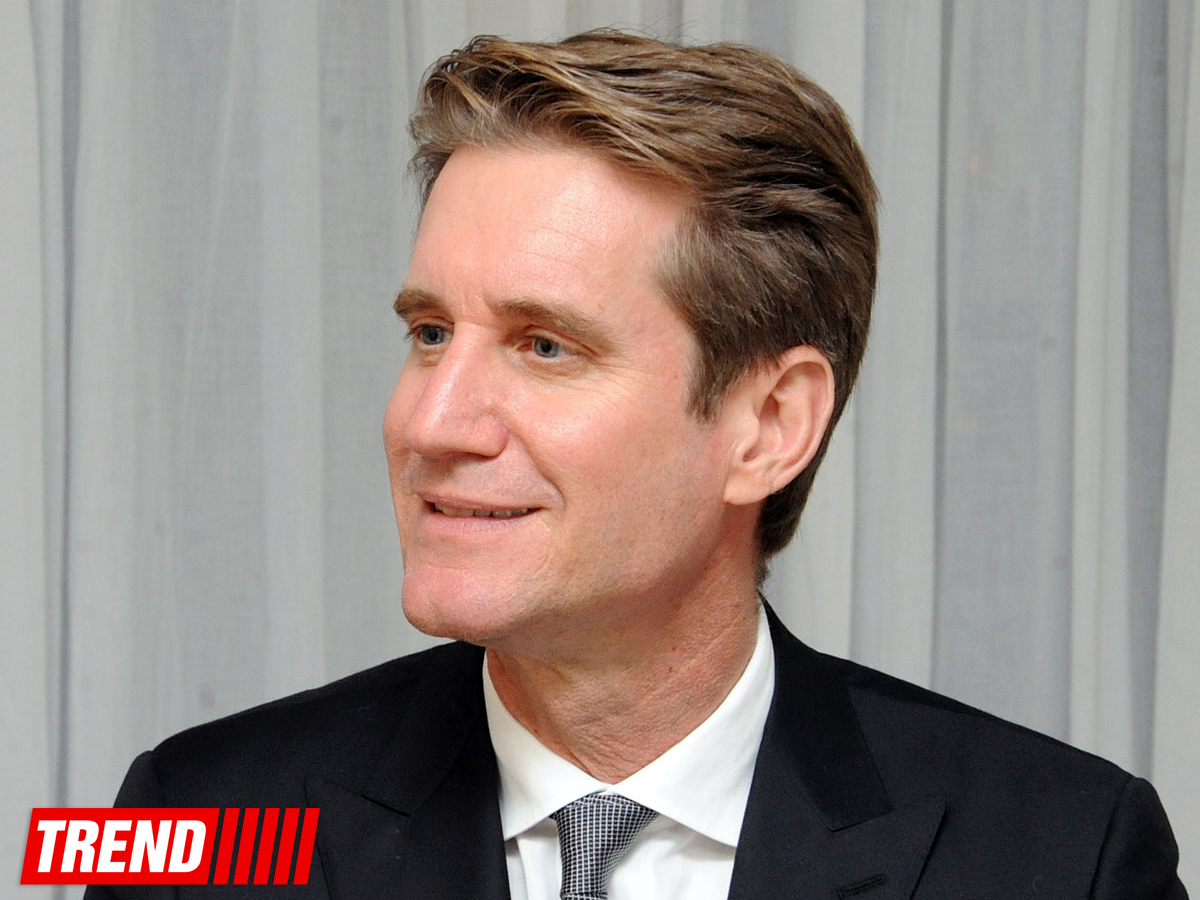
There is still a lot of mistrust and distrust between the US and
Iran, Matthew Bryza, former deputy assistant of the US secretary of
state for South Caucasus, former US ambassador to Azerbaijan and
director of International Centre for Defense Studies in Tallinn
told Trend July 15.
Commenting on the signing of the agreement between Iran and P5 +1
on Tehran’s nuclear program July 14, he said that just because
there is an agreement on nuclear questions doesn’t mean all the
other problems between Washington and Tehran are resolved.
Iran and P5 +1 (the US, UK, France, Russia, China and Germany)
reached a historic agreement on Iran’s nuclear program July 14.
The negotiations ended with adoption of a joint comprehensive
action plan. If Iran carries out this plan, the economic and
financial sanctions earlier imposed on it by the UN Security
Council, the US and EU will be lifted.
Bryza expressed hope that the agreement will indeed become the
foundation of a new and friendly relationship between Tehran and
Washington.
“But first, the agreement has to be approved by the US Congress,
where there will be a tough political battle,” he said. “But I
expect the agreement to pass.”
Once that happens, of course President Obama¹s hope is that a new
climate in relations between the two countries will form, and that
the Iranian side is sincere in saying it wishes to begin a new page
in Iran-US relations, Bryza added.
“There are of course many people who oppose the agreement in the
United States, mostly Republicans in the Congress, as well as the
governments of Israel and several Arab Gulf states, who believe
that once the pressure of sanctions is taken away, Iran will become
even more aggressive with regard to supporting terrorism and groups
like Houthi rebels in Yemen or Hezbollah in a few months or a
couple of years,” he said.
Commenting on the remarks of Iranian politicians about opening of
the US embassy in Iran, Bryza said that it is possible in the
future though not imminent.
“Agreement does not eliminate decades of distrust and even hate
between the two countries,” he said. “Everything depends on how far
and how quickly the improvements of relations move between the US
and Iran. It thus depends on how far and how quickly Iran's
behavior changes.”
“If you follow the debates in Washington now, many Republicans say
this agreement doesn¹t end Iran’s financing of terrorism, and other
destabilizing actions,” said Bryza.
Whether the US will open its embassy in Tehran or Tehran will
reopen its embassy in Washington will thus depend on other changes
in behavior beyond the nuclear agreement, he added.
“But as I said in the beginning, we all hope that the new agreement
will lead to improved relations,” said Bryza.
Furthermore, he said that sanctions on Iran will remain in place
for some time and be lifted over time as Iran implements the
agreement.
“So, I think it will take one year or even more for the Iranian
economy to pick up and get strong again,” said Bryza. “Boeing, for
example, has not been able to have normal relations with Iran to
provide spare parts and services for all the aircraft it sold to
Iran 40 years ago.”
“But I know, during that period, many US companies will be eager to
restore business with Iranian partners,” he said, adding that of
course, American energy companies, including oil services and
drilling companies are very eager to get back to Iran.
“In general, there is great potential for trade between the US and
Iran and there could be great trade opportunities for Azerbaijan
and Turkey too,” Bryza added.
--
Follow us on Twitter @AzerNewsAz
Here we are to serve you with news right now. It does not cost much, but worth your attention.
Choose to support open, independent, quality journalism and subscribe on a monthly basis.
By subscribing to our online newspaper, you can have full digital access to all news, analysis, and much more.
You can also follow AzerNEWS on Twitter @AzerNewsAz or Facebook @AzerNewsNewspaper
Thank you!