
Iran, P5+1 can’t clinch deal, despite “important headway”
By Sara Rajabova
Iran and P5+1 haven't reached an agreement yet after intensive nuclear talks over the past 10 days.
The officials' comments on the results of the talks vary with some saying there are big differences among the parties and others pointing to progress made during the talks.
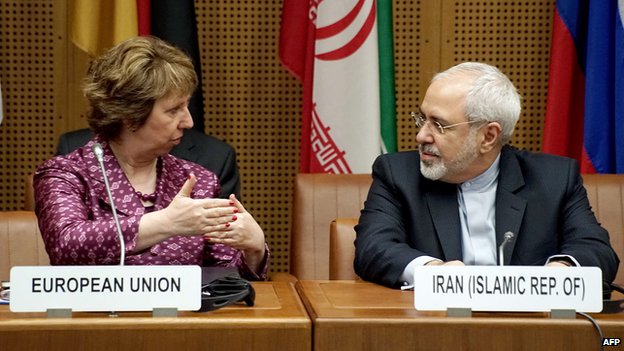
Iranian Foreign Minister Mohammad Javad Zarif said "important headway" has been made in the talks on Iran's nuclear energy program, stressing, however, that the negotiations have yet to bear fruit, Press TV reported.
On July 13, Zarif held about five hours of discussions with all representatives of the P5+1 group - the U.S., France, Britain, Russia, China and Germany - over Tehran's nuclear energy program in Vienna.
Meanwhile, Zarif and U.S. Secretary of State John Kerry started their second bilateral meeting in Vienna on July 14-on the 13th say of negotiations.
After bilateral discussion with Zarif, Kerry said they had very good talks but this was only the beginning and the talks should continue.
The European foreign ministers left Vienna for their own capitals but Kerry is still in the Austrian capital to continue talks with his Iranian counterpart.
On July 13, Zarif noted that Tehran and its negotiating sides have not reached any final nuclear agreement so far, but that all parties have shown willingness to find a solution to the decade-old dispute over Iran's nuclear program.
"We haven't resolved any problem, but we have made some important headway in probably removing some of the misconceptions and moving forward with making more serious decisions," he said.
Iran and the six states kicked off their sixth round of talks this year in the Austrian capital on July 3. They have been working to clinch a final deal ahead of a July 20 deadline, which can be extended depending on the agreement of all parties involved.
On the other hand, Iran's Deputy Foreign Minister for Legal and International Affairs Abbas Araqchi said earlier significant disagreements remain in the ongoing talks.
He added that both Iran and the P5+1 have put forth a number of proposals to settle the differences on some issues, but they have not been agreed upon yet.
Araqchi cited the issue of uranium enrichment as a main matter of disagreement between the sides.
He noted that the issue of uranium enrichment is still a bone of contention in the talks, adding "given the sensitivity of the issue of enrichment and its capacity and volume, we have failed to reach an agreement so far."
Meanwhile, French Foreign Minister Laurent Fabius also underlined the big gaps remaining between Iran and the six countries.
"If we can reach a deal by July 20, bravo," he said in Vienna.
P5+1 and Iran reached an interim pact last November under which Iran won some relief from economic sanctions in return for reining in some of its nuclear activities.
The deal came into force in January and expires on July 20, but can be extended depending on the agreement of all parties involved.
Their goal is to reach a comprehensive nuclear agreement by July 20 that will lay to rest Western concerns about the Iranian program and ease all the sanctions on Tehran.
Here we are to serve you with news right now. It does not cost much, but worth your attention.
Choose to support open, independent, quality journalism and subscribe on a monthly basis.
By subscribing to our online newspaper, you can have full digital access to all news, analysis, and much more.
You can also follow AzerNEWS on Twitter @AzerNewsAz or Facebook @AzerNewsNewspaper
Thank you!