
Tehran, EU discuss ways of progress in nuclear talks
By Sara Rajabova
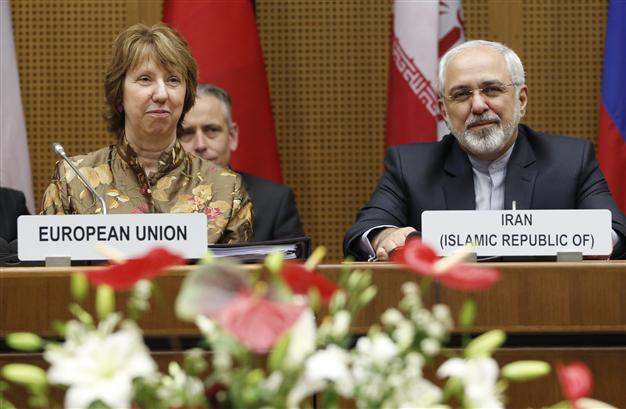
Iran's Foreign Minister Mohammad Javad Zarif and EU foreign policy chief, Catherine Ashton, have held discussions ahead of the next round of nuclear talks on Iran's nuclear energy program.
Zarif and Ashton held an informal meeting on May 26 in Istanbul, Turkey, as Iran and the six world powers - Russia, China, France, Britain, the US, and Germany - prepare to resume their nuclear discussions in the Austrian capital of Vienna on June 16, Press TV reported.
During their two-day talks in Istanbul, the two officials are due to review the progress of nuclear negotiations between Iran and the six countries.
No representatives from the six countries in nuclear negotiations with Iran are present at the meeting.
Deputy Iran's Foreign Minister in Europe and America Affairs Majid Takht-e-Ravanchi, Deputy Foreign Minister in Legal and International Affairs, Seyed Abbas Araqchi and Director General for Political Affairs and International Security Hamid Baˈeidinejad are accompanying Zarif in these negotiations.
Deputy Chief of EU Foreign Policy Helga Schmidt and her assistant Stephan Clement are accompanying Ashton.
Speaking to IRNA prior to his departure, Zarif said different approaches should be considered in order to achieve results.
"The two sides should look for new options or methods that will convince the other side," Zarif said, adding, "I am still not pessimistic. I think that if the opposite side...has learnt the lesson that no progress will be made with pressure and sanctions, we will reach a resolution."
Iran and the P5+1 group wrapped up their latest round of high-level nuclear talks in the Austrian capital Vienna on May 16 without any result.
Iranian officials blamed the U.S. for the failure, claiming that Washington has made excessive demands beyond the agreements made in the previous rounds of the talks.
Iran and the six countries have been discussing ways to iron out differences and start drafting a final deal that would end the West's dispute with Iran over its nuclear program.
Last November, the two sides signed an interim nuclear deal in the Swiss city of Geneva that came into force on January 20 this year.
Under the Geneva deal, the six countries pledged to provide Iran with some sanctions relief in exchange for Tehran's agreement to scale down certain aspects of its nuclear activities during a six-month period.
Here we are to serve you with news right now. It does not cost much, but worth your attention.
Choose to support open, independent, quality journalism and subscribe on a monthly basis.
By subscribing to our online newspaper, you can have full digital access to all news, analysis, and much more.
You can also follow AzerNEWS on Twitter @AzerNewsAz or Facebook @AzerNewsNewspaper
Thank you!