
Iran denies any limitation to export of crude oil
By Sara Rajabova
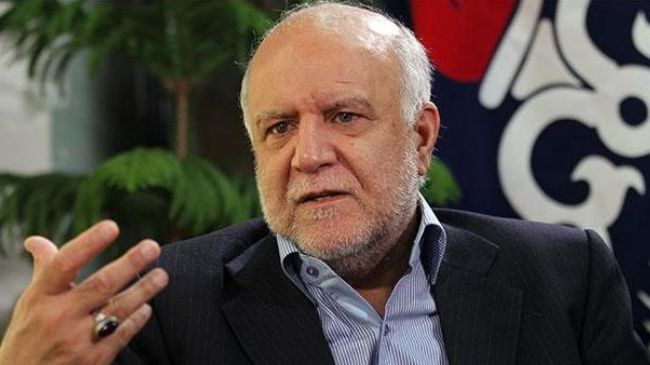
Iran's Oil Minister, Bijan Namdar Zanganeh has said the country will not accept any limitation to the export of its crude oil.
Zanganeh said on May 8 that the volume of Iran's oil export is the same as it is supplied in the oil market, Press TV reported.
"Iran will not accept any numbers and figures regarding the volume of its crude oil export that are dictated from elsewhere," he added.
Zanganeh pointed out that Iran itself determines the volume of its oil export.
Earlier on May 6, Zanganeh said the country is strongly pressing ahead with its plans to increase production of crude oil despite Western sanctions.
He added that initial steps have been taken to increase Iran's oil output by one million barrels per day within the next four years.
World oil giants, including Royal Dutch Shell, British Petroleum (BP), Malaysia's Petronas, Spain's Repsol, Russia's second-largest oil producer, Lukoil, France's Total and Italy's Eni, have shown interest in returning to the Iranian market following partial relief in the anti-Iran sanctions that came after a nuclear accord between the Tehran and the six world powers last November.
In 2012, the United States and the European Union imposed sanctions on Iran's oil and financial sectors accusing Iran in development of nuclear energy program for military purposes.
On January 20, the EU Council partially suspended its sanctions against the Iran according to the nuclear deal between Tehran and the five permanent members of the UN Security Council -- France, Britain, Russia, China, the United States - plus Germany.
Besides, Iran also plans to boost its natural gas exports to the foreign countries.
Iranian Deputy Oil Minister for International and Trade Affairs, Ali Majedi has recently said the country is prepared to export natural gas to European countries seeking to diversify their energy sources and gas supplies.
Majedi said European countries can import Iran's gas through three separate routes.
He described a pipeline meant to transfer natural gas from Iran to Europe through Turkish soil as the most viable option, adding that the second pipeline project could be a route that crosses several countries, including Iraq, Syria and Lebanon, to transport Iran's gas to Europe.
Majedi also said the third route would be a pipeline that runs through Armenia, Georgia and under the Black Sea.
He further noted that the level of Iran's natural gas exports to Europe would vary from four million cubic meters (mcm) per day to 50, declining to provide an exact figure.
On May 3, Oil Minister Zanganeh said Iran is ready to supply European countries with natural gas.
"As a country that has the capacity to supply gas in large volumes, Iran is always willing to export natural gas to Europe via pipeline or in the form of liquefied natural gas (LNG)," Zanganeh said.
Regardless of the gas supply issues between the European Union and Russia over the crisis in Ukraine, the Europeans are willing to diversify their sources of energy, he pointed out.
Iran, which sits on the world's second largest natural gas reserves after Russia, has been trying to enhance its gas production by attracting foreign and domestic investment, especially in its South Pars gas field.
Here we are to serve you with news right now. It does not cost much, but worth your attention.
Choose to support open, independent, quality journalism and subscribe on a monthly basis.
By subscribing to our online newspaper, you can have full digital access to all news, analysis, and much more.
You can also follow AzerNEWS on Twitter @AzerNewsAz or Facebook @AzerNewsNewspaper
Thank you!