
Policy of détente is priority for Iran
By Umid Niayesh
The policy of détente for resolving foreign policy problems is the Iranian administration's priority, said a high ranking member of the country's ruling clergy.
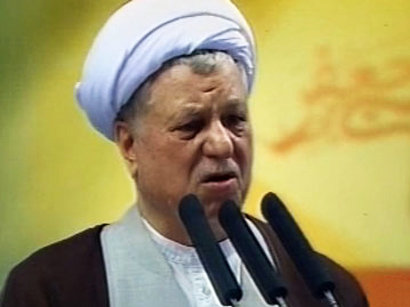
"When I took office as president after the Iran-Iraq war in 1989, I successfully carried out the policy of détente," said chairman of the Expediency Discernment Council of Iran, Ali Akbar Hashemi Rafsanjani, as reported in Etemad newspaper on March 11.
Rafsanjani said, adding that Iranian president Hassan Rouhani was also aware that the foreign policy problems should be one of the first issues addressed.
"Some people argue that we should manage issues based on only domestic potentials, however in the current global situations it is impossible," he added.
"If you want to resolve the country's problems, you can not cut your relations with the world," Rafsanjani remarked.
Commenting on the Iran-"P5+1" nuclear talks, Rafsanjani said that "If we can proceed the negotiations without unnecessary concessions and both sides respect the international rules, Iran will pass the danger [point]."
Iran respects international rules and if the other side has goodwill and understands that Iran moves within a legal path, all problems will be resolved, he added.
Iran and the P5+1 (Russia, China, France, Germany, UK and the U.S.) held meetings in Vienna in February to work out a comprehensive deal. The two sides signed an interim deal on Iran's nuclear energy program in Geneva on November 24, 2013. The deal took effect on Jan. 20.
Under the agreement, the six major powers agreed to give Iran access to its $4.2 billion in revenues blocked overseas if the country fulfills the deal's terms which offer sanctions relief in exchange for steps on curbing the Iranian nuclear program. The two sides aim to continue their talks to reach a final agreement to fully resolve the decade-old dispute over the Islamic Republic's nuclear program.
Commenting on the Iranian nuclear negotiating team, Rafsanjani said that they are former students and co-workers of the Iranian ex-foreign minister Ali Akbar Velayati who is currently an advisor on international affairs to Iranian Supreme Leader Ayatollah Ali Khamenei.
Rouhani`s opponents inside Iran claim that Khamanei is not satisfied by the nuclear deal, but the supreme leader has supported the interim nuclear deal and the ongoing negotiations. However, he has also announced that he is not optimistic on upcoming talks.
The U.S. and its Western allies suspect Iran of developing a nuclear weapon - something that Iran denies. The Islamic Republic has on numerous occasions stated that it does not seek to develop nuclear weapons, using nuclear energy for medical research instead.
Here we are to serve you with news right now. It does not cost much, but worth your attention.
Choose to support open, independent, quality journalism and subscribe on a monthly basis.
By subscribing to our online newspaper, you can have full digital access to all news, analysis, and much more.
You can also follow AzerNEWS on Twitter @AzerNewsAz or Facebook @AzerNewsNewspaper
Thank you!