
Georgia will be able to cope with Russian pressure: Top diplomat
By Nazrin Gadimova
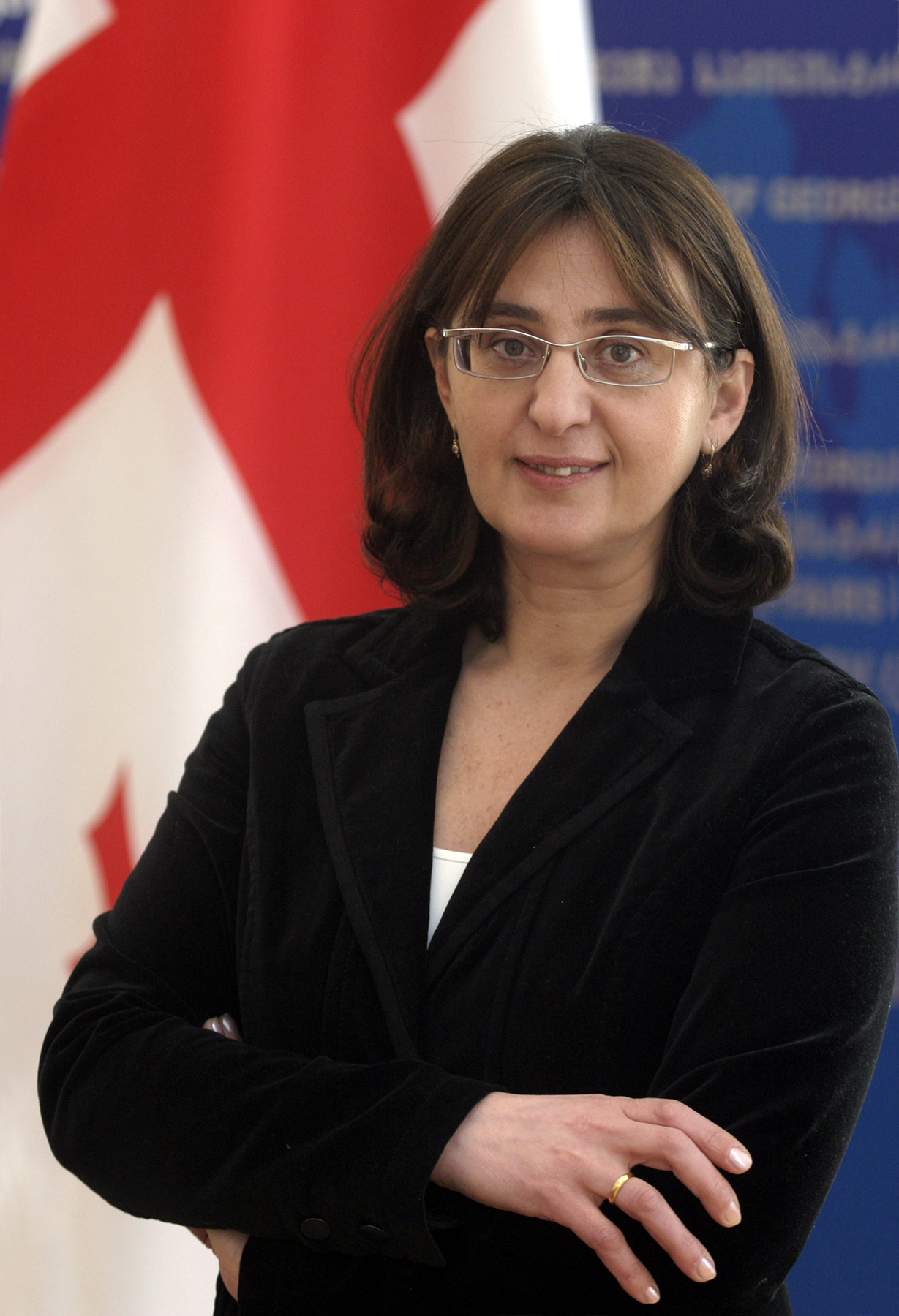
Georgia will be able to cope with economic problems if pressure from the Russian side increases, Georgia's Foreign Minister said on November 27.
Maia Panjikidze was referring to the Eastern Partnership Summit running in Vilnius on November 28-29.
Within the framework of the summit, Georgia plans to initial the Association Agreement with the EU. Moreover, the situation in Ukraine will be discussed at the event.
Ukraine's government announced suspension of preparation for signing the Association Agreement with the EUon November 19, explaining its decision with economic pressure from the Russian side. Following this, thousands of supporters of Ukraine's integration into the EU objected to the government's decision.
Panjikidze said Russia has no more leverage to put pressure on Georgia given that it has occupied 20 percent of our territories, and announced two regions of Georgia [Abkhazia and South Ossetia] as independent states.
Panjikidze said Russia has built barriers and various obstacles along the administrative borders of Abkhazia and the Tskhinvali region since January 2013, separating them from the rest of Georgia.
"We are very concerned about this process and, accordingly, mobilize international support to prevent these illegal actions. This process is underway. Our response to Russia's illegal actions will be low-key. We will not succumb to the Russian provocations and attempts to escalate the situation," the foreign minister said.
At the same time, she welcomed the opening of the Russian market for Georgian goods, noting that it is an achievement that resulted from the negotiations of Georgian Prime Minister's Special Representative for Relations with Russia Zurab Abashidze and Russia's Deputy Foreign Minister Grigory Karasin.
However, Panjikidze said Georgia, unlike other countries of the Eastern Partnership, is economically less dependent on Russia.
According to the Georgian Foreign Ministry, the Association Agreement can be roughly divided into three parts: political cooperation, industrial cooperation, and a deep and comprehensive free trade area (DCFTA).
The political part of the agreement opens cooperation in the following areas: protection and promotion of common European values, the rule of law, democracy, and human rights, respect for the principles of international law and sovereignty and territorial integrity within internationally recognized borders, promotion of peaceful settlement of conflicts, deepening political dialogue and cooperation towards local reforms and regional stability, non-proliferation of weapons of mass destruction, fight against organized crime, money laundering, corruption, drug trafficking, human trafficking, and others.
The second part, relating to industrial policy, includes modernization of all spheres and introduction of European standards in the areas of transport, energy, agriculture, tourism, health care, and others.
Issues related to trade involve creating a deep and comprehensive free trade zone between Georgia and the European Union. DCFTA includes elimination of tariff and non-tariff barriers, and settlement of a wide range of issues related to trade.
Here we are to serve you with news right now. It does not cost much, but worth your attention.
Choose to support open, independent, quality journalism and subscribe on a monthly basis.
By subscribing to our online newspaper, you can have full digital access to all news, analysis, and much more.
You can also follow AzerNEWS on Twitter @AzerNewsAz or Facebook @AzerNewsNewspaper
Thank you!