
US envoy sees Iran`s nuclear tests as threat
in Baku Anne Derse has said Iran`s testing new missiles raises
concern for Azerbaijan as well.
"There are very logical reasons for this," she said, adding that there has always been a missile threat posed to American interests.
Derse said it was for this reason that Washington was seeking to create a collective missile defense system.
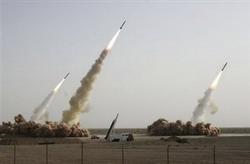
Iran tested nine missiles last Wednesday. Washington said the tests necessitated stepping up its efforts to locate radars and interceptor missiles in the Czech Republic and Poland.
The Azerbaijan Foreign Ministry spokesman Khazar Ibrahim said he saw no threat from Tehran`s activities. "The reason for this is that there have always been friendly relations between Azerbaijan and Iran."
The ambassador said the position of the U.S. and its partners on Iran is that issues involving the country`s nuclear program should be solved by peaceful means with the use of diplomacy.
Western powers charge that Iran`s nuclear program poses a threat to the rest of the world but Tehran denies the allegations, saying its uranium enrichment work serves exclusively peaceful purposes.
Derse emphasized that the U.S. and its allies have submitted a new package of incentives to Iran. Tehran may avail of these incentives to reconsider its uranium enrichment activities and pass a respective decision, she said.
As for using a radar station in Azerbaijan in a collective missile shield, Derse said the issue remains on the agenda.
"We want to create a broad-architecture missile defense system. We plan to continue working within this framework, and the Gabala radar station [in western Azerbaijan] could be considered in this context."
Derse said that since the facility belongs to Azerbaijan, Baku must be informed about talks involving it.
She said the recent preliminary agreement reached by the U.S. and the Czech Republic to base a radar on Czech soil met Washington`s interests but the deal still had to be ratified.
The United States says its European shield aims to avert the threat of missile attacks from what it calls "rogue states" such as Iran and North Korea. Former Russian President Vladimir Putin offered to the U.S. in June 2007 to jointly operate the Gabala radar station as an alternative to Washington`s plans to build missile defense elements in Europe. While the U.S. made clear it was ready to cooperate with Russia, it said the offer was an addition rather than a replacement for its missile shield plan.
Meanwhile, Russian Foreign Minister Sergei Lavrov said Iran`s missile tests prove that US plans for a defense shield in Europe are "unnecessary". He said the tests confirmed Tehran had missiles with a limited range of up to 2,000km, which does not allow to hit long-distance targets.
"This proved what we had said before, i.e. the United States does not need to station a third radar system in Europe to track down such short-distance missiles," he said.
Russia, which is staunchly opposed to U.S. missile shield plans, has warned it would retaliate if the deal is finalized. Moscow fears locating the system near its borders could weaken its own defenses or be used to spy on Russia. It has previously threatened to aim its own missiles at any eventual base in Poland or the Czech Republic.
Here we are to serve you with news right now. It does not cost much, but worth your attention.
Choose to support open, independent, quality journalism and subscribe on a monthly basis.
By subscribing to our online newspaper, you can have full digital access to all news, analysis, and much more.
Subscribe
You can also follow AzerNEWS on Twitter @AzerNewsAz or Facebook @AzerNewsNewspaper
Thank you!