
Iran says nuclear talks 'on right track', but U.S. warns 'window for diplomacy closing'
By Sara Rajabova
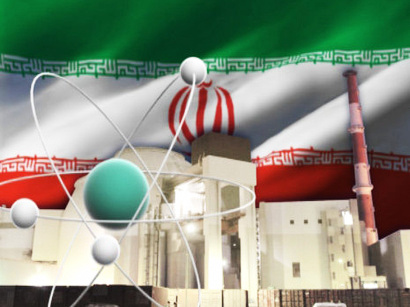
Iran's Foreign Minister Ali Akbar Salehi has said assessing the latest round of nuclear talks between Tehran and the P5+1 group of six major world powers that the negotiations are on the right track.
"The important point is that the talks with the P5+1 (Britain, China, France, Russia, and the United States plus Germany) are heading in the right direction," Salehi told reporters in the Iraqi city of Najaf on Monday.
The Iranian minister said the latest round of talks has yielded positive results and urged both sides to take another step forward.
Iran and the P5+1 countries last mulled the Iranian nuclear energy program in the Kazakh city of Almaty on February 27-28. The sides agreed to convene again in the city on April 5-6 to continue the talks after holding expert-level talks in the Turkish city of Istanbul on March 17-18.
Both sides have expressed hope and optimism about the future of the talks. On February 28, Reuters quoted an unnamed Western diplomat as saying that "this was more constructive and more positive than previous meetings because they were really focusing on the proposal on the table."
In an interview with Austrian broadcaster ORF on March 1, Salehi himself described the latest round of the talks as a "milestone" and a "turning point in the negotiations."
However, U.S. Secretary of State John Kerry said an offer to negotiate with Tehran about its nuclear program is limited in time and went on warning about the proliferation of nuclear weapons in the Middle East.
He said that confronting the Iranian nuclear program remains "the most urgent" priority and that the talks offer was not open-ended.
"It is absolutely not unlimited," Kerry said commenting on the meeting results. "Talks will not go on for the sake of talks."
On the other hand, U.S. Vice President Joe Biden went as far as threatening Iran, saying that the U.S. does not want to start a war with Iran but the window for diplomacy is closing.
"President Barack Obama is not bluffing," Biden said, when commenting on the US president's statement in which he said military action would be used to prevent Iran from acquiring nuclear weapons if all other options failed.
"We are not looking for war... but all options, including military force, are on the table," the US vice president said.
In early 2012, the US and the European Union imposed new sanctions on Iran's oil and financial sectors with the goal of preventing other countries from purchasing Iranian oil and conducting transactions with the Central Bank of Iran.
The sanctions were imposed based on the accusation that Iran is pursuing non-civilian objectives in its nuclear energy program. Iran rejects the allegations, arguing that as a committed signatory to the nuclear Non-Proliferation Treaty and a member of the International Atomic Energy Agency, it has the right to use nuclear technology for peaceful purposes.
Here we are to serve you with news right now. It does not cost much, but worth your attention.
Choose to support open, independent, quality journalism and subscribe on a monthly basis.
By subscribing to our online newspaper, you can have full digital access to all news, analysis, and much more.
You can also follow AzerNEWS on Twitter @AzerNewsAz or Facebook @AzerNewsNewspaper
Thank you!