
Illegal money transfers from Russia reaches $49 bln in 2012
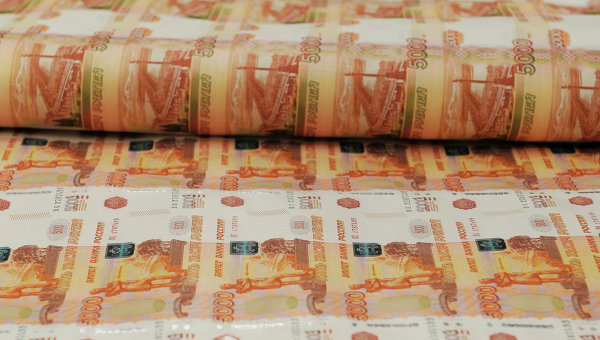
Illegal money transfers from Russia reached $49 billion in 2012 or 2.5 percent of the country's GDP, with almost half of that sum sent out by a single group of "well-organized" people, central bank chief Sergei Ignatyev said on Wednesday, RIA Novosti reported.
"This could be payment for the delivery of drugs... payments for grey imports ... bribes and kickbacks for officials or managers making purchases at large private companies with ineffective internal controls. Or this may involve tax evasion schemes," Ignatyev said in an interview with Vedomosti business paper.
Ignatyev said $14 billion of that $49 billion was transferred to foreign accounts abroad in trade operations, while $35 billion involved capital operations referred to as "dubious" in the balance of payments and included in the capital outflow count.
Russia's net capital outflow reached $56.8 billion last year - therefore indicating that up to 60 percent of money which left Russia was brought out illegally.
"I estimate the damage to the budget system from these operations at about 30 percent of the volume of dubious operations or about 450 billion rubles a year. If we add internal cash-converting operations that are organized by the same people, then I believe the overall damage to the budget system will exceed 600 billion rubles a year," he said.
The Russian budget loses 600 billion rubles ($20 billion) annually from such money transfer scams, he said - comparable to the entire sum spent last year on education (604 billion rubles) or health care (614 billion rubles), according to Vedomosti.
Shell companies play the most significant role in these dubious operations, Ignatyev said, adding there were 3.9 million businesses registered by Russia's Federal Tax Service compared with just 2 million organizations that really existed.
"Also, our analysis shows that more than half of all dubious operations are held by firms directly or indirectly bound by payment relations with each other. The impression is created that all of them are controlled by one well-organized group of people. If the law-enforcement agencies concentrate their efforts considerably, they will be able to identify these people and also the beneficiaries of these operations," Ignatyev said.
Under the central bank's methodology based on international standards, dubious operations involve export revenues that were not received on time, the cost of goods and services prepaid but not received under import contracts, and money transfers abroad under fictitious operations with securities and loans.
Ignatyev said Russia urgently needed to adopt a law developed by the Federal Financial Monitoring Service allowing banks to unilaterally cancel relations with clients making dubious transactions, streamline the business registration procedure and introduce liability for nominal directors.
The volume of dubious operations has stayed steady at 2 percent of Russia's GDP in the past four years, the central bank estimates.
Here we are to serve you with news right now. It does not cost much, but worth your attention.
Choose to support open, independent, quality journalism and subscribe on a monthly basis.
By subscribing to our online newspaper, you can have full digital access to all news, analysis, and much more.
You can also follow AzerNEWS on Twitter @AzerNewsAz or Facebook @AzerNewsNewspaper
Thank you!